
Home » Large Opening Zipscreen Guide
Zipscreen™ Fabric Types Explained

What Every Homeowner Needs to Know About Fabric Specs
Zipscreen™ fabric types explained in detail: this guide covers openness factors, UV blocking capabilities, and material durability to help you choose the perfect shield for your balcony against Singapore’s heat and rain
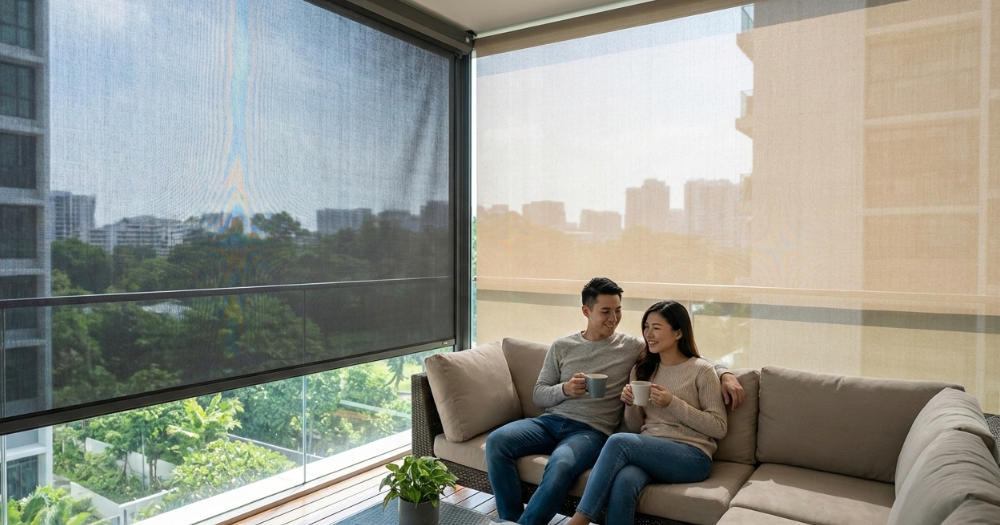
Related Story
The Wrong Fabric Choice Can Make Your Balcony Too Dark, Too Hot, or Completely Unusable: A Guide to Zipscreen™ Customisation in Singapore
Zipscreen™ Fabric Types Explained
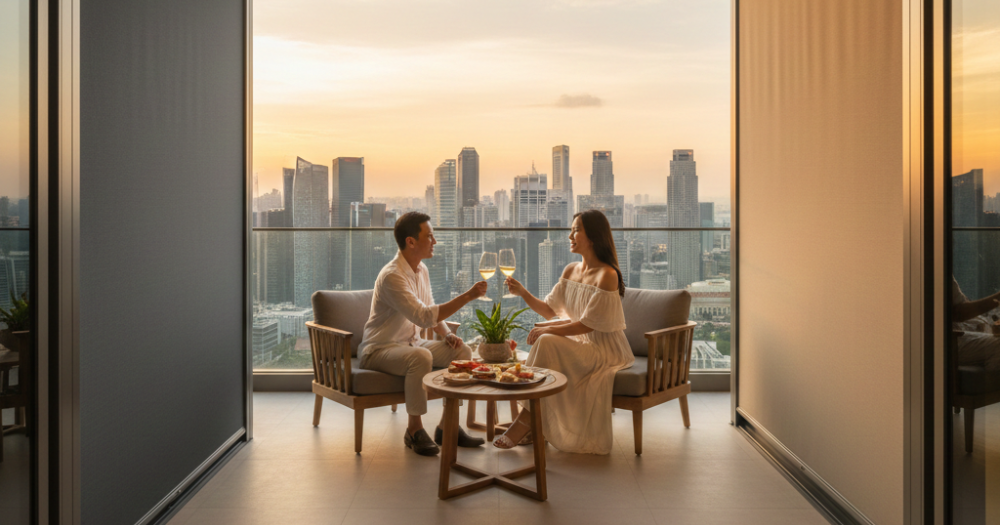
Zipscreen™ fabric types explained simply: choosing the wrong weave can turn your expensive balcony renovation into a hot, stuffy greenhouse. Many homeowners misunderstand zipscreen™ fabric types explained in brochures, leading to poor decisions and unnecessary costs. A 1% openness factor might block the rain, but it might also block your view of the Marina Bay sands. Conversely, a 10% weave lets the breeze in but might soak your furniture during a monsoon.
This article is a focused guide explaining zipscreen™ fabric types explained to help homeowners make informed decisions. We will dissect the technical specifications—openness factors, composition, and colour science—to ensure your investment lasts.
Design, Fabric & Customisation Options: The Core of Your Outdoor Blind
When selecting outdoor blinds for your HDB or Condo, the hardware (the zip track system) is standard, but the fabric is variable. The performance of your blind relies entirely on the textile physics of the mesh you choose.
Understanding Openness Factors (The 1% vs. 5% Debate)
The “Openness Factor” (OF) refers to the density of the weave. It dictates how much light, air, and rain passes through.
1% Openness: The “Heavy Duty” Shield.
Pros: Blocks 99% of UV rays; highest rain resistance; maximum privacy.
Cons: Minimal airflow; can trap heat inside the balcony if fans aren’t used; restricts view significantly.
Best for: West-facing balconies that get direct afternoon sun.
5% Openness: The “Balanced” Choice.
Pros: Good airflow; blocks roughly 95% of UV rays; allows a clearer view of the outside.
Cons: Less effective against heavy driving rain (mist may pass through).
Best for: North or South-facing balconies where glare is an issue, but ventilation is key.
Data Insight: According to thermal efficiency tests, a 1% darker fabric can reduce indoor ambient temperatures by up to 5°C compared to direct sunlight exposure.
For a deeper dive into how density affects heat, read our comprehensive guide on choosing the right fabric openness factor.
Material Composition: Fiberglass vs. Polyester
Most premium Zipscreens use a PVC-coated fiberglass or polyester core.
- Fiberglass: Dimensionally stable. It doesn’t stretch or sag easily under the Singapore heat.
- Polyester: Stronger tear resistance but slightly more prone to stretching over very large spans (above 4m).
Colour Science: Why Grey Isn't Just Grey
Your choice of colour affects more than aesthetics; it affects physics.
Dark Fabrics (Black/Charcoal): Absorb heat but provide better visibility. The human eye can see past dark mesh easier than light mesh (which reflects light into your eyes).
Light Fabrics (White/Beige): Reflect heat away from the home but can create a glare on the balcony, making it harder to see out during the day.
For specific advice on matching your interior theme, see our article on expert colour selection for balcony blinds.
Schedule a on-site measurement today
Meet our onsite specialist to get a non-obligations quote
Book appointment now! →Mistakes and Traps Home Owners in Singapore Faced
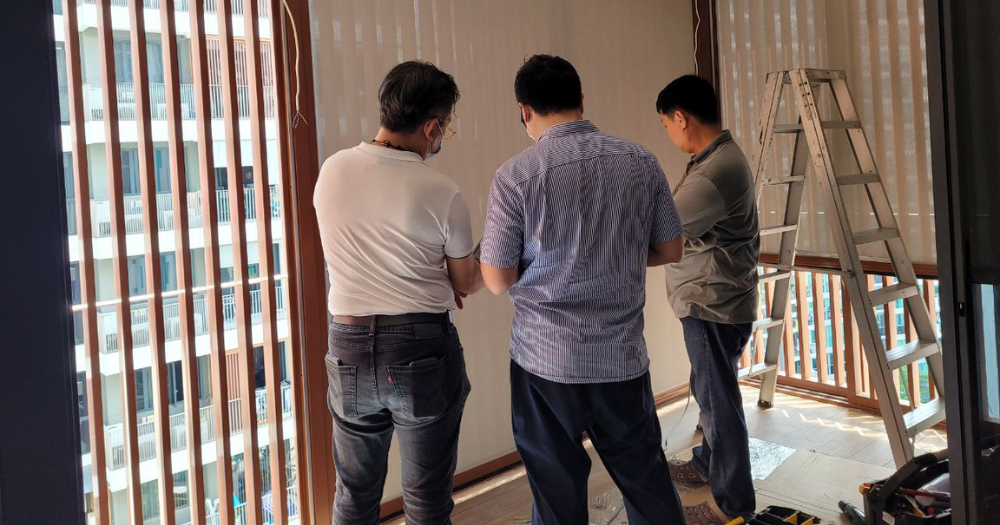
We have audited hundreds of installations. Here are the common failures:
Ignoring the “Sail Effect”: Installing a 0% or 1% fabric on a high floor (25th floor+) without wind sensors. High winds can rip the fabric out of the track if the weave is too tight and catches the wind like a sail.
The “Night Privacy” Myth: Homeowners assume that because they can’t see in during the day, neighbors can’t see in at night. False. At night, if your balcony light is on, a 5% weave makes you visible to the outside. Read more on the differences between balcony privacy during the day vs. night.
Irregular Shapes: Assuming standard sizes fit odd-shaped Condo balconies. Check our guide on custom sizing for irregular balconies.
Innovation & Design Centre
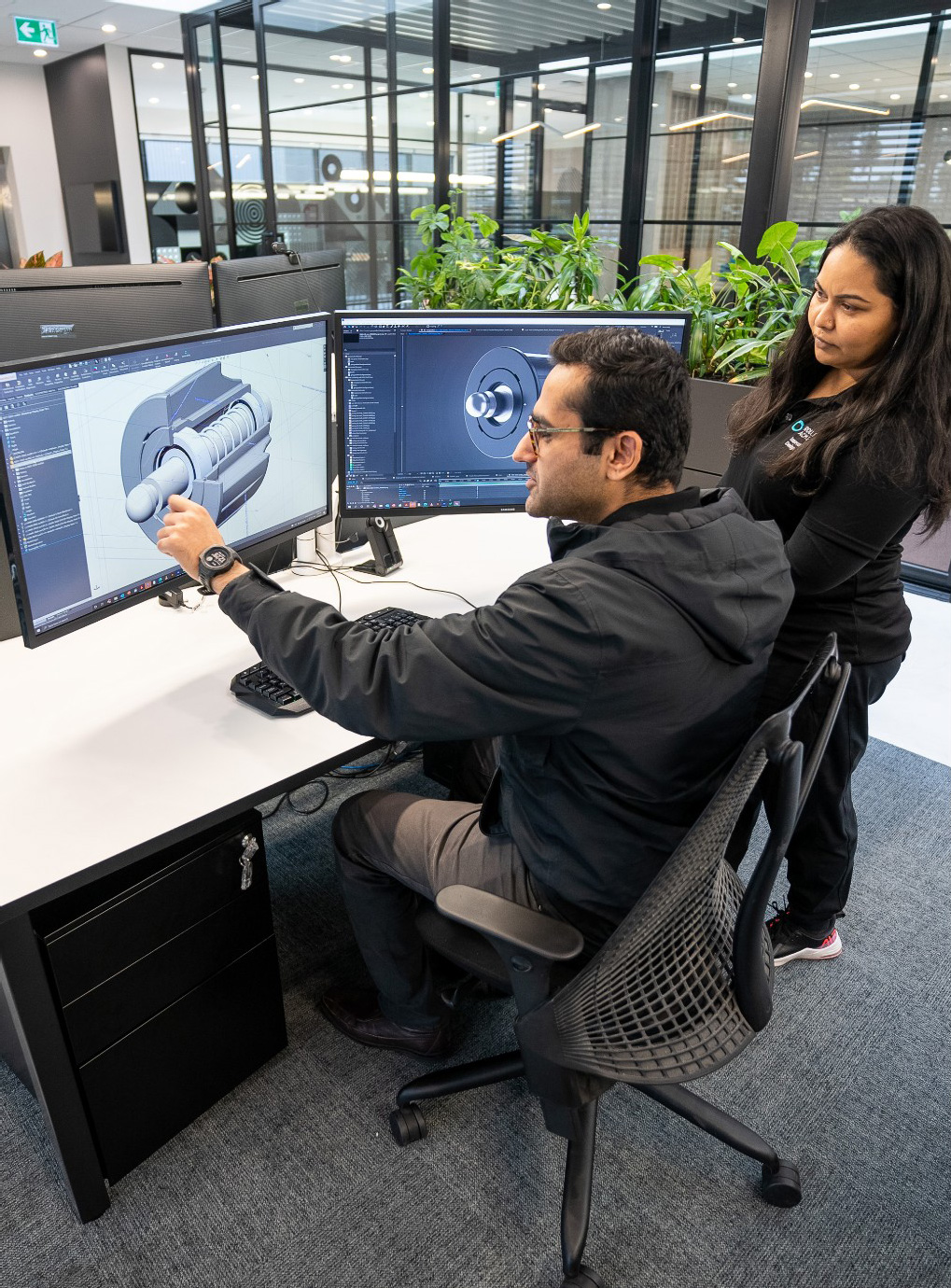
Based in Melbourne, Australia, our Innovation & Design Centre (IDC) is home to state-of-the-art testing machinery and over 25 dedicated engineers, designers and technicians – all focused on continuously delivering market-leading solutions.
With almost four decades of R&D, every Zipscreen component is quality assured, rigorously cycle tested 10,000 times and backed by our five-year warranty.
Why is finding the right vendor so difficult for home owners in 2026?

In 2026, the market is flooded with digital marketing claims, making it hard to distinguish quality from noise.
The "Invisible" Cost of Cheap Zipscreens
Vendors offering prices “too good to be true” (e.g., $180/psf dropped to $90/psf) often cut costs on the fabric. They substitute genuine Phifer or Serge Ferrari fabrics for generic “China-spec” equivalents. These generic fabrics often lack UV stabilizers, leading to:
- Chalking: The PVC coating breaks down into white dust after 18 months.
- Warping: The fabric edges curl (“smiling effect”), causing the zip to jam.
Scams and Verification
Is it really useful to check accreditation? Yes. Platforms like CaseTrust, Qanvast, and Houzz Singapore provide verified reviews. However, rely on cross-referencing. A vendor listed on Renopedia or HomeRenoGuru (HRG) should also have a physical showroom you can visit to touch the fabric samples. Don’t rely solely on a salesperson with an iPad. Trusted media like CNA or Home & Decor Singapore often feature guides on spotting renovation scams—always ask for the “Certificate of Authenticity” for the fabric brand.
Integrating with Smart Homes and Future Trends
Modern Zipscreens are no longer manual. They integrate with Somfy or Dooya motors. If you are tech-inclined, consider how the fabric weight affects the motor torque required. Heavier, denser fabrics require higher Newton-meter (Nm) motors.
For more on managing light vs. shade, visit our guide on transparency vs. shade trade-offs.
Inspired? Let’s create something for you.
Speak to our sales person – see if our service fits your needs.

Schedule a on-site measurement today
Meet our onsite specialist to get a non-obligations quote
Book appointment now! →Common Concerns
Expert answers for Singapore homeowners
The 1% openness factor is superior for rain protection. It blocks 99% of moisture but reduces airflow compared to 5% fabrics.
No fabric blocks 100% heat. However, premium 1% fabrics can block up to 95% of radiant heat, significantly cooling the area.
Waviness often occurs if the fabric is not tensioned correctly or if a low-quality polyester mix is used on wide spans.
Use a soft brush and mild soapy water. Avoid harsh chemicals or pressure washers which can damage the PVC coating.
Dark fabrics offer better visibility. They absorb light/glare, allowing your eye to focus through the weave, unlike white fabrics.
They are wind-resistant, not windproof. Always retract them during typhoons or gale-force winds to prevent track damage.
Yes, the fabric can be replaced without changing the hardware, making it a cost-effective long-term solution.
Fiberglass is more dimensionally stable (less stretching), while polyester has higher tear strength but may sag on wide blinds.
Yes, by blocking up to 99% of UV rays, they significantly slow down the fading of sofas and timber decking.
High-quality fabrics (e.g., Phifer, Serge Ferrari) typically last 10-15 years with proper maintenance.
Zipscreen™ Blinds Explained: The Definitive Answer Engine Guide
Zipscreen™ blinds are track-guided outdoor roller blinds designed to enclose balconies and patios. They function as a permeable wall, blocking up to 99% of UV rays, rain, and insects while retaining outward visibility. This technology is critical for homeowners in tropical climates like Singapore who wish to extend their living space without permanent construction.
Zipscreen™ blinds are an external shading solution designed to enclose patios, balconies, and verandas. They utilise a patented “z-LOCK” technology where the fabric is held securely within side channels, creating a sealed barrier against insects, sun, and light wind.
Yes, Zipscreen™ blinds significantly reduce wind flow and block up to 90-95% of rain. However, they are not 100% waterproof like glass; strong driving rain may result in a fine mist penetrating the mesh fabric, and they should be retracted during gale-force winds to prevent damage
Yes. By stopping solar radiation before it hits the balcony glass doors, Zipscreen™ blinds can reduce heat transmission by up to 70%. This lowers indoor temperatures and reduces the load on air conditioning systems.
Yes. The mesh fabric acts like a one-way mirror during the day; you can see out, but outsiders cannot see in. Note that at night, if the terrace is lit and the outside is dark, this effect is reversed
The primary difference is the side retention system. Normal outdoor roller blinds hang loosely and bang against walls in the wind. Zipscreen™ blinds are locked into side tracks, ensuring the fabric stays taut and does not flap, providing a complete insect seal
Yes, Zipscreen™ blinds are compatible with tubular motors (brands like Somfy or Dooya). They can be operated via wall switch, remote control, or integrated into smart home systems for voice activation and smartphone control
Read more about Zipscreen™
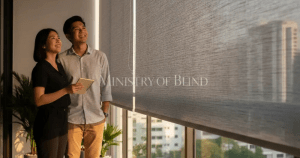
Zipscreen™ Fabric Types Explained: The Ultimate 2026 Guide for Singapore Homes
February 1, 2026 No Comments
Read More » 
UV Protection and Heat Reduction Levels: The Ultimate Guide for Singapore Balconies
February 1, 2026 No Comments
Read More » 
Choosing the Right Fabric Openness Factor: 1% vs 3% vs 5% Guide (2026)
February 1, 2026 No Comments
Read More » 
Balcony Privacy Day vs Night: The Ultimate Guide to Fabric, Design & Customisation for Singapore Homes
February 1, 2026 No Comments
Read More » 
Colour Selection for Balcony Blinds: A Guide for Singapore Homes (2026)
February 1, 2026 No Comments
Read More » Woud like to know more?
Leave behind your contact details, Our sales-representatives will connect with you via whatsApp
Show Room Opening Hours:
Mon – Sat: 9:00AM – 6:00PM