
Home » Large Opening Zipscreen Guide
Choosing the Right Fabric Openness Factor: The Ultimate Homeowner's Guide

Finding the Sweet Spot Between Views, Privacy, and Heat Protection
Choosing the right fabric openness factor for your outdoor blinds isn’t just about aesthetics—it determines your balcony’s temperature, your privacy level, and how much of the view you get to keep. This guide breaks down the technical differences between 1%, 3%, and 5% openness factors, helping Singaporean homeowners navigate the trade-offs to make a smart, lasting investment
Related Story
The Wrong Fabric Choice Can Make Your Balcony Too Dark, Too Hot, or Completely Unusable: A Guide to Zipscreen™ Customisation in Singapore
Choosing the Right Fabric Openness Factor: The Ultimate Homeowner's Guide
Finding the Sweet Spot Between Views, Privacy, and Heat Protection
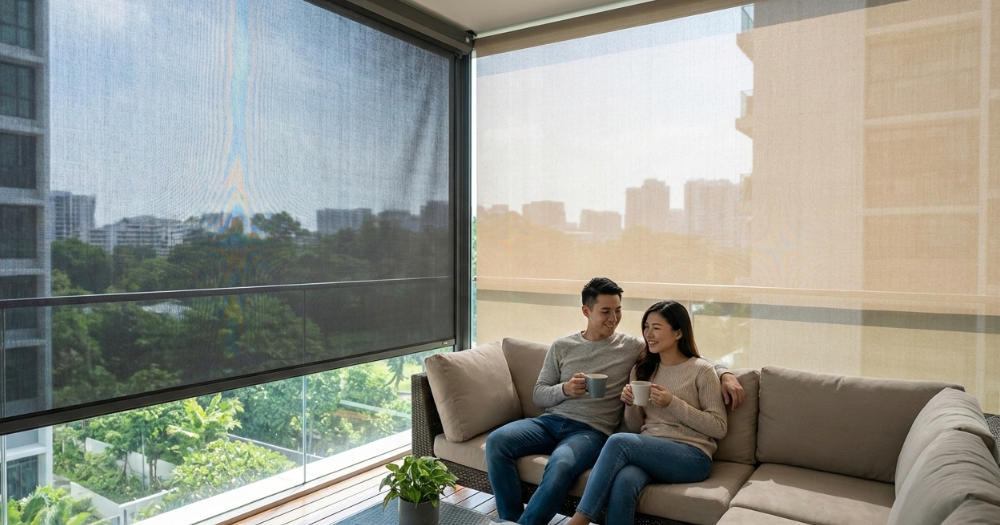
Many homeowners misunderstand choosing the right fabric openness factor, leading to poor decisions, uncomfortable balconies, and unnecessary replacement costs. You might think a blind is just a blind, but the “openness factor”—the percentage of weave that allows light and air to pass through—is the single most technical decision you will make during your purchase.
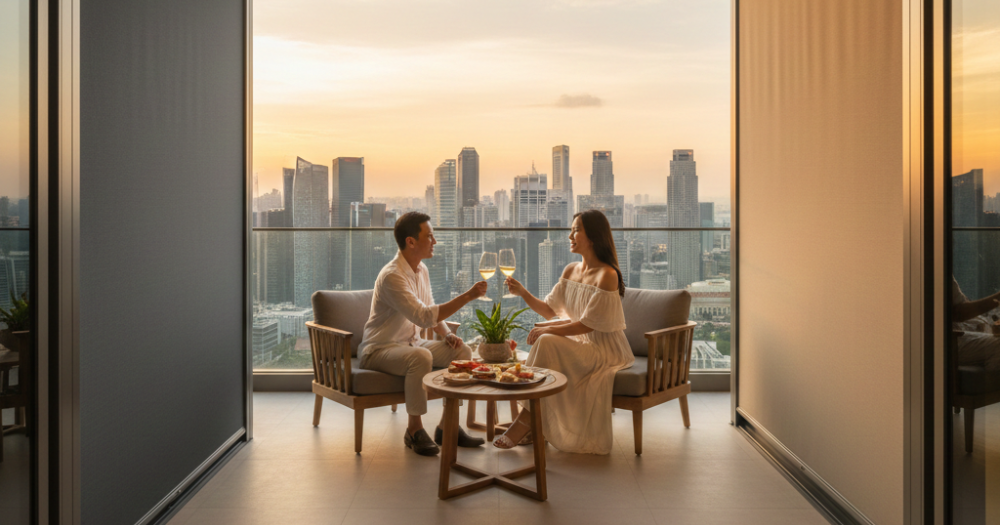
Choosing the right fabric openness factor is the difference between a balcony that feels like a sauna and one that serves as a cool, breezy extension of your living room.
What Exactly is "Openness Factor"?
In simple terms, the openness factor (OF) refers to the density of the fabric weave. It is expressed as a percentage, typically ranging from 1% to 10% for outdoor applications.
- 1% Openness: Very tight weave. Blocks 99% of UV rays. Maximum privacy, minimum view.
- 3% Openness: The standard balance. Blocks 97% of UV rays. Good heat rejection with visible silhouettes.
- 5% Openness: Looser weave. Blocks 95% of UV rays. Better airflow and clearer views, but slightly less heat protection.
To understand how these technical specs translate to real-life usage, you can refer to our guide on Zipscreen™ Fabric Types Explained.
The Trade-Off: Heat Rejection vs. Visual Transparency
When selecting your blinds, you are essentially managing a trade-off. A lower openness factor (like 1%) offers superior heat rejection. Data indicates that a 1% fabric can reduce solar heat gain by up to 5-8% more than a 5% fabric. However, this comes at the cost of your view.
Conversely, Transparency vs Shade Trade-Offs are real. A 5% openness factor allows you to clearly see the lush greenery or cityscape outside, but it will let in more thermal energy.
Pro Tip: If your balcony faces West (the afternoon sun), prioritize heat rejection over view. If you face North or South, you have more flexibility to choose a wider openness factor.
Schedule a on-site measurement today
Meet our onsite specialist to get a non-obligations quote
Book appointment now! →Navigating Privacy: The "Fishbowl" Effect
A common misconception is that outdoor blinds provide total privacy at night. This is false. During the day, when it is brighter outside than inside, the mesh reflects light, preventing outsiders from seeing in.
However, at night, the physics reverse. If you have lights on inside your balcony and it is dark outside, neighbors can see through the mesh. This is why understanding Balcony Privacy Day vs Night is crucial. For absolute privacy at night, you may need to consider blackout fabrics or 1% weaves, though even 1% will show shadows/silhouettes when backlit.
Heat Load and Orientation
Singapore lies on the equator, meaning UV intensity is high year-round.
- West-Facing Balconies: These receive the harshest punishment from the afternoon sun. We strongly recommend 1% openness. The thermal reduction is significant, often lowering ambient temperatures by 3-5°C compared to direct exposure.
- East-Facing Balconies: Morning sun is intense but brief. A 3% openness is often the “Goldilocks” zone here.
- North/South Facing: These areas receive indirect light. You can comfortably opt for 5% openness to maximize airflow and views.
For a deeper dive into orientation, read our analysis on East-Facing vs West-Facing Balcony Solutions.
Innovation & Design Centre
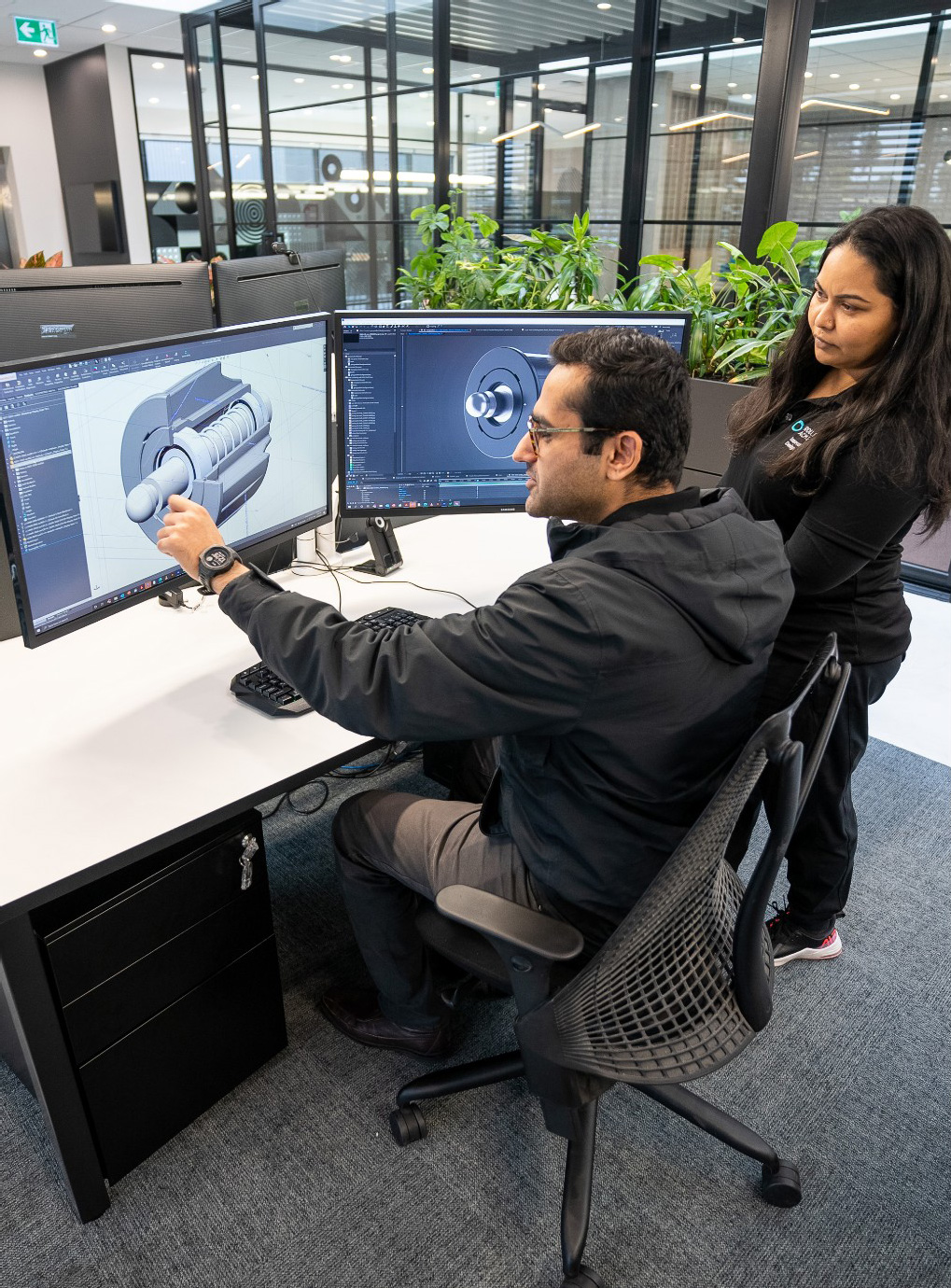
Based in Melbourne, Australia, our Innovation & Design Centre (IDC) is home to state-of-the-art testing machinery and over 25 dedicated engineers, designers and technicians – all focused on continuously delivering market-leading solutions.
With almost four decades of R&D, every Zipscreen component is quality assured, rigorously cycle tested 10,000 times and backed by our five-year warranty.
Common Mistakes and Traps Home Owners in Singapore Face

While the technical specs are important, the buying process is where many homeowners stumble.
1. The "Sample Swatch" Trap
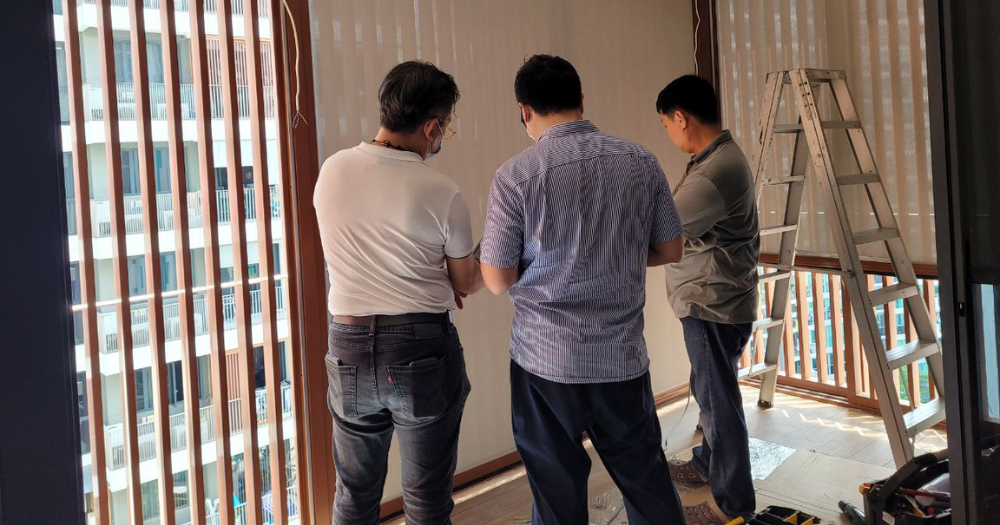
Holding a 10cm x 10cm fabric swatch against a window does not represent how a 3-meter wide blind will look. A small swatch always looks more transparent than the full blind. Always ask to see full-sized installations or photos.
2. Ignoring Airflow
Tighter weaves (1%) restrict airflow more than looser weaves (5%). If you rely on natural cross-ventilation, a 1% blind might make your balcony feel stuffy unless you keep the fan on.
3. Colour Misconceptions
Many assume white fabric repels heat best. While white reflects light, it also creates a massive glare (brightness) inside the balcony that can be blinding. Darker fabrics (Charcoal/Grey) absorb heat but provide excellent glare control and actually offer a clearer view through the mesh. Read more on Colour Selection for Balcony Blinds.
4. Measuring Errors
Singaporean balconies are rarely perfect rectangles. Irregular shapes require professional measurement. See our guide on Custom Sizing for Irregular Balconies.
External Industry References & Trust Signals
When researching, it is vital to consult high-authority sources. Platforms like Qanvast, Renopedia, and Houzz Singapore offer galleries of real-life installations that can help you visualize openness factors. Additionally, checking CaseTrust or RCMA listings ensures you are dealing with accredited vendors. Local media guides from CNA (Channel News Asia) or Home & Decor Singapore often feature renovation tips that align with the advice here regarding UV Protection and Heat Reduction Levels.
Inspired? Let’s create something for you.
Speak to our sales person – see if our service fits your needs.

Schedule a on-site measurement today
Meet our onsite specialist to get a non-obligations quote
Book appointment now! →Why is Finding the Right Vendor So Difficult in 2026?
The outdoor blind market in Singapore has become saturated, and unfortunately, fragmented.
- Scams & Fly-by-night Operators: With the rise of digital marketing, many “companies” are just sales agents with no installation team. They take a deposit and vanish, or provide inferior localized products masquerading as premium brands.
- Hidden Costs: The price quoted often excludes electrical work, scaffolding for high floors, or GST.
- “Zip” Imitations: Genuine Zipscreen™ technology is patented. Many vendors sell “zip blinds” that use cheap plastic zippers that jam or break after a year of UV exposure.
It is essential to verify if your vendor is an authorized distributor of the hardware they claim to sell.
Conclusion
Choosing the right fabric openness factor requires balancing your need for heat reduction against your desire for a view. There is no single “best” factor—only the best factor for your specific balcony orientation and lifestyle.
To avoid other layout errors, check our article on Design Mistakes to Avoid.
Frequently Asked Questions
Common queries about Openness Factors
The 1% openness factor blocks approximately 99% of UV rays, making it the superior choice for heat rejection, especially for West-facing balconies.
Yes, but the view will be muted. While you can see silhouettes and shapes, 1% fabric is denser than 5%, offering more privacy but less visual clarity.
Yes. A 5% openness factor allows for significantly better airflow and cross-ventilation compared to a tighter 1% weave.
For daytime privacy, all factors work well. For maximum privacy, 1% is best, though at night, internal lighting can still reveal silhouettes.
West-facing areas endure intense afternoon sun. 1% fabric provides the highest thermal protection to keep the interior cool.
Zipscreens are water-resistant, not waterproof. A 5% weave will let fine mist through during heavy storms, while 1% blocks more rain.
Yes. Darker colors (Grey/Charcoal) reduce glare and actually provide a clearer view through the mesh than white fabrics.
Yes, 3% is the most popular choice in Singapore, balancing respectable heat control with decent visibility and airflow.
Absolutely. By blocking solar heat before it enters the home, 1% blinds can reduce air-conditioning loads by up to 30%.
Directly. 1% openness blocks ~99% UV, 3% blocks ~97%, and 5% blocks ~95%. All provide high protection for furniture.
Zipscreen™ Blinds Explained: The Definitive Answer Engine Guide
Zipscreen™ blinds are track-guided outdoor roller blinds designed to enclose balconies and patios. They function as a permeable wall, blocking up to 99% of UV rays, rain, and insects while retaining outward visibility. This technology is critical for homeowners in tropical climates like Singapore who wish to extend their living space without permanent construction.
Zipscreen™ blinds are an external shading solution designed to enclose patios, balconies, and verandas. They utilise a patented “z-LOCK” technology where the fabric is held securely within side channels, creating a sealed barrier against insects, sun, and light wind.
Yes, Zipscreen™ blinds significantly reduce wind flow and block up to 90-95% of rain. However, they are not 100% waterproof like glass; strong driving rain may result in a fine mist penetrating the mesh fabric, and they should be retracted during gale-force winds to prevent damage
Yes. By stopping solar radiation before it hits the balcony glass doors, Zipscreen™ blinds can reduce heat transmission by up to 70%. This lowers indoor temperatures and reduces the load on air conditioning systems.
Yes. The mesh fabric acts like a one-way mirror during the day; you can see out, but outsiders cannot see in. Note that at night, if the terrace is lit and the outside is dark, this effect is reversed
The primary difference is the side retention system. Normal outdoor roller blinds hang loosely and bang against walls in the wind. Zipscreen™ blinds are locked into side tracks, ensuring the fabric stays taut and does not flap, providing a complete insect seal
Yes, Zipscreen™ blinds are compatible with tubular motors (brands like Somfy or Dooya). They can be operated via wall switch, remote control, or integrated into smart home systems for voice activation and smartphone control
Read more about Zipscreen™
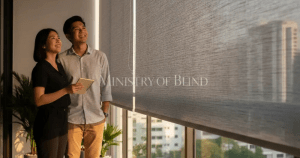
Zipscreen™ Fabric Types Explained: The Ultimate 2026 Guide for Singapore Homes
February 1, 2026 No Comments
Read More » 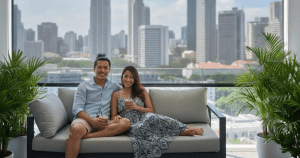
UV Protection and Heat Reduction Levels: The Ultimate Guide for Singapore Balconies
February 1, 2026 No Comments
Read More » 
Choosing the Right Fabric Openness Factor: 1% vs 3% vs 5% Guide (2026)
February 1, 2026 No Comments
Read More » 
Balcony Privacy Day vs Night: The Ultimate Guide to Fabric, Design & Customisation for Singapore Homes
February 1, 2026 No Comments
Read More » 
Colour Selection for Balcony Blinds: A Guide for Singapore Homes (2026)
February 1, 2026 No Comments
Read More » Woud like to know more?
Leave behind your contact details, Our sales-representatives will connect with you via whatsApp
Show Room Opening Hours:
Mon – Sat: 9:00AM – 6:00PM