
Home » Large Opening Zipscreen Guide
Balcony Privacy Day vs Night: The Truth About Transparency and Shade
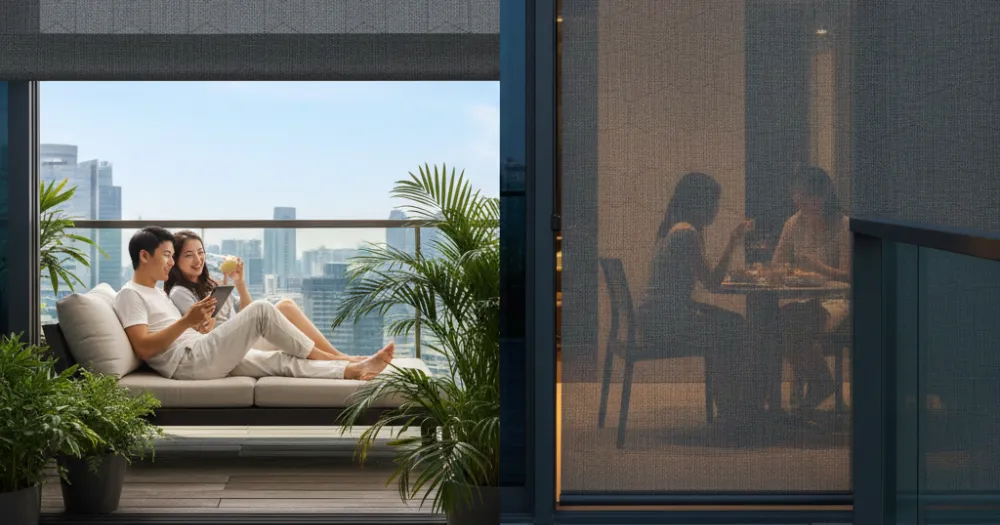
Quick Summary: Mastering Light Control
Balcony privacy day vs night is one of the most critical yet overlooked aspects of outdoor blind installation. This guide breaks down exactly how different fabrics perform under changing lighting conditions. We cover the science of “Openness Factors” (1% vs 5%), why darker colours often provide better views than light ones, and how to avoid the “fishbowl effect” at night. Whether you are facing the harsh West sun or need privacy from a neighbour block, this data-driven guide ensures you make the right investment for your home
Related Story
The Wrong Fabric Choice Can Make Your Balcony Too Dark, Too Hot, or Completely Unusable: A Guide to Zipscreen™ Customisation in Singapore
Balcony privacy day vs night
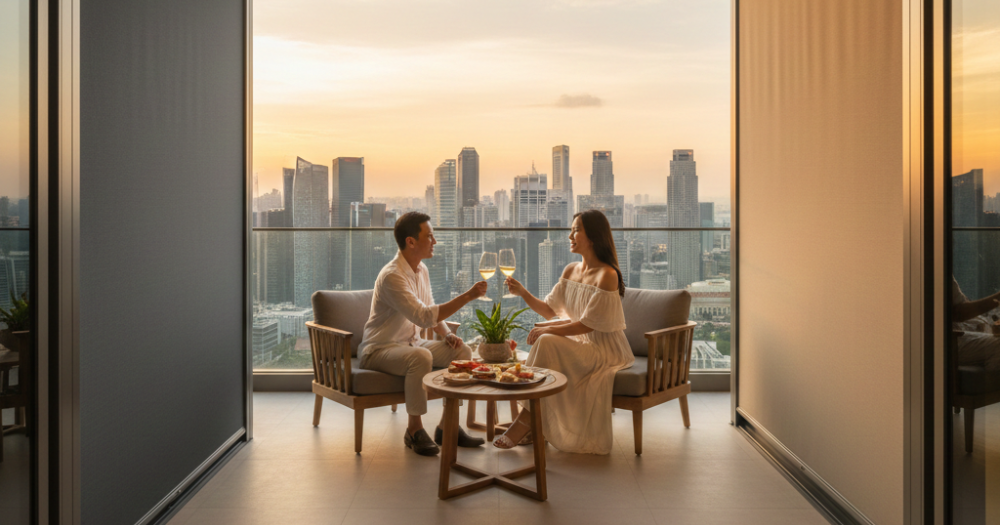
Balcony privacy day vs night is the single most confusing factor for Singaporean homeowners when selecting outdoor blinds. You visit a showroom at 2 PM, choose a fabric that looks great against the afternoon sun, and assume it will offer the same seclusion after dark. It won’t.
Many homeowners misunderstand balcony privacy day vs night, leading to poor decisions and unnecessary costs. They end up with a “fishbowl effect”—where they can’t see out, but everyone can see in.
This article is a deep dive into the physics of light, fabric choices, and design customisation to ensure your privacy is protected 24/7.
Understanding the Physics: How Light Affects Privacy
At its core, privacy is determined by lighting contrast. The rule is simple: You can always see from the darker side into the brighter side.
- Daytime: It is brighter outside than inside. Therefore, you can see out, but neighbours cannot see in.
- Nighttime: It is brighter inside your living room (lights on) than outside. Therefore, neighbours can see in, and your view out is reflected by the glass or fabric.
To master balcony privacy day vs night, we need to manipulate this rule using specific fabrics and “Openness Factors.”
Fabric Types & Openness Factors: The 1% vs 5% Dilemma
When selecting Zipscreen™ or outdoor roller blinds, the “Openness Factor” (OF) refers to how tightly the fabric is woven.
- 1% Openness: Very tight weave. Blocks 99% of UV and rain.
- Pros: Maximum privacy and heat reduction.
- Cons: drastically reduces airflow and visibility.
- 5% Openness: Looser weave.
- Pros: Better airflow and clearer views out.
- Cons: Slightly less privacy at night compared to 1%.
Data Benchmark:
In a standard HDB estate where blocks are 30-50 meters apart, a 3% to 5% openness factor is usually the “sweet spot” for balancing ventilation and privacy.
For a deeper technical breakdown, read our guide on Choosing the Right Fabric Openness Factor.
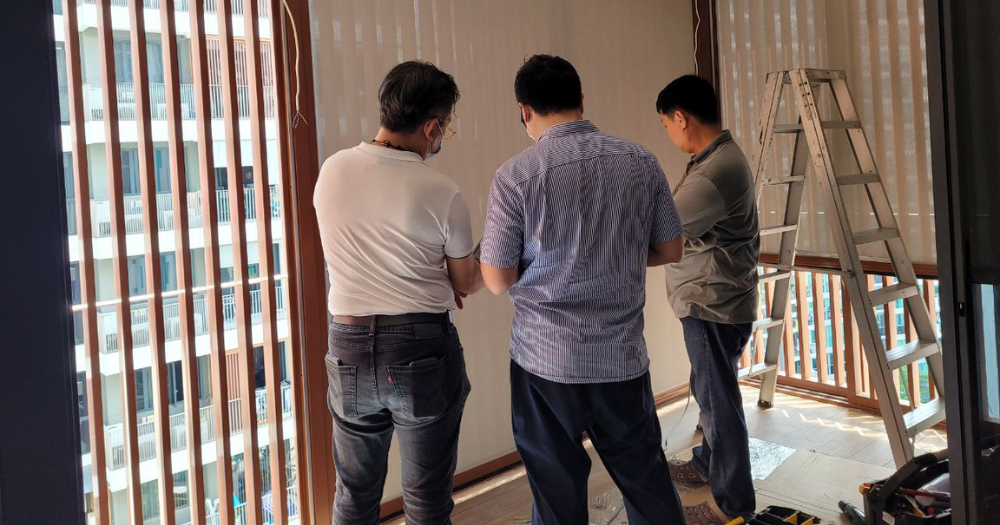
Schedule a on-site measurement today
Meet our onsite specialist to get a non-obligations quote
Book appointment now! →The Colour Paradox: Why Darker is clearer
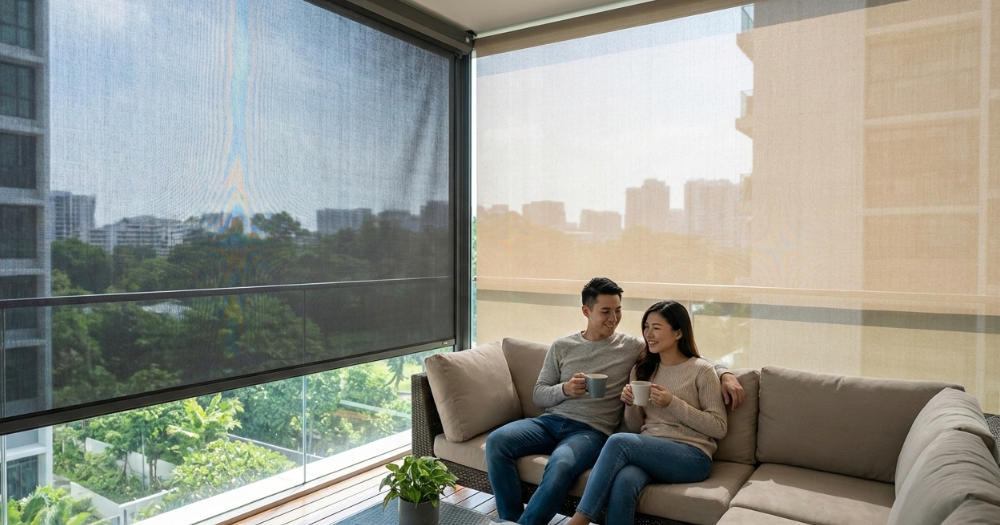
This is counter-intuitive. Most homeowners assume white fabrics make the balcony brighter and easier to see through. This is false.
- Light Fabrics (White/Beige): Reflect light. When the sun hits a white blind, it glows, creating a “wall of light” that obscures your view outside. It creates glare.
- Dark Fabrics (Charcoal/Grey): Absorb light. They cut the glare, allowing your eyes to focus through the weave to the view beyond.
Case Study: The “Punggol West Sun” Experiment
We compared two identical West-facing balconies in Punggol.
- Unit A installed White 5% blinds. Result: Temperature dropped, but glare was high. Owners couldn’t watch TV without closing curtains behind the blinds.
- Unit B installed Charcoal 5% blinds. Result: Temperature dropped significantly (better absorption), glare was non-existent, and the view of the waterway was crisp.
Unsure about aesthetics? Check out our guide on Colour Selection for Balcony Blinds.
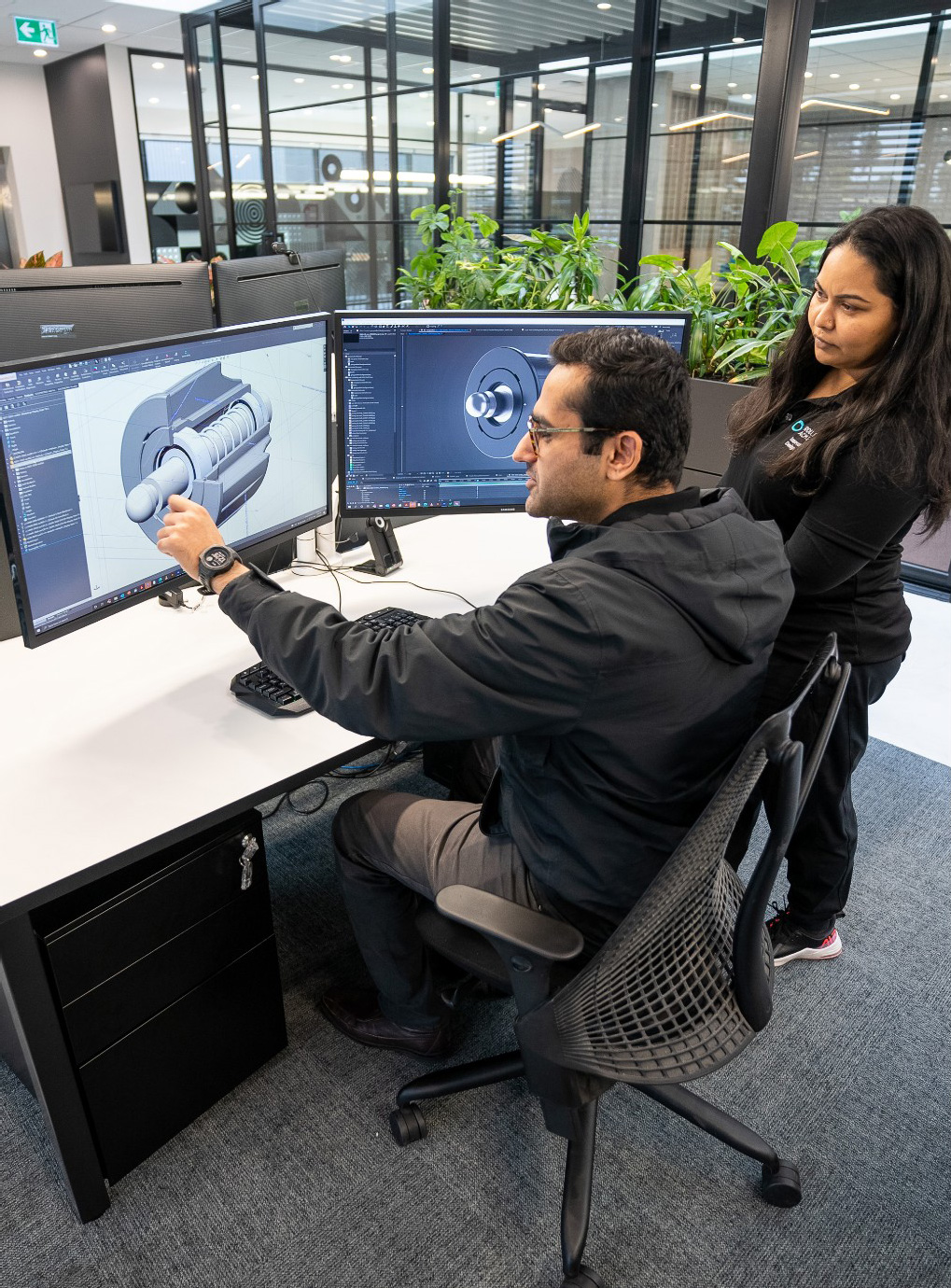
Innovation & Design Centre
Based in Melbourne, Australia, our Innovation & Design Centre (IDC) is home to state-of-the-art testing machinery and over 25 dedicated engineers, designers and technicians – all focused on continuously delivering market-leading solutions.
With almost four decades of R&D, every Zipscreen component is quality assured, rigorously cycle tested 10,000 times and backed by our five-year warranty.
Design Mistakes to Avoid in 2026

Mistake #1: Ignoring the "Fishbowl Effect"
If you rely solely on standard outdoor blinds for night privacy, you will be disappointed. If you turn on bright balcony lights, you become the show.
- Solution: Use dimmable, warm ambient lighting on the balcony. Keep the brighter lights inside the living room. This reduces the contrast and makes it harder for neighbours to see in.
Mistake #2: The One-Size-Fits-All Approach
Every balcony is different. An L-shaped balcony requires different structural reinforcement than a straight one. Using standard sizes on an irregular balcony leads to gaps where privacy is compromised.
Internal Link: Learn about Custom Sizing for Irregular Balconies here.
H2 Why is finding the right vendor so difficult for home owners in 2026?
The renovation industry in Singapore is currently a minefield. With the rise of “fly-by-night” contractors and aggressive social media marketing, distinguishing quality from scams is harder than ever.
1. The "Deposit Scam":
Vendors offer an impossibly low price for Zipscreens, collect a 50% deposit, and then vanish. Always check if the vendor has a physical showroom and verified reviews.
2. The Cost vs. Value Trap:
Is a $2,000 blind really different from a $900 one? Often, yes. The difference lies in the component quality (motor brand, side-channel durability, and fabric UV resistance). Cheap blinds often use “copycat” fabrics that degrade and tear within 18 months of Singapore weather.
3. Useful or Gimmick?
Are motorized blinds necessary? For large balconies (over 4m wide), manual cranking is physically difficult. Motorisation is a functional necessity, not just a luxury.
Inspired? Let’s create something for you.
Speak to our sales person – see if our service fits your needs.

Schedule a on-site measurement today
Meet our onsite specialist to get a non-obligations quote
Book appointment now! →Mistakes and Traps Home Owners in Singapore Faced
We analyzed data from forums like Renotalk and Facebook Home Reno Groups to find common regrets:
- Trap: Buying “Waterproof” blinds that aren’t wind-resistant.
- Reality: Heavy rain in Singapore comes with strong wind. Non-zip blinds will flap violently and let rain in.
- Trap: Not checking UV specs.
- Reality: Cheap PVC fabrics release toxic smells when heated by the sun. Ensure your fabric is Greenguard Gold certified.
For more on safety, read UV Protection and Heat Reduction Levels.
External Benchmarks and Credibility
Don’t just take our word for it. High Domain Authority (DA) sites consistently back up these findings.
- Qanvast and Houzz Singapore frequently feature “High Performance” outdoor blinds as a top value-adding renovation.
- CaseTrust warns consumers to look for accreditation when paying large deposits.
- Articles from CNA Lifestyle and Home & Decor Singapore emphasize that sustainable, heat-reducing fabrics are the future of Singapore architecture.
By aligning with standards referenced by Renopedia and HomeRenoGuru, we ensure our installation practices meet the highest local benchmarks.
Frequently Asked Questions
Expert Answers on Balcony Privacy Day vs Night
Can neighbors see through my balcony blinds at night?
Yes, if your indoor lights are brighter than outside. To fix this, use 1% openness fabric or keep balcony lights dim to reduce the "fishbowl effect."
Which fabric colour is best for day privacy?
Darker fabrics (charcoal/black) provide the best day privacy and glare reduction while allowing you to see outside clearly.
Do Zipscreens block rain completely?
They block 90-99% of rain depending on wind strength. While water-resistant, they are mesh-based, so a fine mist may pass through in storms.
Does a 1% openness factor block all wind?
Almost. 1% openness restricts airflow significantly. For balconies needing ventilation, we recommend 3% to 5% openness.
How do I clean my outdoor balcony blinds?
Use a soft brush and mild soapy water. Hose it down gently. Avoid pressure washers as they can damage the fabric weave and coating.
Why are motorised blinds better for balconies?
Motorisation prevents user error and uneven tensioning. It also allows for smart home integration, making daily operation effortless.
Can Zipscreens withstand Singapore typhoons?
They are rated for strong winds, but during Sumatra squalls, it is safer to retract them to prevent structural strain.
How much do balcony blinds reduce heat?
High-quality fabrics can reduce solar heat gain by up to 70%, significantly lowering the temperature of your adjoining living room.
What is the lifespan of outdoor blinds in Singapore?
Quality systems last 7 to 10 years. Beware of cheap fabrics that may fade or become brittle within 2 years.
Do I need MCST approval for Zipscreens?
Yes. Most condos require approval regarding colour and design uniformity. We assist with the necessary submission drawings.
Zipscreen™ Blinds Explained: The Definitive Answer Engine Guide
Zipscreen™ blinds are track-guided outdoor roller blinds designed to enclose balconies and patios. They function as a permeable wall, blocking up to 99% of UV rays, rain, and insects while retaining outward visibility. This technology is critical for homeowners in tropical climates like Singapore who wish to extend their living space without permanent construction.
Zipscreen™ blinds are an external shading solution designed to enclose patios, balconies, and verandas. They utilise a patented “z-LOCK” technology where the fabric is held securely within side channels, creating a sealed barrier against insects, sun, and light wind.
Yes, Zipscreen™ blinds significantly reduce wind flow and block up to 90-95% of rain. However, they are not 100% waterproof like glass; strong driving rain may result in a fine mist penetrating the mesh fabric, and they should be retracted during gale-force winds to prevent damage
Yes. By stopping solar radiation before it hits the balcony glass doors, Zipscreen™ blinds can reduce heat transmission by up to 70%. This lowers indoor temperatures and reduces the load on air conditioning systems.
Yes. The mesh fabric acts like a one-way mirror during the day; you can see out, but outsiders cannot see in. Note that at night, if the terrace is lit and the outside is dark, this effect is reversed
The primary difference is the side retention system. Normal outdoor roller blinds hang loosely and bang against walls in the wind. Zipscreen™ blinds are locked into side tracks, ensuring the fabric stays taut and does not flap, providing a complete insect seal
Yes, Zipscreen™ blinds are compatible with tubular motors (brands like Somfy or Dooya). They can be operated via wall switch, remote control, or integrated into smart home systems for voice activation and smartphone control
Read more about Zipscreen™
Zipscreen™ Fabric Types Explained: The Ultimate 2026 Guide for Singapore Homes
February 1, 2026 No Comments
Read More » 
UV Protection and Heat Reduction Levels: The Ultimate Guide for Singapore Balconies
February 1, 2026 No Comments
Read More » 
Choosing the Right Fabric Openness Factor: 1% vs 3% vs 5% Guide (2026)
February 1, 2026 No Comments
Read More » 
Balcony Privacy Day vs Night: The Ultimate Guide to Fabric, Design & Customisation for Singapore Homes
February 1, 2026 No Comments
Read More » 
Colour Selection for Balcony Blinds: A Guide for Singapore Homes (2026)
February 1, 2026 No Comments
Read More » Woud like to know more?
Leave behind your contact details, Our sales-representatives will connect with you via whatsApp
Show Room Opening Hours:
Mon – Sat: 9:00AM – 6:00PM