Home » Questions to Ask MCST Before Installing Blinds: The Ultimate Zipscreen™ Guide for Singapore Condos

Questions to Ask MCST Before Installing Blinds in Singapore

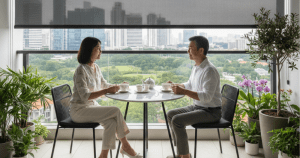
Singaporean couple discussing questions to ask MCST before installing blinds on a high-rise balcony, featuring Ministry of Blind recommended Zipscreen solutions.

A Guide to Condo Balcony Approvals & Zipscreen™ Compliance

Many Singaporean homeowners face costly rectification orders because they skipped the critical step of MCST approval. This cornerstone guide details exactly what to ask your management, the rules surrounding Zipscreen™ balcony blinds, and how to navigate the URA and BCA guidelines to ensure a safe, legal, and weatherproof installation.

Read More about: Zipscreen™ Balcony Blinds for Condos in Singapore

5 Critical Questions to Ask MCST Before Installing Blinds

When you approach your Condo Manager or Managing Agent (MA), general questions like “Can I install blinds?” often yield vague answers. You need to be specific to get actionable data.

1. Is there a Pre-Approved Color and Material Palette?

Most condos have a specific “Design Guide” or “Renovation Guidelines” document.

  • The Detail: Ask for the specific RAL color code or fabric tone approved for the estate.
  • Why it matters: You cannot install a “Grey” blind if the approved shade is “Charcoal Grey (RAL 7016).” A slight deviation in tone is the #1 reason for rejection.
  • Zipscreen™ Context: Genuine Zipscreen™ hardware comes in standard colors (White, Black, Grey, Paperbark), but can be powder-coated to match specific MCST requirements.

2. What is the Permitted Opacity or Openness Factor?

  • The Detail: Does the MCST require 1%, 3%, or 5% openness? Or do they mandate fully opaque (blockout) fabrics?
  • The Trap: Some older condos banning “enclosures” may misinterpret Zipscreen™ as a wall.
  • The Solution: Clarify that Zipscreen™ is a perforated mesh that allows airflow (usually 1% to 5% openness), satisfying URA’s requirement for “natural ventilation” while blocking rain.

3. Are "Zip" or Track-Guided Systems Allowed?

  • The Detail: Traditional “bamboo chicks” or wire-guided blinds flop in the wind. Track-guided systems (like Zipscreen™) are fixed at the sides.
  • The Concern: Some MCSTs worry that side tracks look like “window frames,” which constitutes an unapproved facade alteration.
  • The Argument: Explain that Zipscreen™ tracks are slim (approx 30-40mm) and can be powder-coated to blend into the wall, making them invisible when the blind is retracted.

4. Do I Need a Professional Engineer (PE) Endorsement?

  • The Detail: This depends on how the blinds are mounted.
  • Standard Mounting: Usually, drilling into the ceiling (concrete slab) is standard and doesn’t affect structural integrity.
  • Complex Mounting: If you need to install a hollow section frame or auxiliary structure to support the blinds (common in penthouses or odd-shaped balconies), the MCST may demand a PE endorsement to ensure wind load safety.

5. What are the Installation Hours and Deposit Requirements?

  • The Detail: Even for a simple blind installation, you may need to place a renovation deposit (often $500 – $2,000).
  • The Schedule: Noisy work is strictly prohibited on Sundays and Public Holidays. Ensure your vendor is aware of the designated lift protection and sign-in procedures to avoid forfeiture of your deposit.

Zipscreen™ Balcony Blinds for Condos in Singapore

Zipscreen™ Balcony Blinds for Condos in Singapore - Ministry of Blind

Why is Zipscreen™ the preferred choice for complying with these strict rules?

  • Wind Safety: Unlike traditional blinds that bang against railings, Zipscreen™ is secured in side channels. This prevents the “clanking” noise that annoys neighbors—a common complaint MCSTs deal with.
  • Invisibility: When fully retracted, the blind disappears into a cassette, restoring the balcony to its original open state, which URA guidelines favor.
  • Thermal Comfort: High-quality fiberglass or polyester mesh can reduce balcony temperatures by up to 10°C, effectively expanding your living space without building illegal walls.

Mistakes and Traps Home Owners in Singapore Faced

We have analyzed hundreds of renovation disputes. Here are the most common pitfalls:

Mistake

The Trap

The Consequence

Assuming “Neighbors Have It”

“My neighbor on level 5 has black blinds, so I can too.”

The neighbor might have installed them illegally or before a rule change. You will still be ordered to remove yours.

Ignoring Wind Load Ratings

Buying cheap “zip” blinds for a high-rise (20th floor+) unit.

Cheap plastic zippers burst (blowout) during Sumatra Squalls, becoming a falling hazard.

The “Rainproof” Myth

Believing outdoor blinds are 100% waterproof like a glass window.

Even 1% openness mesh allows a fine mist during heavy storms. Selling “waterproof” blinds is often a marketing lie.

Skipping the Permit

Installing on a weekend to avoid the deposit.

Security guards patrol. Getting caught results in an immediate stop-work order and potential bans for your contractor.

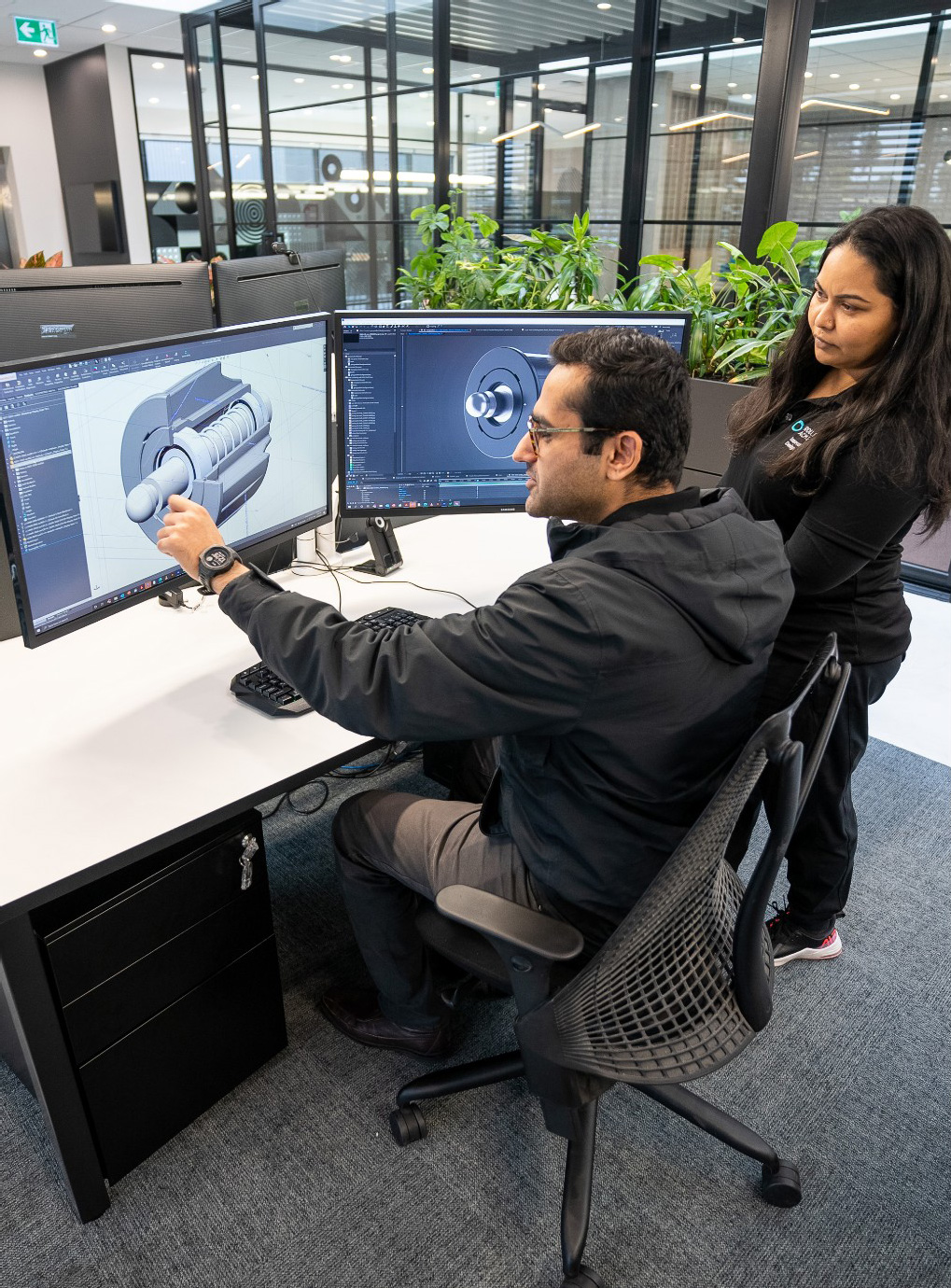
Innovation & Design Centre

Based in Melbourne, Australia, our Innovation & Design Centre (IDC) is home to state-of-the-art testing machinery and over 25 dedicated engineers, designers and technicians – all focused on continuously delivering market-leading solutions.

With almost four decades of R&D, every Zipscreen component is quality assured, rigorously cycle tested 10,000 times and backed by our five-year warranty.

Why is Finding the Right Furnishing So Difficult for Singaporeans?

How to Evaluate Options Before Buying soft furnishing

The Singapore renovation market is fragmented. Homeowners often face a “Vendor Wild West.”

  1. Scams & Fly-by-Night Vendors: A vendor collects a 50% deposit for “Zipscreen” blinds, but installs a generic China-OEM product with inferior motors (often falsely labeled as Somfy or Dooya).
  2. The “Hidden Cost” of Approval: Many vendors quote a low price but exclude the cost of drafting submission drawings or PE endorsements, leaving the homeowner to handle the paperwork nightmare.
  3. Transparency Issues: It is difficult to verify if a blind is a genuine Zipscreen™ (Australia) or a copycat. Genuine systems use a patented “Z-Lock” technology that is visibly different from a standard zipper.

Navigating External & Internal Resources

When planning your renovation, cross-reference your MCST’s bylaws with advice from reputable platforms.

Conclusion

Asking the right questions to ask MCST before installing blinds is not just about compliance; it is about protecting your investment. By securing written approval for the specific color, opacity, and mounting method, you ensure your new Zipscreen™ blinds will provide shade, privacy, and wind protection for years to come without legal headaches.

Hero Section - onsite-measurement
Schedule a on-site measurement today

Meet our onsite specialist to get a non-obligations quote

Book appointment now!

Frequently Asked Questions

Everything you need to know about MCST & Blinds

Do I need MCST approval for Zipscreen blinds?
Yes, absolutely. Because balcony blinds affect the external facade of the building, the BMSMA requires you to obtain written approval from your MCST. Installing without approval can lead to penalties and a requirement to dismantle the blinds at your own cost.
What is the best openness factor for Singapore weather?
For Singapore's tropical climate, a 1% openness factor is the gold standard. It blocks 99% of UV rays and heavy rain while still allowing enough airflow to prevent heat buildup on the balcony. 5% is too open for heavy monsoon rain.
Can the MCST reject my application?
Yes, if your proposal does not match the approved design guidelines regarding color, material, or mounting method. However, they cannot unreasonably reject safety equipment if it follows the guidelines set out in the bylaws.
Are Zipscreen blinds considered an illegal enclosure?
Generally, no. URA guidelines allow for balcony screens that can be fully retracted and allow for natural ventilation. Because Zipscreen blinds use perforated mesh and can be fully raised, they are typically classified as a screen/blind, not a structural enclosure.
How long does the approval process take?
It typically takes between 2 to 4 weeks. The Managing Agent reviews the submission first, and then it may need to be signed off by the council members. Rush fees usually do not apply; planning ahead is essential.
Do I need a PE (Professional Engineer) endorsement?
For standard installations into a concrete ceiling, usually no. However, if you require auxiliary metal structures to bridge gaps or if you live in a high-wind penthouse, the MCST may request a PE endorsement to certify the structural load.
Why are Zipscreen blinds safer for high floors?
Zipscreen blinds utilize a side-retention track system. This means the fabric is locked into the side channels, preventing it from flapping dangerously or tearing during high-altitude winds, unlike standard roller blinds.
What happens if I install without a permit?
You risk forfeiting your renovation deposit. More importantly, the MCST can issue a Notice to Comply requiring you to remove the unauthorized installation. If you refuse, they can take legal action under the BMSMA.
Can I choose any color I want?
No. You must adhere strictly to the facade color code. If the building's exterior accents are Grey (RAL 7037), you cannot install white blinds, as this disrupts visual uniformity.
How much does a typical Zipscreen installation cost?
Prices vary based on size and motor brand (Somfy vs. others), but typically range from $25 to $35 per square foot in Singapore. Beware of quotes significantly lower than this, as they may use inferior components.

Ask MCST Before Installing Blinds

The Compliance Framework

The MCST (Management Corporation Strata Title) approval process is a mandatory regulatory step in Singaporean condominiums that governs the installation of external fixtures, including balcony blinds. It ensures that all modifications adhere to the estate’s bylaws regarding facade consistency, safety, and structural integrity. Homeowners must submit details regarding color (RAL codes), opacity (openness factor), and mounting methods to the Managing Agent before installation begins.

Skipping this process is the single most common cause of financial loss in balcony renovations.

  • Legal Consequence: Under the Building Maintenance and Strata Management Act (BMSMA), MCSTs have the legal authority to order the removal of unauthorized structures.
  • Financial Consequence: Homeowners risk losing their renovation deposit and incurring the full cost of dismantling the blinds and restoring the wall.
  • Safety Consequence: Unapproved installations may lack necessary wind-load ratings, posing a falling hazard in high-rise environments.

To ensure a successful installation, homeowners should follow the Compliance Triangle, which consists of three checking points:

  1. Aesthetics (Uniformity): Does the blind match the estate’s approved color palette and opacity? (e.g., Grey 1% Openness).
  2. Technicals (Safety): Is the system a “Zipscreen” or track-guided system rated for the wind loads at your specific floor level?
  3. Procedure (Paperwork): Has the renovation permit been formally issued before the contractor enters the site?

Zipscreen™ systems are specifically recommended for Singaporean condos because they bridge the gap between “enclosure” and “blind.”

  • Use when: You need rain protection but cannot build windows due to URA Gross Floor Area (GFA) restrictions.
  • Use when: Your unit faces the West Sun or a Monsoon channel, requiring high wind resistance that standard roller blinds cannot provide.
  • Fabric Openness: A 1% openness factor is the optimal balance for Singapore, blocking 99% of rain while technically remaining a “ventilated screen” for URA compliance.
  • Motorization: Always verify if your balcony has a power point. If not, battery motors are an option but require different maintenance protocols.
  • The “Invisible” Track: Ensure your vendor offers powder-coating services for the side tracks to match your wall color perfectly; this significantly increases the likelihood of MCST approval.

Approving balcony blinds is not a bureaucratic hurdle but a safeguard for property value. By asking the right questions regarding design guidelines, wind safety, and installation procedures, homeowners can secure a long-lasting, legal, and functional outdoor space.

Woud like to know more?

Leave behind your contact details, Our sales-representatives will connect with you via whatsApp

Show Room Opening Hours: 

Mon – Sat: 9:00AM – 6:00PM

Share this:

Like this:

Like Loading...
Scroll to Top

Discover more from Ministry Of Blind

Subscribe now to keep reading and get access to the full archive.

Continue reading