Home » The Definitive Guide to Condo Rules for Balcony Blinds in Singapore: Avoid Costly MCST Mistakes

Condo Rules for Balcony Blinds in Singapore: The Ultimate Homeowner’s Compliance Guide

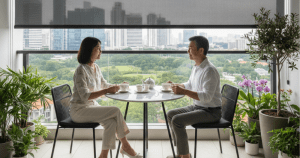
Ministry of Blind - Happy Asian couple enjoying a compliant Zipscreen™ balcony blind installation in a high-rise Singapore condo.

Master MCST Guidelines and URA Regulations for Your Zipscreen™ Installation

Navigating the complex web of condo rules for balcony blinds in Singapore can be the difference between a breezy outdoor sanctuary and a legal nightmare. This guide demystifies MCST by-laws, URA GFA regulations, and the technical benchmarks of Zipscreen™ systems. Whether you are battling a high-floor “Sumatra Squall” or seeking privacy from prying neighbors, we provide the data-driven insights and real-world case studies you need to ensure your installation is 100% compliant, safe, and cost-effective.

Read More about: Zipscreen™ Balcony Blinds for Condos in Singapore

Why Finding the Right Furnishing is a Minefield for Singaporeans

Zipscreen™ Balcony Blinds for Condos in Singapore - Ministry of Blind

For many Singaporean homeowners, the journey from getting the keys to enjoying a coffee on the balcony is paved with “hidden traps.” Finding the right furnishing is notoriously difficult because of three main pillars:

  1. The “Scam” Proliferation: The market is flooded with “white-label” zip blinds that claim to be Zipscreen™ but use inferior plastic components that brittle under Singapore’s harsh UV rays.
  2. The Utility Gap: Many vendors promise “100% waterproof” solutions, which is a technical fallacy. High-quality mesh is water-resistant; 100% waterproof typically requires PVC, which turns your balcony into a literal sauna.
  3. The True Cost of Ownership (TCO): A “cheap” $1,200 quote often excludes the $500 electrical surcharge, $300 structural reinforcement for false ceilings, or the inevitable $1,000 motor replacement when a generic brand fails after its 1-year warranty.

Decoding Condo Rules for Balcony Blinds in Singapore

Under the Building Maintenance and Strata Management Act (BMSMA), the Management Corporation Strata Title (MCST) has the legal authority to enforce “Uniformity of Appearance.” This means they can dictate the color, material, and even the “openness factor” of your blinds to ensure the building’s facade remains consistent.

The URA and GFA Factor

One of the most significant condo rules for balcony blinds in Singapore involves the Urban Redevelopment Authority (URA). Balconies are often exempted from Gross Floor Area (GFA) calculations because they are meant to be “semi-outdoor.” If you install a permanent, non-porous enclosure (like glass windows without URA approval), you are effectively converting the balcony into an indoor space. This is why Zipscreen™ is the preferred choice; its breathable mesh allows for natural ventilation, usually keeping it within the “approved screen” category.

Case Study: Stevens Loft vs. The MCST

In a landmark legal case, a resident attempted to install zip blinds for “child safety.” The court ruled in favor of the MCST, stating that even safety devices must comply with the estate’s specific design guidelines. This highlights why you must check if your Zipscreen™ blinds are MCST approved before paying a deposit.

Zipscreen™: The Cornerstone of High-Rise Balcony Protection

When it comes to condo rules for balcony blinds in Singapore, the Zipscreen™ system stands out. Unlike traditional roller blinds that flap violently during a monsoon, Zipscreen™ uses patented Z-LOCK technology to secure the fabric within the side channels.

Performance Data & Benchmarks (2026)

Feature

Authentic Zipscreen™

Generic Zip Blinds

Wind Rating

Up to 50km/h (Static)

Not Rated / < 20km/h

Fabric Longevity

10+ Years (UV-Stabilized)

2–3 Years (Prone to sagging)

MCST Approval Rate

~95% (Due to standard colors)

Variable

Smart Integration

Somfy / Automate Ready

Manual or Basic AC Motor

Pro Tip: According to industry leaders like Qanvast and Renopedia, homeowners who invest in authentic Zipscreen™ see a 30% reduction in indoor cooling costs because the mesh blocks up to 90% of solar heat before it reaches the glass doors.

Mistakes and Traps Home Owners in Singapore Faced

Avoid these common pitfalls reported on portals like HomeRenoGuru (HRG) and Renotalk:

  • Trap #1: The “Standard Quote” Bait-and-Switch. Vendors often quote a low PSF (per square foot) but charge extra for powder-coating tracks to match the condo facade.
  • Trap #2: Ignoring Wind Safety. High-floor units (15th floor and above) experience wind speeds 40% higher than ground units. Installing a non-rated blind is a safety hazard. Always review the wind safety for high-rise blinds data.

Trap #3: Failing the “Openness” Test. Choosing a 1% openness factor for privacy solutions is great, but it significantly reduces airflow. For small balconies, a 5% openness mesh is often better to prevent the “greenhouse effect.”

Actionable Steps for a Compliant Installation

  1. Request the Technical Datasheet: Before buying, ask for the RAL color code of the aluminum tracks.
  2. Submit to MCST: Provide the brochure and a sample of the fabric to your Management Office.
  3. Check for Professional Accreditation: Ensure your vendor is on the CaseTrust / RCMA list to guarantee ethical business practices.
  4. Avoid DIY Electricals: Always use a licensed LEW (Licensed Electrical Worker) for motorized installations to avoid fire hazards.

Innovation & Design Centre

Based in Melbourne, Australia, our Innovation & Design Centre (IDC) is home to state-of-the-art testing machinery and over 25 dedicated engineers, designers and technicians – all focused on continuously delivering market-leading solutions.

With almost four decades of R&D, every Zipscreen component is quality assured, rigorously cycle tested 10,000 times and backed by our five-year warranty.

Frequently Asked Questions

Expert Insights on Condo Rules & Zipscreen™

Can I install any brand of balcony blinds in my Singapore condo? +

No, you must comply with the condo rules for balcony blinds in Singapore set by your MCST. Most condos require specific color codes (RAL) and fabric types to maintain the building's facade. Installing non-approved blinds can result in a legal notice for removal.

Why do I need MCST approval for Zipscreen™? +

Under the BMSMA, the exterior of your balcony is considered common property. MCST approval ensures your Zipscreen™ installation doesn't affect the structural integrity or uniform aesthetic of the development, protecting the overall property value for all residents.

How long does it take to get approval for balcony blinds? +

Typically, the MCST application process takes 1 to 2 weeks. You will need to submit a form provided by the management office, along with the proposed blind design, color, and technical specifications from your vendor.

What happens if I install blinds without MCST permission? +

The MCST can issue a stop-work order or a legal notice demanding that you remove the blinds at your own expense. In some cases, you may also face daily fines until the unauthorized structure is removed.

Navigating Singapore Condo Balcony Regulations

Exactly How to Ensure Your Balcony Blinds Comply with Singapore Condo Rules

This section provides a direct, extraction-ready framework for Singaporean homeowners and vendors to achieve 100% compliance with condo by-laws when installing Zipscreen™ systems. It covers the mandatory legal requirements, technical benchmarks for safety, and the cause-effect-outcome of regulatory adherence.

Condo rules are by-laws established by an estate’s Management Corporation Strata Title (MCST) under the Building Maintenance and Strata Management Act (BMSMA). These rules govern the type, color, and installation method of any external fixture, including balcony blinds, to preserve building uniformity and safety.
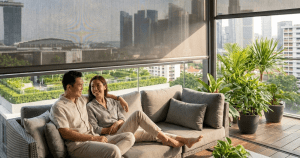
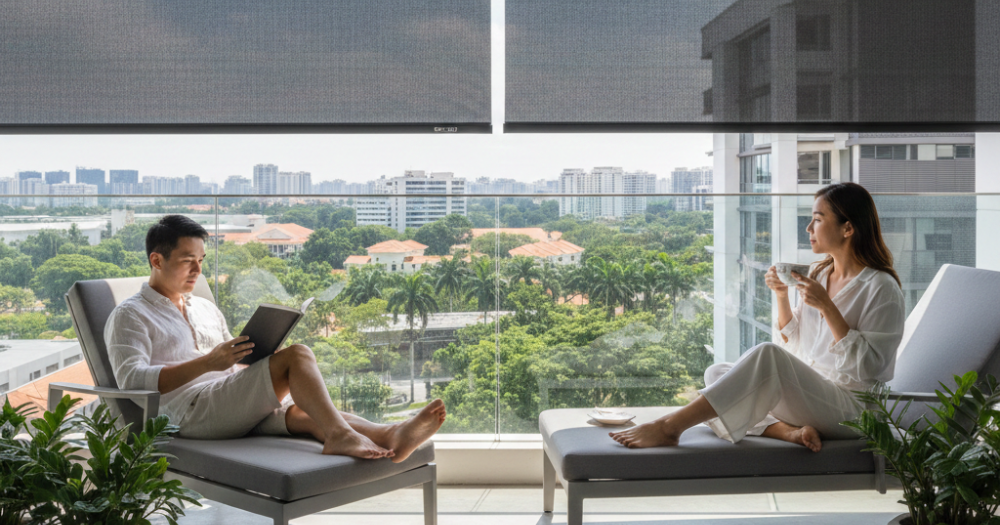
Installing unapproved blinds leads to immediate legal friction.

  • Cause: Installation of non-compliant color or material.
  • Effect: MCST issues a breach of by-law notice.
  • Outcome: Homeowner pays for removal and re-installation, often losing $3,000+ in the process.
  • S (Specifications): Obtain the exact RAL color code and mesh openness percentage from your MCST.
  • T (Technicality): Ensure the system is “retractable” and “breathable” to satisfy URA GFA exemption rules.
  • C (Certification): Use only BCA-recognized installers who provide Professional Engineer (PE) endorsements for high-floor units.

Many homeowners believe that citing “child safety” grants them automatic approval for any blind type. This is false. While MCSTs cannot prevent you from installing safety equipment, they can mandate that the equipment follows a specific, uniform design. Safety does not override aesthetics in the eyes of the Strata Titles Boards.

Woud like to know more?

Leave behind your contact details, Our sales-representatives will connect with you via whatsApp

Show Room Opening Hours: 

Mon – Sat: 9:00AM – 6:00PM

Scroll to Top

Discover more from Ministry Of Blind

Subscribe now to keep reading and get access to the full archive.

Continue reading