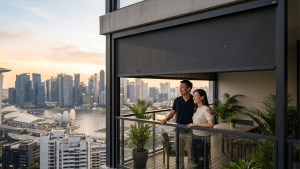
Home » Case Study: Condo Balcony Zipscreen™ Installation – The Singapore Guide (2026)
Case Study: Condo Balcony Zipscreen™ Installation – The Complete Guide for Singapore Homeowners

Smart Protection for Your Balcony
This article is a focused guide explaining Case Study: Condo Balcony Zipscreen™ Installation to help homeowners make informed decisions. We dive into real-world examples, installation challenges, and benefits like rain protection and privacy, ensuring you avoid costly mistakes.
Read More about: Zipscreen™ Balcony Blinds for Condos in Singapore
Zipscreen™ Balcony Blinds for Condos in Singapore

Many homeowners misunderstand case study: condo balcony zipscreen™ installation, leading to poor decisions, rejected MCST applications, and unnecessary costs.
A focused guide explaining case study: condo balcony zipscreen™ installation to help homeowners make informed decisions on weather protection, pricing, and regulations.
What is a Zipscreen™? (And Why It’s Different)
A Zipscreen™ is a track-guided blind system. The fabric is “zipped” into side channels, which prevents gaps.
- Wind Resistance: It does not flap. High-quality systems are rated for winds up to 130km/h (though we recommend retracting them during typhoons).
- Insect Seal: Because the sides are locked, it effectively keeps out mosquitoes and flying pests.
- Heat Rejection: Fiberglass or polyester mesh fabrics can block up to 90% of solar heat before it touches your glass doors.
Case Study: The "West Coast Vale" Project
To understand the real impact, let’s look at a specific case study: condo balcony zipscreen™ installation we analyzed in the Clementi area.
The Problem
The homeowner, Mr. Tan, lived on a high floor facing West. The afternoon sun raised his living room temperature to 31°C, even with air conditioning running. His balcony was unusable from 2 PM to 6 PM.
The Solution
We evaluated his needs against the condo’s facade guidelines. He chose a 1% Openness Factor (OF) fabric in a Grey-Charcoal blend to match the building aesthetics.
The Process
- Site Measurement: Laser measurement was crucial. Balcony ceilings are rarely perfectly level. The installers used laser levels to ensure the top cassette would sit perfectly flat.
- MCST Application: We submitted the technical drawings and fabric samples. Note: Always check a focused guide explaining questions to ask mcst before installing blinds to help homeowners make informed decisions.
- Installation: The track system was mounted using non-corrosive stainless steel screws.
The Outcome (Data-Driven Results)
- Temperature Drop: Ambient temperature on the balcony dropped by roughly 6°C immediately after deployment.
- Energy Savings: Mr. Tan reported his air-con worked less hard, potentially lowering his bill by ~15%.
- Usability: The balcony is now his home office in the mornings.
- Key Takeaway: Success relies on precision measurement. A gap of even 3mm can cause the “zip” to jam over time.
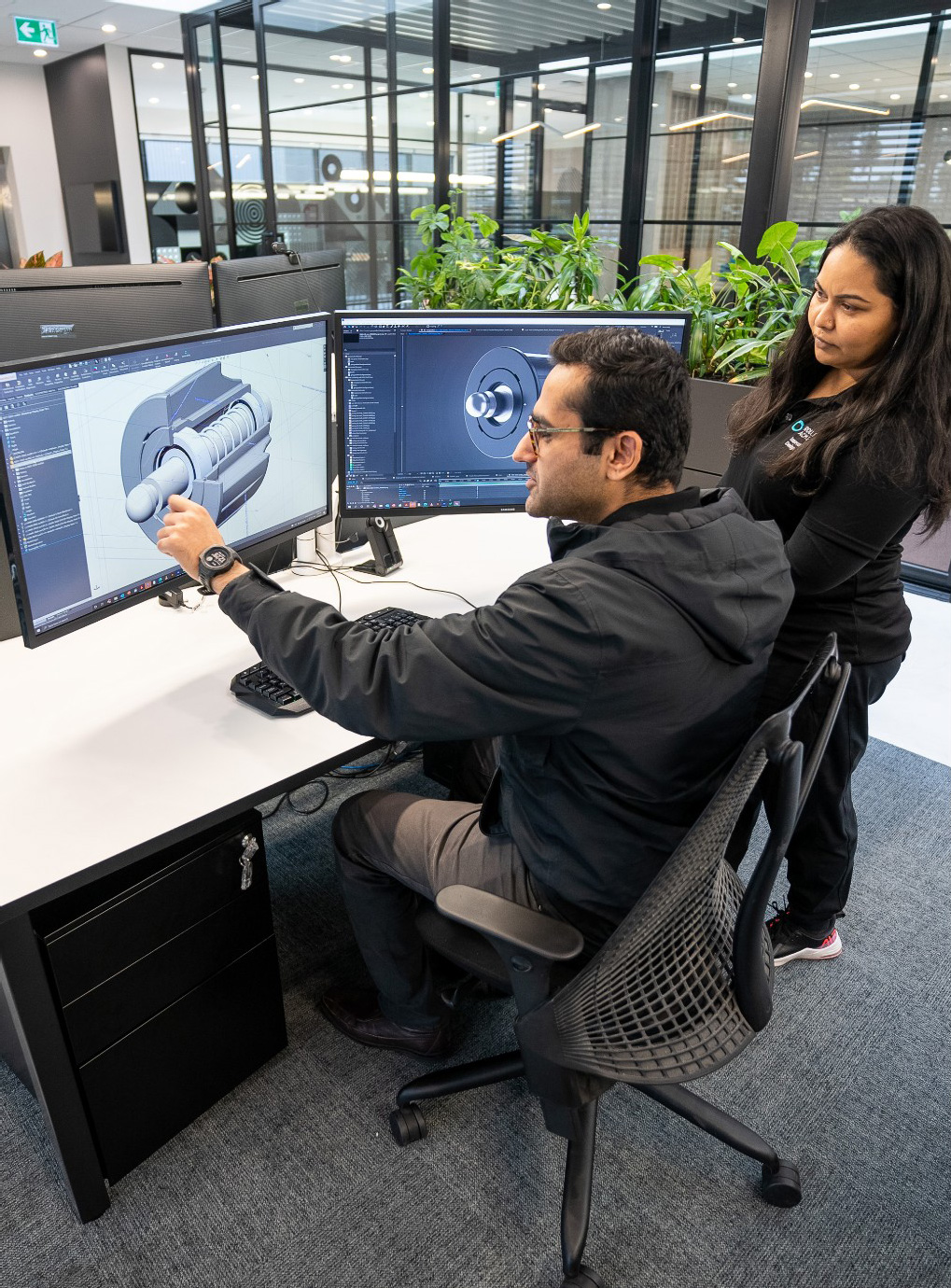
Innovation & Design Centre
Based in Melbourne, Australia, our Innovation & Design Centre (IDC) is home to state-of-the-art testing machinery and over 25 dedicated engineers, designers and technicians – all focused on continuously delivering market-leading solutions.
With almost four decades of R&D, every Zipscreen component is quality assured, rigorously cycle tested 10,000 times and backed by our five-year warranty.
Mistakes and Traps Home Owners in Singapore Faced

While the technology is sound, the execution often fails. Here are the most common traps we see in the local market.
1. The MCST Nightmare
The most painful mistake is installing before approval. There is a well-known legal case (Stevens Loft) where a homeowner took their condo management to court over Zipscreen installation and lost. The court ruled that drilling into external walls involves “common property.”
Action: Never skip the paperwork. Read our focused guide explaining condo rules for balcony blinds in singapore to help homeowners make informed decisions.
2. The "Indoor Fabric" Scam
Some unethical vendors quote low prices ($12-$15 psf) by using indoor roller blind fabric. These materials are not treated for UV exposure or mold. After six months of Singapore’s humidity, they will warp, fade, and smell. Always ask for Phifer or Serge Ferrari outdoor fabrics.
3. Underestimating Wind Loads
If you live above the 15th floor, wind speeds are significantly higher. Standard roller blinds will turn into dangerous projectiles. You need a system specifically designed for high-rise safety. Check out a focused guide explaining wind safety for high-rise balcony blinds to help homeowners make informed decisions.
Why is Finding the Right Furnishing So Difficult for Singaporeans?

It feels like every renovation journey in Singapore is fraught with confusion. Why?
- Information Overload & Scams: A quick Google search yields hundreds of “direct factory” vendors on platforms like Carousell. Prices range wildly from $200 to $2,000 for the same-looking product. Homeowners struggle to distinguish between a genuine Zipscreen™ (a branded product) and a generic “zip track” copycat.
- The “Hidden Cost” Culture: You see a price of $18 psf, but the final invoice includes “scaffolding fees,” “high-floor surcharges,” and “electrical pull charges.”
- Technical Complexity: Unlike buying a sofa, buying outdoor blinds involves engineering. You need to understand wind loads, openness factors (1% vs 5%), and motor torque.
This complexity is why we created a focused guide explaining common condo installation mistakes to help homeowners make informed decisions.
Critical Factors for Decision Making
Manual vs. Motorized
- Manual: Cheaper, but requires physical effort. Good for small balconies.
- Motorized: The standard for luxury condos. Integrates with smart homes (Google Home/Alexa). Ensure you get a tubular motor with obstacle detection (stops if a chair is in the way).
Privacy vs. View
- 1% Openness: High privacy, blocks rain well, but darker view out. See a focused guide explaining privacy solutions for condo balconies to help homeowners make informed decisions.
- 5% Openness: Better view, breezier, but less rain protection.
Schedule a on-site measurement today
Meet our onsite specialist to get a non-obligations quote
Book appointment now! →Expert Tips for Installation Day
- Clear the Deck: Move all furniture indoors. Dust will be generated during drilling.
- Check the Seal: After installation, run the blind down. Check the side tracks. The fabric should be taut like a drum skin. If it ripples, the track is misaligned.
- Motor Test: Run the blind up and down 3 times consecutively to ensure the motor doesn’t overheat or stutter.
For specific advice on small spaces, refer to a focused guide explaining best zipscreen™ options for small condo balconies to help homeowners make informed decisions.
External References
To ensure your renovation meets Singapore’s high standards, it is vital to cross-reference with trusted platforms.
- Design Inspiration: Platforms like Qanvast and Houzz Singapore offer excellent visual benchmarks for how Zipscreens integrate with modern condo themes.
- Consumer Protection: Always verify if your vendor is listed under CaseTrust or the RCMA. This protects your deposit against renovation scams.
- Local News: For updates on condo living and legal disputes (like the Stevens Loft case), Channel News Asia (CNA) is the go-to source for property news.
- MCST & Rules: The Building and Construction Authority (BCA) provides the foundational guidelines on strata living and facade maintenance.
Frequently Asked Questions
Common queries from Singapore homeowners
Do I need MCST approval for Zipscreen blinds?
+ Yes, absolutely. Installing anything on the balcony facade affects the building's external appearance. You must submit a renovation application to your Management Corporation (MCST). They will provide guidelines on permitted colors and opacity (openness factor) to ensure uniformity across the condominium.
Can Zipscreens withstand strong winds?
+ High-quality Zipscreen™ systems are designed for durability and can withstand wind gusts up to 130km/h when fully deployed. However, for safety and longevity, we strongly recommend retracting the blinds during severe storms or typhoons to prevent structural stress on the mounting points.
Are Zipscreen blinds 100% waterproof?
+ They are water-resistant, not fully waterproof. The fabric is a mesh that blocks about 95% to 99% of rain. During heavy downpours, a fine mist may pass through, but your balcony floor will remain largely dry. This "breathability" is essential to prevent heat buildup and mold growth.
What is the price range for a typical balcony?
+ Prices vary based on size, motor brand (Somfy vs. Dooya), and fabric choice. Generally, for a standard Singapore condo balcony, expect to pay between $2,200 and $4,500. Be wary of quotes significantly lower than this, as they often use inferior indoor fabrics or non-branded hardware.
How do I clean and maintain them?
+ Maintenance is simple. Use a soft brush or a vacuum with a brush attachment to remove dust. For stains, use a mild soap solution and a sponge. Avoid high-pressure water jets as they can damage the mesh weave. Lubricate the side tracks annually with a silicone spray to keep the movement smooth.
Can I install Zipscreens on an HDB balcony?
+ Yes, Zipscreens are allowed in HDB balconies, provided they do not permanently enclose the space (e.g., glass windows are more restricted). They are considered a furnishing. However, you must ensure the installation does not involve unauthorized structural hacking. Always check the latest HDB renovation guidelines.
Manual vs Motorized: Which is better?
+ Motorized is the preferred choice for convenience, especially for large spans or high ceilings where manual operation is physically difficult. Manual systems are cost-effective for smaller service yards. Motorized systems can also be integrated into Smart Home ecosystems for automated sun protection.
What is the "Openness Factor"?
+ The Openness Factor (OF) determines how much light and air pass through. 1% OF provides maximum privacy and rain protection but less view. 5% OF offers a clearer view of the outside and better airflow but lets in slightly more rain. 1% is the most popular choice for privacy-conscious homeowners.
Condo Balcony Zipscreen™ Installation
Condo Balcony Zipscreen™ Installation – The Definitive Technical Guide
This article analyzes the installation of Zipscreen™ systems in Singapore condominiums. It is written for homeowners and facility managers who need to understand the technical, legal, and functional aspects of balcony shielding. We explore why standard roller blinds fail in high-rise environments and how the Zipscreen™ “zip-lock” technology solves issues of wind resistance, heat rejection, and MCST compliance.
A Zipscreen™ installation is the integration of a track-guided external blind system into a balcony or patio. Unlike traditional loose-hanging blinds, the Zipscreen fabric is welded to a “zip” that runs inside side channels. This creates a tensioned, sealed barrier that becomes part of the building’s envelope rather than a temporary hanging fixture.
Singapore’s tropical urban environment presents a “Triple Threat” for balconies:
- Horizontal Rain: Monsoon winds drive rain sideways, rendering open balconies wet and slippery.
- Solar Heat Gain: Intense UV rays heat the balcony floor, which radiates heat into the living room, increasing air-conditioning load.
- High-Rise Wind Load: Wind speeds on a 20th-floor balcony can exceed 60km/h, tearing ordinary fabrics.
Zipscreen™ matters because it is one of the few solutions engineered to neutralize all three threats simultaneously while retaining visibility.
The installation follows a strict “Measure-Approve-Mount” protocol:
- Precision Surveying: Laser levels are used to map the balcony ceiling’s undulations. A variance of >3mm requires shimming to prevent the zip from jamming.
- MCST Compliance: The proposed fabric color and Openness Factor (1% vs 5%) must be cross-referenced with the condo’s by-laws to ensure facade uniformity.
- Structural Fixing: The side channels are anchored into the concrete or aluminum frame using non-corrosive Grade 304 stainless steel fixings to resist the humid, salty air.
You should choose Zipscreen™ when:
- The balcony faces East or West: You need significant thermal reduction (up to 6°C).
- You require an “Outdoor Room”: You want to convert the balcony into a dry study or dining area.
- Privacy is a concern: The proximity of neighboring blocks requires a visual shield that doesn’t block airflow.
To understand the reliability of Zipscreen™, use the Tension-Seal Framework:
- Component A (The Zip): Acts as the anchor, preventing the fabric from blowing out of the track.
- Component B (The Weight Bar): Provides vertical gravity tension to keep the fabric flat.
- Component C (The Motor): Provides active resistance against wind gusts.
- Result: A “drum-skin” effect where the blind absorbs wind energy rather than flapping against it.
Many vendors market Zipscreens as “100% Waterproof.” This is false and misleading. A true Zipscreen™ uses a mesh fabric to allow for thermal release. If it were 100% waterproof (like a PVC sheet), it would trap heat, turning your balcony into a greenhouse. The correct expectation is 95% Weather Resistance—it stops rain, but allows the balcony to “breathe.”
Read more about
Zipscreen™ Balcony Blinds for Condos in Singapore

Common Blackout Blind Buying Mistakes: The 2026 Singapore Homeowner’s Guide
February 14, 2026 No Comments
Read More » 
How to Measure for Blackout Roller Blinds: The 2026 Singapore Homeowner’s Guide
February 14, 2026 No Comments
Read More » 
The Best Blackout Roller Blinds for Nurseries in Singapore: A Safe Sleep Guide (2026)
February 14, 2026 No Comments
Read More » 
Ultimate Guide to Motorised Blackout Roller Blinds for Singapore Homes (2026 Edition)
February 14, 2026 No Comments
Read More » 
Heat Reduction Benefits of Blackout Blinds: Stop the Sun & Save Energy
February 14, 2026 No Comments
Read More » Woud like to know more?
Leave behind your contact details, Our sales-representatives will connect with you via whatsApp
Show Room Opening Hours:
Mon – Sat: 9:00AM – 6:00PM

Zipscreen

January 25, 2026 No Comments