
Home » Is Your High-Rise Balcony Safe? The Ultimate Guide to Wind Safety for Zipscreen™ Blinds in Singapore
Zipscreen™ Balcony Blinds for Condos in Singapore: The Definitive Wind Safety Guide

High-Floor Safety: Can Your Blinds Withstand Singapore’s Tropical Storms?
Living in a high-rise condo offers breathtaking views, but it also exposes your balcony to intense wind pressures. Many Singaporean homeowners mistakenly prioritize aesthetics over structural integrity, leading to costly damages or safety hazards. This guide breaks down the engineering behind Zipscreen™ balcony blinds, wind load benchmarks, and the essential safety features required for high-rise living to help you make an informed, secure investment.
Read More about: Zipscreen™ Balcony Blinds for Condos in Singapore
Zipscreen™ Balcony Blinds for Condos in Singapore

The Hidden Danger of High-Rise Winds
Many homeowners misunderstand wind safety for high-rise balcony blinds, leading to poor decisions and unnecessary costs. You might think a heavy fabric or a cheap outdoor roller blind is enough to block the rain, but at 30 stories high, wind behaves differently. When wind hits a building, it creates pressure zones—specifically “suction” on the leeward side—that can rip poorly installed blinds right out of their side tracks.
Why Finding the Right Furnishing is So Difficult for Singaporeans
Finding the right balcony solution in Singapore feels like navigating a minefield.
- The Price Trap: You’ll find vendors quoting $1,500 and others quoting $4,500 for the “same” look. The difference usually lies in the U-channel thickness and the motor’s torque resistance.
- The “Fly-by-Night” Scam: Many smaller contractors source unbranded components that fail after the first monsoon season, only for the company to vanish when you try to claim a warranty.
- The MCST Headache: Navigating condo rules for balcony blinds in Singapore is exhausting. If you install a non-compliant blind, you risk a legal notice demanding removal at your own cost.
The Engineering of Wind Safety: Data and Benchmarks
To ensure your safety, we look at the Beaufort Scale and wind pressure (Pascals). In Singapore, sudden “Sumatran Squalls” can produce wind gusts of up to 60–80 km/h.
Floor Level | Typical Wind Speed (km/h) | Pressure (Pa) | Recommended Blind System |
Low Rise (1-5) | 15 – 30 | 250 | Standard Roller / Zip |
Mid Rise (6-15) | 30 – 50 | 600 | Reinforced Zipscreen™ |
High Rise (16+) | 50 – 90+ | 1200+ | Heavy-Duty Zipscreen™ Extreme |
A genuine Zipscreen™ system uses a patented “zip” technology that locks the fabric into the side guide. According to wind tunnel testing data, these systems can withstand winds of up to static pressures of 2500Pa, provided the installation follows the manufacturer’s strict torque specs.
Case Study: The 40th-Floor Failure at Tanjong Pagar
In 2024, a homeowner at a luxury high-rise in Tanjong Pagar installed “budget” zip blinds. During a heavy downpour, the wind gust created a vacuum effect. Because the side channels were only 1.2mm thick (standard is 2.0mm+ for high-rise), the tracks buckled, and the fabric became a “sail,” nearly shattering the balcony’s glass railing.
The homeowner saved $800 on the initial purchase but spent $3,200 on repairs and a replacement system. This highlights why understanding wind safety for high-rise balcony blinds is a financial necessity, not just a luxury.
Actionable Safety Checklist for Homeowners
- Check the Side Channels: High-rise units require deeper channels (at least 50mm-75mm) to prevent the fabric from popping out.
- Motor Sensors: Ensure your system has an anemometer (wind sensor). If wind speeds exceed a safe limit, the blind should automatically retract.
- Fabric Tension: Only use high-tenacity polyester or fiberglass yarns. Look for brands like Serge Ferrari or Phifer, often recommended on Houzz Singapore and Qanvast.
- MCST Compliance: Before committing, check if your choice is MCST approved.
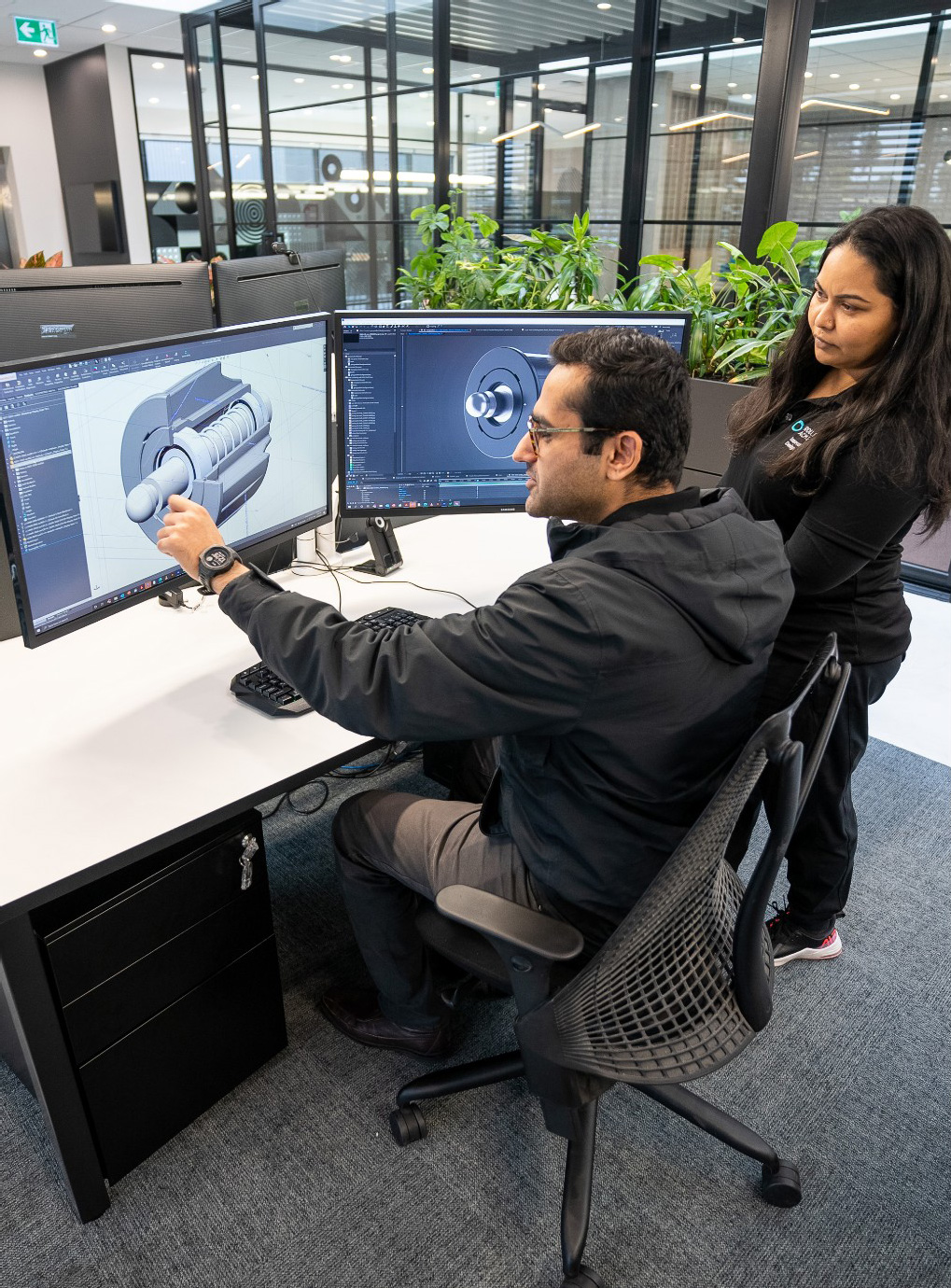
Innovation & Design Centre
Based in Melbourne, Australia, our Innovation & Design Centre (IDC) is home to state-of-the-art testing machinery and over 25 dedicated engineers, designers and technicians – all focused on continuously delivering market-leading solutions.
With almost four decades of R&D, every Zipscreen component is quality assured, rigorously cycle tested 10,000 times and backed by our five-year warranty.
Traps and Common Mistakes Home Owners in Singapore Face

- Assuming All “Zip” Blinds are Equal: Many vendors sell “Zip-style” blinds. If it isn’t the trademarked Zipscreen™, the internal components may be plastic rather than marine-grade aluminum.
- Neglecting the Bottom Bar: In high-wind areas, a light bottom bar will rattle. You need a weighted, heavy-duty bottom rail to keep the fabric taut.
- Ignoring the Facade: Failing to match balcony blinds to condo facade rules can result in fines.
- DIY Calculations: Homeowners often measure the opening but forget to account for the mounting substrate. Fixing a blind into a false ceiling without structural reinforcement is a recipe for disaster.
High-Authority References for Smart Decisions
Industry experts at HomeRenoGuru (HRG) and Renopedia emphasize that while Zipscreen™ blinds provide excellent privacy solutions, their primary role in Singapore is weather protection. For the latest consumer advice, always check the CaseTrust list of accredited renovators to avoid fly-by-night vendors.
Expert Advice on Wind Safety
Everything you need to know about high-rise protection
How wind-resistant are Zipscreen™ blinds?
+ Zipscreen™ systems are engineered to withstand extreme conditions. When properly installed with heavy-duty side channels, they can handle wind speeds up to 90km/h. For high-rise condos, we utilize reinforced hardware to ensure the fabric remains locked under pressure, preventing the "blow-out" common in cheaper alternatives.
Can I leave my blinds down during a storm?
+ While Zipscreen™ is highly durable, we recommend retracting them during severe squalls. No permanent fixture is 100% windproof. Automated systems with wind sensors are the best choice for high-floor residents, as they automatically retract when wind speeds exceed safety thresholds to protect your investment.
Why are Zipscreen™ blinds better for high floors?
+ Standard roller blinds flap violently in the wind. Zipscreen™ uses a patented zip-lock technology that secures the fabric edges inside the side tracks. This creates a taut surface that evenly distributes wind load, making it the only viable choice for Singapore’s high-rise residential towers.
What happens if the fabric pops out of the track?
+ If fabric pops out, it's usually due to incorrect tensioning or extreme wind. In genuine Zipscreen™ systems, this is rare. If it happens, do not force the motor. Retract the blind manually if possible and call a professional to re-insert the zip into the inner guide to avoid damaging the fabric.
Read more about Zipscreen™

Are Zipscreen™ Blinds MCST Approved? The Ultimate 2026 Singapore Condo Guide
January 25, 2026 No Comments
Read More » The Definitive Guide to Condo Rules for Balcony Blinds in Singapore: Avoid Costly MCST Mistakes
January 25, 2026 No Comments
Read More » 
Is Your High-Rise Balcony Safe? The Ultimate Guide to Wind Safety for Zipscreen™ Blinds in Singapore
January 25, 2026 No Comments
Read More » 
7 Best Zipscreen™ Options for Small Condo Balconies: 2026 Singapore Guide to Maximizing Space
January 25, 2026 No Comments
Read More » 
Ultimate Guide to Privacy Solutions for Condo Balconies: Why Zipscreen™ is the Top Choice in Singapore (2026)
January 25, 2026 No Comments
Read More » The Ultimate Wind Safety Protocol for High-Rise Blinds
How to Ensure Wind Safety for High-Rise Balcony Blinds in Singapore
This article explains the critical engineering requirements for balcony blinds installed above the 10th floor in high-density urban environments. It is for Singaporean homeowners and MCST managers who need to differentiate between decorative screens and life-safety equipment. Understanding wind load is the difference between a functional balcony and a structural failure.
Wind load refers to the force applied by air movements against a surface. In high-rise buildings, this force increases exponentially with height due to the “Venturi Effect,” where wind accelerates as it passes between buildings. For balcony blinds, this means the system must resist both positive pressure (pushing in) and negative pressure (suction pulling out).
Safety is the primary driver. A failed blind system can result in falling debris, shattered glass railings, or damage to building facades. In Singapore, homeowners are legally liable for any fixtures that fall from their units. High-quality Zipscreen™ systems act as a protective barrier, reducing the risk of water ingress and wind damage to your interior furniture.
The Zipscreen™ Framework consists of three core components:
- The Zip-Lock Edge: A side-bead welded to the fabric that stays locked in a track.
- The Weighted Bottom Bar: Provides vertical tension to prevent the fabric from billowing.
- The Structural U-Channel: A heavy-duty aluminum track that anchors the system to the building’s RC (Reinforced Concrete) beams.
To evaluate a blind’s safety, use the PTR Model:
- Pressure: Determine the wind pressure at your floor height (in Pascals).
- Torque: Ensure the motor has “Obstacle Detection” to stop if wind pressure prevents movement.
- Resilience: The fabric’s ability to return to its original shape after being stretched by a gust.
A common misconception is that zip blinds can stay down 24/7. Contrarian Insight: No outdoor blind system is designed to be a “wall.” During a Category 1 squall or Typhoon-level gusts, the smartest move is to retract the blinds. The blind’s job is to protect you during typical tropical rain, not to withstand a natural disaster while fully deployed.
- High-rise winds create suction that can pull standard blinds out of their tracks.
- Zipscreen™ uses a patented side-bead technology to lock fabric securely.
- Singapore high-floor installations require minimum 2.0mm aluminum thickness.
- Automated wind sensors are highly recommended for any unit above level 15.
- Homeowners are liable for damages caused by improperly installed or low-grade blinds.
Woud like to know more?
Leave behind your contact details, Our sales-representatives will connect with you via whatsApp
Show Room Opening Hours:
Mon – Sat: 9:00AM – 6:00PM
Zipscreen

Is Your High-Rise Balcony Safe? The Ultimate Guide to Wind Safety for Zipscreen™ Blinds in Singapore
Read More » January 25, 2026 No Comments