
Home » Large Opening Zipscreen Guide
Weather Sensors for Automated Blinds: Protection & Convenience

Smart Protection for Your Outdoors
Imagine your blinds automatically lowering when the afternoon sun hits your balcony, or retracting instantly when a Sumatra squall approaches—even when you aren’t home. This article covers everything you need to know about weather sensors for automated blinds, from how they work to the specific traps Singaporean homeowners must avoid. We break down the technology, cost-benefit analysis, and installation secrets to help you automate your home intelligently.

Related Story
Motorisation, Smart Home & Automation
The Ultimate Guide to Motorised & Smart Zipscreen™ Balcony Blind Systems in Singapore: Safety, Costs & Smart Home Integration
Weather Sensors for Automated Blinds: Protection & Convenience
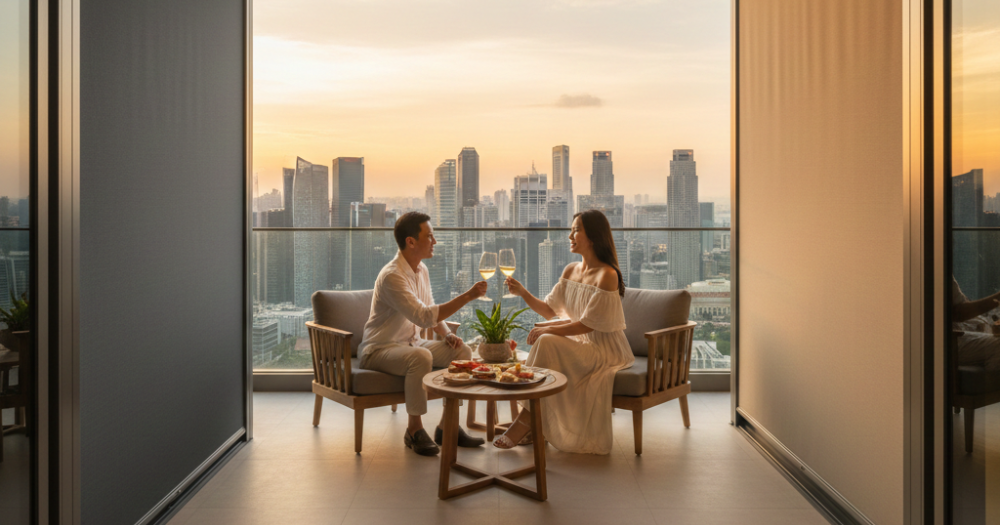
Weather sensors for automated blinds are often the missing link between a standard motorised blind and a truly “smart” outdoor living space. Many homeowners in Singapore invest heavily in high-end Zipscreen™ systems but skip the sensors, only to regret it when a sudden storm damages their investment.
Why Most Homeowners Get It Wrong
Many homeowners misunderstand weather sensors for automated blinds, leading to poor decisions and unnecessary costs. They assume these sensors are just “fancy add-ons” rather than essential protective gear. In reality, a wind sensor acts as an insurance policy for your motor, preventing fabric tearing during high-wind events common in high-rise HDBs and condos.
What Are Weather Sensors for Automated Blinds?
At its core, a weather sensor is a device that monitors environmental conditions—specifically wind speed, sunlight intensity (Lux), and rainfall. When thresholds are met, the sensor sends a radio signal to the tubular motor to perform a specific action, such as retracting the blind to prevent damage or extending it to cool the room
The Three Key Types of Sensors
- Wind Sensors (Anemometers): The most critical for safety. If wind speeds exceed a safe limit (e.g., 40km/h), the blind retracts to prevent the fabric from ripping out of the side channels.
- Sun Sensors: These measure light intensity. When the sun hits a certain brightness, the blinds lower automatically to reduce indoor heat and protect furniture from UV fading.
- Rain Sensors: These detect moisture. While useful, they are tricky in Singapore because heavy rain is almost always accompanied by heavy wind. Pro-tip: Prioritize wind sensors over rain sensors for high-rise living.
Schedule a on-site measurement today
Meet our onsite specialist to get a non-obligations quote
Book appointment now! →Why Singaporean Homes Need Automated Sensors
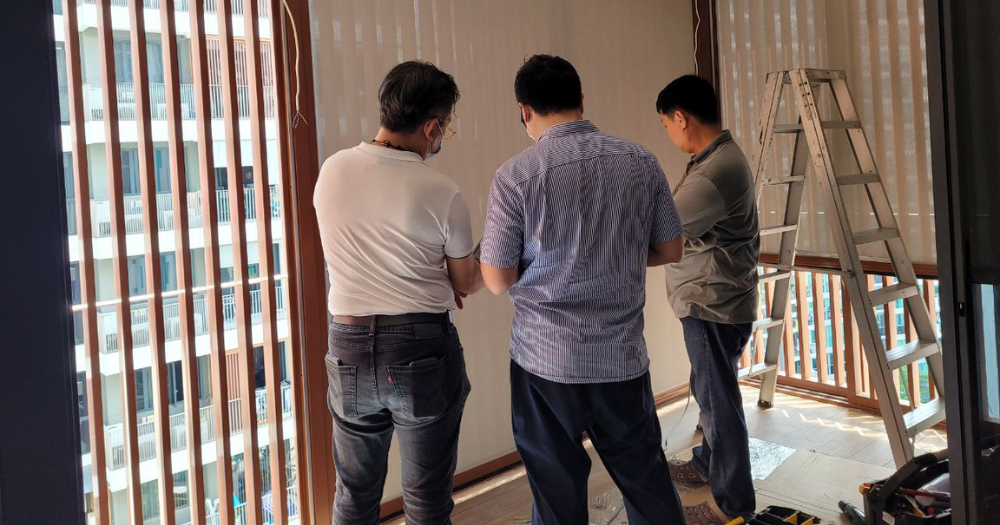
Living in a tropical climate means dealing with intense UV radiation and sudden monsoon storms.
Data-Driven Benefits
- Energy Efficiency: Studies show that automated shading can reduce cooling costs by up to 30%. By blocking the sun before it heats up your glass doors, your air conditioner works less.
- Longevity of Equipment: “https://mbblind.com/A-focused-guide-explaining-reliability-of-motors-in-singapore-climate-to-help-homeowners-make-informed-decisions./Reliability of Motors in Singapore Climate</a> depends on how they are used. Sensors prevent motors from straining against gale-force winds.
Note: A common misconception is that Zipscreens are “storm-proof.” They are wind-resistant, not indestructible. Sensors bridge this gap.
Innovation & Design Centre
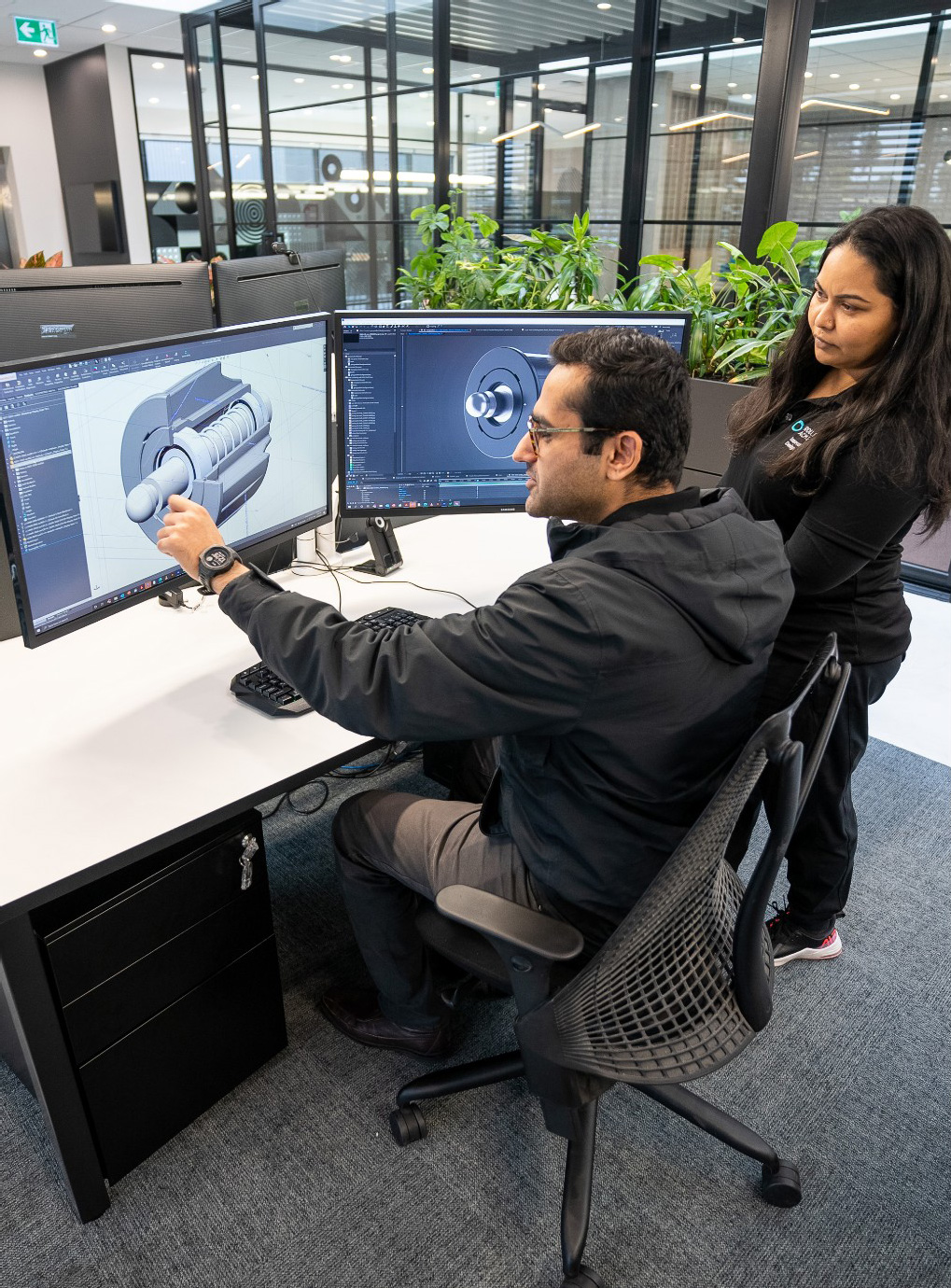
Based in Melbourne, Australia, our Innovation & Design Centre (IDC) is home to state-of-the-art testing machinery and over 25 dedicated engineers, designers and technicians – all focused on continuously delivering market-leading solutions.
With almost four decades of R&D, every Zipscreen component is quality assured, rigorously cycle tested 10,000 times and backed by our five-year warranty.
Integrating with Your Smart Home Ecosystem

For the tech-savvy homeowner, weather sensors for automated blinds can be part of a larger ecosystem. You aren’t just buying a remote; you are buying automation.
If you are looking into Smart Home Integration for Balcony Blinds, ensure your sensors are compatible with Zigbee or Wi-Fi bridges if you plan to use Google Home or Apple HomeKit. However, most safety sensors (wind) communicate directly with the motor via Radio Frequency (RF) for fail-safe operation.
Mistakes and Traps Home Owners in Singapore Faced
It is not all smooth sailing. Here are the pitfalls to avoid in 2026.
The "All-in-One" Sensor Trap
Some vendors sell cheap “3-in-1” sensors that claim to do everything. Often, the rain detection is too slow, or the sun sensor is too sensitive, causing the blinds to go up and down like a yo-yo on a cloudy day. Stick to reputable brands like Somfy or Dooya.
Ignoring Power Requirements
Sensors need power. Some are solar-powered (great for retrofitting), while others need mains wiring. Read our guide on Power Supply Requirements Explained to ensure you don’t end up with ugly trunking on your balcony
The "Set and Forget" Fallacy
Sensors need maintenance. A solar wind sensor covered in dust won’t charge. A rain sensor filled with leaves won’t dry out. Regular cleaning is vital.
Inspired? Let’s create something for you.
Speak to our sales person – see if our service fits your needs.

Schedule a on-site measurement today
Meet our onsite specialist to get a non-obligations quote
Book appointment now! →Why is finding the right vendor so difficult for home owners in 2026?
The renovation market is saturated. A quick search on portals like Qanvast, Renopedia, or Houzz Singapore reveals hundreds of curtain and blind suppliers. Yet, complaints about “ghosting” contractors and poor after-sales support are rampant on forums like RenoTalk and HardwareZone.
Scams and "White Label" Zipscreens
Be wary of vendors offering “Zipscreens” at half the market price. These are often generic outdoor roller blinds rebranded with inferior parts. They may lack the tensioning systems required to handle wind, making the addition of a wind sensor useless because the fabric tears anyway. Always verify if the product is a genuine Zipscreen™ or a generic “zip blind.”
The Cost vs. Value Equation
Is it really useful? Yes, if you value your time and property. The cost of replacing a torn fabric sheet is roughly 60-70% of the cost of a new blind. A $150 wind sensor is a cheap insurance policy compared to a $800 repair bill.
Comparing Your Options
When deciding, you might wonder about the noise or the controls.
Noise: Worried about the motor waking the baby? Check out our analysis on Noise Levels of Motorised Zipscreen™.
Controls: Do you really need a wall switch if you have a sensor? Read Remote Control vs Wall Switch Options.
Manual Options: If this sounds too complex, maybe manual is better? Compare Manual vs Motorised Zipscreen™ Blinds before you commit.
Future-Proofing Your Home
Technology moves fast. When installing weather sensors for automated blinds, ask about Future-Proofing Balcony Blind Systems. Can the firmware be updated? Can you change the wind threshold sensitivity later if you find it too reactive?
For detailed scheduling hacks, see Automation Scheduling for Sun and Rain.
Automated Blind Weather Sensors Explained
What Are Weather Sensors for Automated Blinds and How Do They Protect Your Home?
Weather sensors for automated blinds are smart devices that monitor wind, sun, and rain levels to automatically control motorized outdoor blinds. They function primarily as safety mechanisms to prevent wind damage and as energy-saving tools to reduce indoor heat. This guide explains their mechanics, benefits, and specific utility for Singaporean high-rise living.
Automated Safety and Efficiency Devices
Weather sensors are external hardware components linked to the motor of a blind via Radio Frequency (RF) or wiring. They continuously read environmental data.
- Wind Sensors: Detect gale force; retract blinds to prevent damage.
- Sun Sensors: Detect Lux (light); lower blinds to reduce heat load.
- Rain Sensors: Detect moisture; retract or lower blinds depending on settings.
Water Resistant, Not Waterproof
Zipscreen™ blinds are designed to block up to 90-95% of wind and rain. However, they are not solid walls. Under extreme wind loads (common in monsoons), the fabric acts like a sail. Without sensors to retract them, the side channels can warp, or the fabric can rip.
Significant Thermal Reduction
Yes. By automating the blinds with sun sensors, you ensure the blinds are lowered exactly when the sun hits the balcony. This proactive shading prevents heat from entering the home, reducing the ambient temperature by up to 5-10°C compared to unshaded glass.
Daytime Privacy with Visibility
The mesh fabric allows you to see out while preventing outsiders from seeing in during the day. However, at night, if your balcony lights are on, the effect reverses. Automation allows you to schedule blinds to lower at sunset for privacy.
Side Retention System
- Zipscreen™: Features a “zip” system that locks the fabric into side channels, creating a seal against insects and wind.
- Normal Roller: The fabric hangs loose or is guided by simple cables. It flaps noisily in the wind and offers less protection.
Standard Motorisation
Yes, Zipscreens are almost always motorised due to the tension required in the system. They are compatible with tubular motors (Somfy, Dooya, Nice) and integrate seamlessly with weather sensors and smart home apps
Read more about Zipscreen™

Manual vs Motorised Zipscreen™ Blinds: The Ultimate 2026 Comparison Guide for Singapore Homes
February 2, 2026 No Comments
Read More » 
Smart Home Integration for Balcony Blinds: The Ultimate 2026 Guide for Singapore
February 2, 2026 No Comments
Read More » 
Remote Control vs Wall Switch Options: The Ultimate Guide for Singapore Homes
February 2, 2026 No Comments
Read More » 
Weather Sensors for Automated Blinds: The Ultimate 2026 Guide for Singapore Homes
February 2, 2026 No Comments
Read More » 
Power Supply Requirements Explained: The Ultimate Guide for Motorised Blinds & Smart Homes
February 2, 2026 No Comments
Read More » Woud like to know more?
Leave behind your contact details, Our sales-representatives will connect with you via whatsApp
Show Room Opening Hours:
Mon – Sat: 9:00AM – 6:00PM