
Home » Large Opening Zipscreen Guide
Smart Home Integration for Balcony Blinds: A Complete Guide for Singapore Homeowners
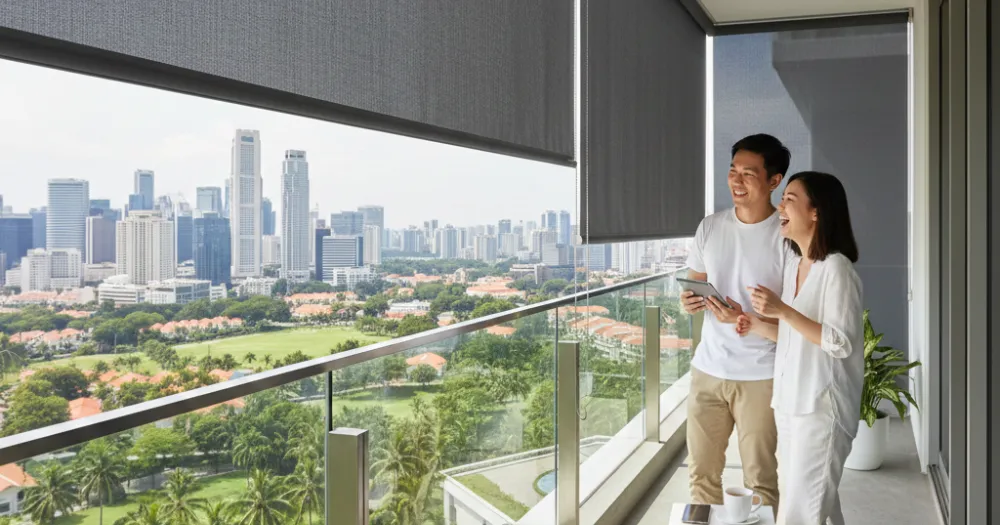
Automate Your Balcony Comfort with Ease
This article is a focused guide explaining smart home integration for balcony blinds to help homeowners make informed decisions. We cover the essentials of automating outdoor shades, from selecting the right motors to integrating with ecosystems like Google Home and Apple HomeKit. Stop guessing and start enjoying a truly connected home.

Related Story
Motorisation, Smart Home & Automation
The Ultimate Guide to Motorised & Smart Zipscreen™ Balcony Blind Systems in Singapore: Safety, Costs & Smart Home Integration
Smart Home Integration for Balcony Blinds: A Complete Guide for Singapore Homeowners
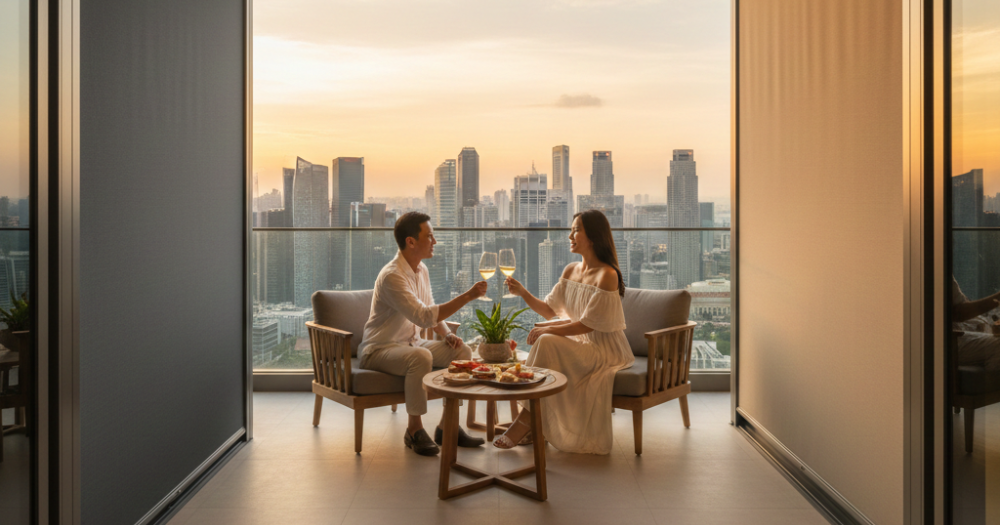
Smart home integration for balcony blinds is rapidly transforming how we live in Singapore. Imagine waking up to blinds that gently rise with the sun or receiving an alert that your balcony is secured against a sudden tropical storm—all without lifting a finger.
Many homeowners misunderstand smart home integration for balcony blinds, leading to poor decisions and unnecessary costs. The assumption that “smart” simply means a remote control is a costly mistake. True integration involves seamless communication between your blinds, your Wi-Fi network, and other devices to create a responsive living environment. This guide dives deep into the technology, the benefits, and the potential pitfalls, ensuring your investment enhances your lifestyle rather than complicating it.
Automate Your Balcony Comfort with Ease
Living in a tropical climate means battling intense heat and unpredictable rain. Automated blinds are no longer a luxury; they are a functional necessity for expanding your living space. By integrating your outdoor blinds into a smart ecosystem, you gain precise control over heat, glare, and privacy.
The Core of Smart Blind Technology
At the heart of any automated system is the motor. Unlike standard motorized options that rely solely on a handheld remote, smart motors are equipped with communication protocols that allow them to “talk” to a central hub or directly to your smartphone.
Key components usually include:
- Tubular Motors: The engine hidden inside the roller tube.
- Smart Hubs/Bridges: The translator that connects radio frequency (RF) motors to your Wi-Fi.
- Sensors: Devices that detect wind, sun, or rain to trigger automatic movements.
For a deeper dive into the engines powering these systems, read our guide on Reliability of Motors in Singapore Climate.
Connectivity: Wi-Fi, Zigbee, and RF Explained
Understanding how your blinds connect is crucial.
- Radio Frequency (RF): Reliable for local control (remotes) but requires a bridge for app control.
- Wi-Fi: Connects directly to your router. Great for simple setups but can crowd your network if you have many devices.
- Zigbee/Matter: A mesh network protocol that is highly stable and uses less power. This is the future standard for smart homes.
If you are debating between simple control and full automation, check out Remote Control vs Wall Switch Options.
Real-World Case Study: The Tan Family's HDB Upgrade
Scenario: The Tan family in Punggol faced a common issue: the afternoon sun turned their balcony into an oven. They installed Zipscreen™ blinds but often forgot to lower them before leaving for work.
Solution: They upgraded to smart home integration for balcony blinds using a Somfy Connexoon hub linked to Google Home.
- Action: They set a “Work Routine.” At 8:00 AM, the blinds automatically lower to 50%.
- Result: Their living room temperature dropped by an average of 4°C during the day, reducing the load on their air conditioning.
Data Insight: According to energy efficiency studies by the Building and Construction Authority (BCA), reducing solar heat gain through windows can lower cooling energy consumption by up to 20-30%.
Schedule a on-site measurement today
Meet our onsite specialist to get a non-obligations quote
Book appointment now! →Why Is Finding the Right Vendor So Difficult for Homeowners in 2026?
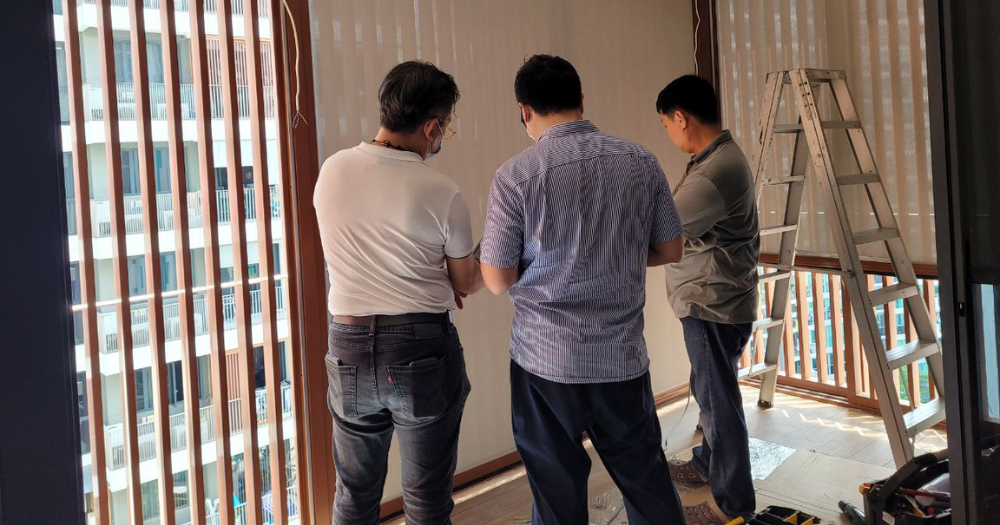
The smart home market is flooded, yet finding a trustworthy vendor remains a challenge
The "Smart" Scam
Some vendors label basic motorized blinds as “smart” simply because they have a remote. If it cannot connect to an app or integrate with voice assistants like Alexa or Siri, it is not truly smart. Always ask: “Does this require a separate hub to connect to my phone?”
The Cost of Quality vs. Cheap Imitations
A high-quality Zipscreen system with smart integration is an investment. Cheap alternatives often use generic motors with poor software support. The app might crash, or the connection might drop frequently.
Trust Indicators and Authority Links
When selecting a vendor, look for accreditation. Platforms like CaseTrust and RCMA provide lists of accredited renovation businesses. Furthermore, reading unbiased reviews on portals like Houzz Singapore or Home & Decor Singapore can provide insight into a vendor’s after-sales support—crucial for troubleshooting tech issues. You can also cross-reference vendor reliability on Renopedia and Qanvast.
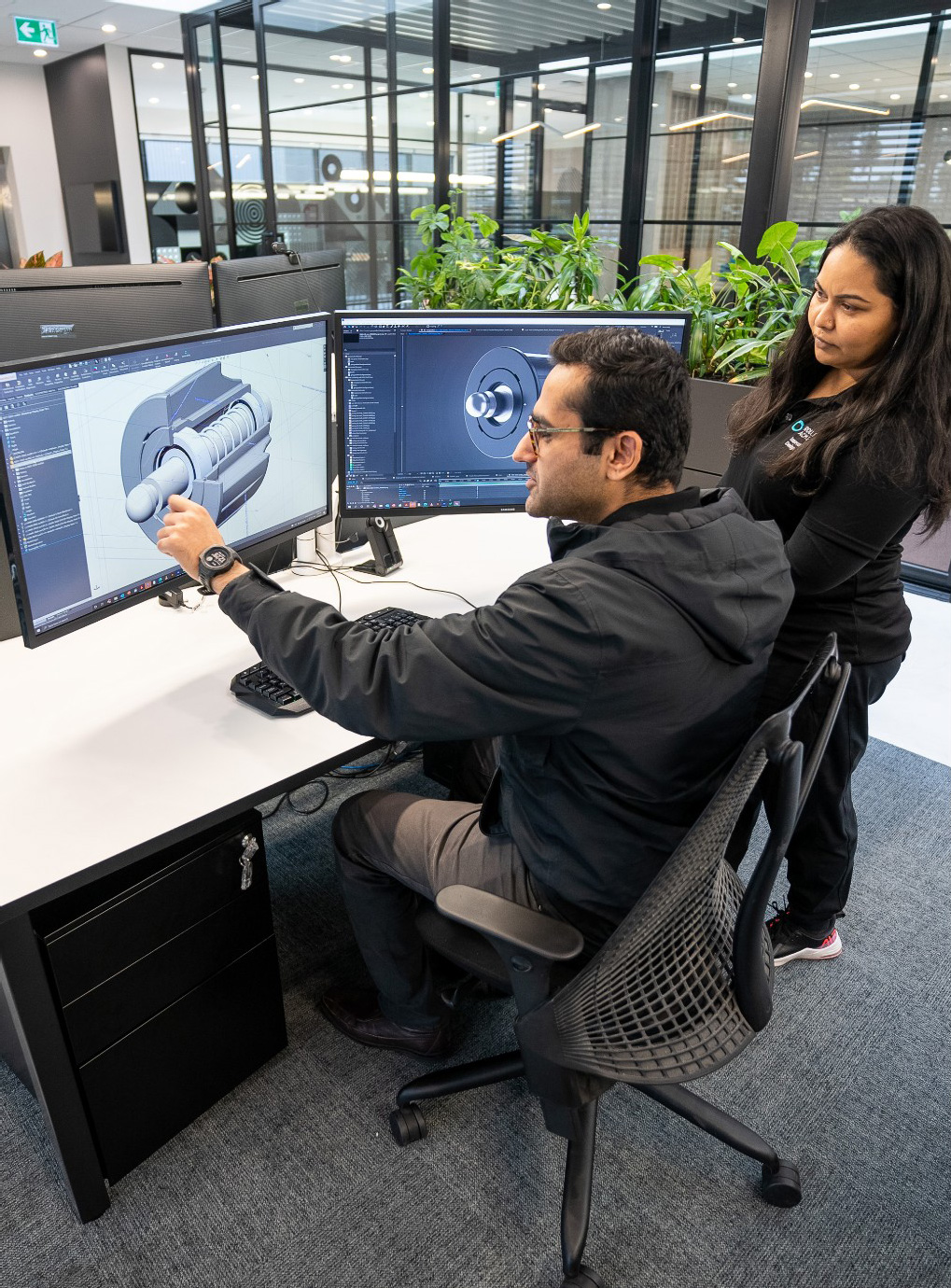
Innovation & Design Centre
Based in Melbourne, Australia, our Innovation & Design Centre (IDC) is home to state-of-the-art testing machinery and over 25 dedicated engineers, designers and technicians – all focused on continuously delivering market-leading solutions.
With almost four decades of R&D, every Zipscreen component is quality assured, rigorously cycle tested 10,000 times and backed by our five-year warranty.
Mistakes and Traps Homeowners in Singapore Face

- Ignoring Power Requirements: Many homeowners install blinds without planning for electrical points. You cannot have a smart motor without power. See our guide on Power Supply Requirements Explained.
- Overlooking Weather Sensors: Smart blinds should react to the environment. Without a wind sensor, a sudden storm could damage your blinds while you are away. Learn more about Weather Sensors for Automated Blinds.
- Incompatible Ecosystems: Buying a motor that works with Apple HomeKit when your whole house runs on Google Home creates friction. Ensure compatibility before purchase.
- Forgetting Future Updates: Technology moves fast. Ensure your hardware is capable of firmware updates. Read about Future-Proofing Balcony Blind Systems.
Seamless Integration with Major Platforms
Most modern smart motors (like Somfy or Dooya) can be bridged to major platforms.
Feature | Google Home | Apple HomeKit | Amazon Alexa |
Voice Control | “Hey Google, open blinds” | “Hey Siri, open blinds” | “Alexa, open blinds” |
Routines | “Good Morning” routine | “Arrive Home” scene | “Movie Time” routine |
Ease of Setup | High | Medium (requires hub) | High |
This level of integration allows for “scenes.” For example, saying “Movie Night” could lower the blinds, dim the lights, and turn on the TV simultaneously.
Some vendors promise 100% rain protection. While Zipscreens are excellent at keeping out 95-99% of rain, no outdoor blind is a solid wall. Strong driving winds can force fine mist through the mesh. Expecting aquarium-level waterproofing is unrealistic.
Inspired? Let’s create something for you.
Speak to our sales person – see if our service fits your needs.

Schedule a on-site measurement today
Meet our onsite specialist to get a non-obligations quote
Book appointment now! →Frequently Asked Questions
Everything you need to know about automation
How does smart home integration for balcony blinds work?
It connects motorized blinds to a central hub, allowing control via apps or voice commands like Google Home.
Why should I automate my Singapore balcony blinds?
Automation maximizes energy efficiency, enhances privacy, and protects interiors from harsh sun and sudden rain.
What is the cost of smart blinds integration?
Costs typically add $200–$500 per motor for smart hubs and sensors, excluding the blind itself.
Can I retrofit existing manual blinds to be smart?
Yes, tubular motors can often be retrofitted into existing roller tubes if power is available.
Do Zipscreen blinds block rain and wind?
They block up to 90% of rain and withstand strong winds when properly secured.
How do I control smart blinds with my voice?
Connect your hub to Google Home or Alexa and use simple voice commands.
What happens to smart blinds during a power outage?
They stop electronic operation. Manual override cranks are recommended.
Are smart balcony blinds difficult to maintain?
No, maintenance is minimal. Occasional cleaning and battery checks are sufficient.
Can smart blinds close automatically when it rains?
Yes, with a rain sensor the system can automatically lower the blinds.
Is a hub required for smart blind automation?
Usually yes. A hub or bridge translates Wi-Fi to motor signals, though some motors have built-in Wi-Fi.
Smart Home Integration for Balcony Blinds: Everything You Need to Know
Smart Home Integration for Balcony Blinds connects motorized outdoor shades to your home network, allowing control via smartphone apps, voice assistants, or automation schedules. It is designed for homeowners who want to maximize energy efficiency, privacy, and convenience in outdoor living spaces.
By integrating blinds into ecosystems like Google Home or Apple HomeKit, users can automate shade positions based on time of day, sunlight intensity, or weather conditions. This technology transforms passive shading into an active home defense against heat and rain.
Zipscreen™ blinds are an external shading solution designed to enclose patios, balconies, and verandas. They utilise a patented “z-LOCK” technology where the fabric is held securely within side channels, creating a sealed barrier against insects, sun, and light wind.
Yes, Zipscreen™ blinds significantly reduce wind flow and block up to 90-95% of rain. However, they are not 100% waterproof like glass; strong driving rain may result in a fine mist penetrating the mesh fabric, and they should be retracted during gale-force winds to prevent damage
Yes. By stopping solar radiation before it hits the balcony glass doors, Zipscreen™ blinds can reduce heat transmission by up to 70%. This lowers indoor temperatures and reduces the load on air conditioning systems.
Yes. The mesh fabric acts like a one-way mirror during the day; you can see out, but outsiders cannot see in. Note that at night, if the terrace is lit and the outside is dark, this effect is reversed
The primary difference is the side retention system. Normal outdoor roller blinds hang loosely and bang against walls in the wind. Zipscreen™ blinds are locked into side tracks, ensuring the fabric stays taut and does not flap, providing a complete insect seal
Yes, Zipscreen™ blinds are compatible with tubular motors (brands like Somfy or Dooya). They can be operated via wall switch, remote control, or integrated into smart home systems for voice activation and smartphone control
Read more about Zipscreen™

Manual vs Motorised Zipscreen™ Blinds: The Ultimate 2026 Comparison Guide for Singapore Homes
February 2, 2026 No Comments
Read More » 
Smart Home Integration for Balcony Blinds: The Ultimate 2026 Guide for Singapore
February 2, 2026 No Comments
Read More » 
Remote Control vs Wall Switch Options: The Ultimate Guide for Singapore Homes
February 2, 2026 No Comments
Read More » 
Weather Sensors for Automated Blinds: The Ultimate 2026 Guide for Singapore Homes
February 2, 2026 No Comments
Read More » 
Power Supply Requirements Explained: The Ultimate Guide for Motorised Blinds & Smart Homes
February 2, 2026 No Comments
Read More » Woud like to know more?
Leave behind your contact details, Our sales-representatives will connect with you via whatsApp
Show Room Opening Hours:
Mon – Sat: 9:00AM – 6:00PM