Home » What Affects Zipscreen™ Installation Cost? The 2026 Singapore Homeowner’s Guide
What Affects Zipscreen™ Installation Cost: The Data-Driven Guide for Singapore Homeowners

Stop Guessing Your Balcony Budget
Navigating the world of outdoor blinds in Singapore can feel like a maze of hidden fees and “group buy” traps. This comprehensive guide deconstructs exactly what affects Zipscreen™ installation cost, from fabric tech to motor warranties. Whether you’re shielding a high-rise balcony in Sengkang or an HDB patio in Bedok, we provide the real-world benchmarks and data you need to avoid the “cheap vendor” scam and invest in a system that actually lasts.
Read More about: Zipscreen™ Balcony Blinds Cost & Pricing in Singapore
Design, Fabric & Customisation Options: The Core Cost Drivers

Why Material Science Dictates Your Invoice
When it comes to Zipscreen™, you aren’t just buying a “piece of cloth.” You are investing in a tensioned system designed to withstand Singapore’s tropical thunderstorms and the relentless afternoon sun. The primary factor in what affects Zipscreen™ installation cost is the fabric specification.
According to data from Home & Decor Singapore, high-performance fabrics like USA-made Phifer or Serge Ferrari meshes can increase the base price by 15% to 25% compared to generic OEM alternatives. Why? Because these fabrics are UV-rated and anti-fungal, preventing the “saggy fabric” syndrome common in cheap knock-offs.
The Openness Factor: Privacy vs. Ventilation
The “Openness Factor” (OF) refers to how tight the weave is.
- 1% Openness: Maximum privacy and rain protection, but can turn your balcony into a “sauna box” without airflow.
- 5% Openness: The “Goldilocks” zone for Singapore, balancing breeze and blockage.
- 0% (Blackout): Typically used for total enclosure, often requiring heavy-duty motorization due to wind resistance.
Why Most Singaporeans Overpay (Or Buy Twice)
Many homeowners misunderstand what affects Zipscreen™ installation cost, leading to poor decisions and unnecessary costs. They focus on the lowest “per square foot” price, only to realize six months later that their motor has stalled or the side tracks are rattling in the wind.
In the local market, the long-term cost of Zipscreen™ vs other blinds is a critical metric. A “cheap” $1,500 system that fails in two years has a higher Total Cost of Ownership (TCO) than a $3,500 authentic Zipscreen™ that lasts a decade.
Case Study: Sengkang 5-Room Flat vs. Marine Parade Condo
Feature | Sengkang HDB (Manual) | Marine Parade Condo (Motorized) |
Dimensions | 3.5m x 2.4m | 4.2m x 2.6m |
Fabric Type | 5% Mesh (Standard) | 1% High-Tech UV Mesh |
Control | Manual Crank | Smart-Home Integrated Motor |
Total Cost | ~$2,800 | ~$5,400 |
Key Factor | Accessibility (HDB Pelmet) | Wind Load (High-floor reinforcement) |
Innovation & Design Centre
Based in Melbourne, Australia, our Innovation & Design Centre (IDC) is home to state-of-the-art testing machinery and over 25 dedicated engineers, designers and technicians – all focused on continuously delivering market-leading solutions.
With almost four decades of R&D, every Zipscreen component is quality assured, rigorously cycle tested 10,000 times and backed by our five-year warranty.
Why Is Finding the Right Furnishing So Difficult for Singaporeans?
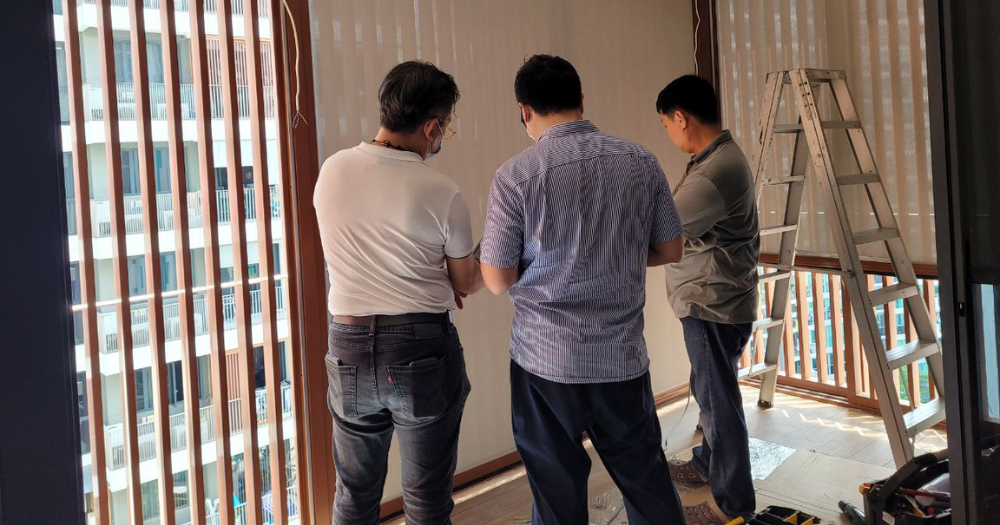
To truly understand what affects zipscreen™ installation cost, we must look at the technical components.
Manual vs. Motorised: The Price Gap
The motor is the heart of the system. A basic manual crank is affordable but labor-intensive. In contrast, a motorized system adds $500 to $1,200 to the bill. For a detailed breakdown, see our manual vs motorised zipscreen™ cost comparison.
Square Footage Pricing Realities
In 2026, the zipscreen™ blinds price per square foot explained usually ranges from $25 to $45 psf. If a vendor offers you $16 psf, they are likely cutting corners on:
- Aluminium Grade: Thin-walled tracks that warp in the heat.
- The Zip System: Non-patented zips that pop out during strong winds.
Warranty: One year instead of the industry-standard five to eight years.
Mistakes and Traps Homeowners in Singapore Faced
Based on consumer feedback from platforms like Qanvast and Renotalk, here are the most common pitfalls:
- The “One-Size-Fits-All” Trap: Trying to install a Zipscreen™ on a balcony with heavy obstructions (like AC ledges) without custom boxing. This leads to gaps where rain and mosquitoes enter.
- The Motor Warranty Illusion: Vendors offer a “5-year warranty” but hide the fact that it only covers the fabric, not the electronic motor.
- Skipping the MCST/HDB Approval: Installing a color or design that violates building guidelines, resulting in a fine and a forced removal.
For those on a tight budget, budgeting for balcony blinds in Singapore requires a “Quality First” mindset. If you can’t afford a full Zipscreen™ setup, it’s often better to wait than to ask are cheap zipscreen™ blinds worth the risk.
Final Verdict: Is it Worth It?
When comparing cost comparison: balcony glass vs zipscreen™, Zipscreen™ offers superior ventilation and a “seamless” feel that glass cannot match. By understanding what affects Zipscreen™ installation cost, you empower yourself to negotiate better and choose a solution that enhances your home’s value.
Got Questions?
Everything you need to know about Zipscreen™ costs in Singapore.
The Truth About Balcony Blind Risks
The Ultimate Decision Matrix for Zipscreen™ Costs in Singapore
This guide provides a direct, data-backed analysis of the financial and technical factors governing Zipscreen™ installations in Singapore. It is designed for homeowners and vendors to navigate budgeting with precision, ensuring a balance between cost, safety, and functionality.
The total cost is a product of the System Geometry + Component Tier + Structural Prep.
- System Geometry: The width and height of the aperture. Larger spans require thicker headboxes and heavy-duty rollers to prevent bowing.
- Component Tier: Choosing between manual cranks, entry-level motors, or premium smart-integrated systems (e.g., Somfy).
- Structural Prep: The “hidden” cost of creating flush mounting surfaces for the side tracks in non-standard balconies.
In Singapore’s high-rise landscape, wind load is the primary failure point. A “cheap” installation often ignores the Cause-Effect-Outcome of wind pressure:
- Cause: Strong gusts on high floors (above 20th level).
- Effect: Excessive pull on the side-track anchors.
- Outcome: System failure or safety hazard if not properly reinforced with heavy-duty brackets.
Evaluate your purchase using the Usage vs. Longevity Model:
- High Usage (Daily): Invest in motorized, premium mesh (ROI through lifestyle comfort).
- Low Usage (Storage): Opt for manual or traditional roller blinds (Lower upfront cost).
Contrarian Insight: The cheapest Zipscreen™ is often the most expensive. In the Singaporean humidity, low-tier motors have a 40% failure rate within 24 months. Paying 20% more upfront for a 5-year replacement warranty is mathematically superior to paying for two separate installations.
Woud like to know more?
Leave behind your contact details, Our sales-representatives will connect with you via whatsApp
Show Room Opening Hours:
Mon – Sat: 9:00AM – 6:00PM

