Zipscreen™ Balcony Blinds: A Comprehensive Singapore Buyer’s Guide
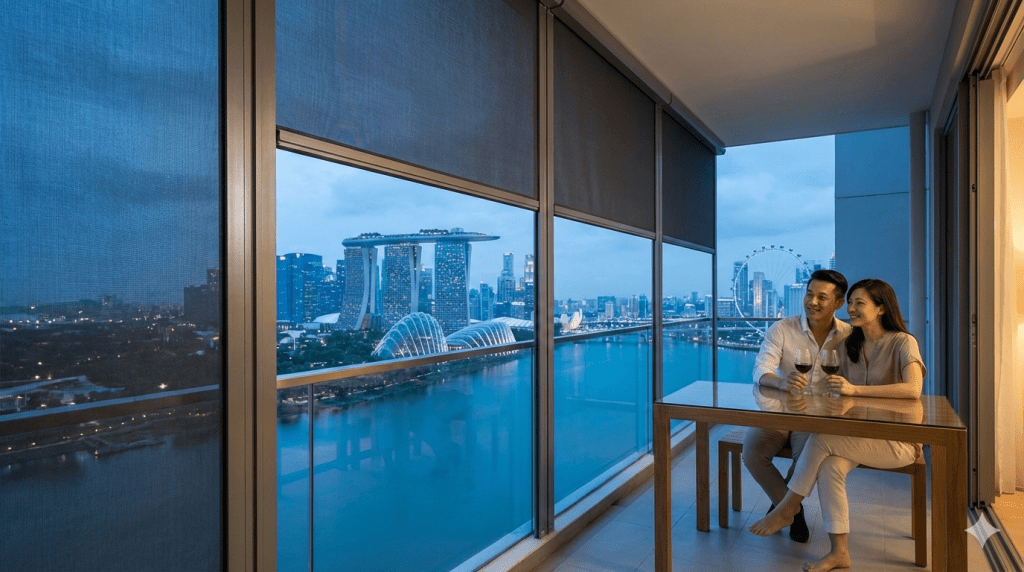
Demystifying the Price Tags of Premium Balcony Protection
If you’ve been shopping for outdoor blinds in Singapore, you’ve likely noticed a massive gap in quotes. One vendor says $1,500, another says $3,500 for the same balcony. If you were quoted wildly different prices for Zipscreen™ blinds, it’s not a scam. It’s a pricing structure most buyers don’t understand. This comprehensive guide pulls back the curtain on Zipscreen™ pricing in 2026. We break down the per-square-foot costs, reveal the hidden “extras” that inflate your bill, and provide a realistic budgeting framework so you can transform your balcony without overpaying. Whether you are moving into a new BTO in Tengah or upgrading a condo in District 9, this is the only financial roadmap you need.
Why is finding the right furnishing so difficult for Singaporeans?
Finding the right balcony treatment in Singapore feels like a full-time job. Between the aggressive Facebook ads and the “hidden gem” contractors on Carousell, homeowners are often overwhelmed.
The Noise and the "Low-Price" Bait
The biggest issue is the lack of price transparency. Many vendors use “bait-and-switch” tactics, advertising a low price per square foot (psf) that only applies to standard manual blinds in a specific color. Once you add motorization, smart home connectivity, and GST, that “deal” evaporates.
The Risk of Scams and "Fake" Zipscreens
There is also the rise of “unbranded zip blinds” being marketed as Zipscreen™. Authentic Zipscreen™ is an Australian-engineered system. Generic alternatives often use weaker side channels that rattle in the wind or motors that burn out after 18 months. Consequently, Singaporeans are rightfully skeptical about where their money is actually going. According to consumer advice from CaseTrust, homeowners should always verify the brand of the components (motor and fabric) before signing any contract.
Is it really useful or just a luxury?
The cost of purchasing a Zipscreen from vendors can seem steep, leading many to ask: “Is it worth it?” In a city where humidity is 80% and rain comes sideways, an outdoor blind isn’t just a luxury—it’s the difference between a usable 100 sqft balcony and a wasted storage space for wet laundry.
Breaking Down the Zipscreen™ Price Per Square Foot (PSF)

In Singapore, the industry standard for pricing Zipscreen™ is by the square foot. However, this number is rarely “all-in.”
Current Market Benchmarks for 2026
Generally, you can expect to see prices ranging from $22 to $48 psf. To get a clearer picture of your specific needs, check out a focused guide explaining Zipscreen™ blinds price per square foot explained to help homeowners make informed decisions.
Blind Type | Estimated Price (PSF) | Best For |
Manual Zipscreen™ | $22 – $28 | Smaller balconies or budget-conscious HDB yards. |
Motorised (Chinese Motor) | $28 – $35 | Mid-range condos; good balance of tech and price. |
Motorised (Premium Somfy) | $38 – $48 | High-end installs with 5-10 year motor warranties. |
Why Prices Vary Between Vendors
If Vendor A and Vendor B are both selling “Zipscreen,” why is there a $1,000 difference? Usually, it boils down to the “internals.” Premium vendors use European motors like Somfy and USA-made fabrics like Phifer. Budget vendors might use generic aluminum tracks and entry-level motors. To dive deeper into these discrepancies, refer to a focused guide explaining why Zipscreen™ prices vary between vendors to help homeowners make informed decisions.
Innovation & Design Centre
Based in Melbourne, Australia, our Innovation & Design Centre (IDC) is home to state-of-the-art testing machinery and over 25 dedicated engineers, designers and technicians – all focused on continuously delivering market-leading solutions.
With almost four decades of R&D, every Zipscreen component is quality assured, rigorously cycle tested 10,000 times and backed by our five-year warranty.
The Components That Drive Your Final Quote
1. Manual vs. Motorised Control
This is the single biggest price driver. A manual Zipscreen uses a crank handle, while motorised versions use a remote or app. While manual is cheaper, almost 85% of Singaporean condo owners opt for motorised due to the height and weight of the blinds. For a direct price breakdown, read a focused guide explaining manual vs motorised Zipscreen™ cost comparison to help homeowners make informed decisions.
2. Fabric Choice (The 1% vs. 5% Rule)
The “openness factor” of the fabric affects the price.
- 1% Openness: Blocks more rain and provides better privacy (Costlier).
- 5% Openness: Better airflow and visibility but lets in more mist during heavy rain.
High-quality fabrics from brands like Serge Ferrari (recommended by Houzz Singapore) are designed to resist tropical mold and UV degradation.
3. Installation Complexity and Hidden Costs
Are you on the 30th floor with a curved balcony? Or do you need a custom-built aluminum sub-frame to mount the blinds? These factors add to the labor cost. Be wary of quotes that don’t specify installation fees. You can find a list of common traps in a focused guide explaining hidden costs in balcony blind installations to help homeowners make informed decisions.
Realistic Pricing Case Studies (2026 Data)
To help you budget, let’s look at two common Singaporean home scenarios.
Case Study A: The 3-Bedroom HDB BTO (Service Yard)

- Dimensions: 6ft x 7ft (42 sqft)
- Selection: Manual Zipscreen™, Standard Fabric.
- Final Quote: ~$1,100 – $1,300 (All-in).
- Verdict: Essential for keeping rain out of the laundry area.
Case Study B: The Premium Condo Balcony

- Dimensions: 12ft x 8ft (96 sqft)
- Selection: Motorised (Somfy), 1% Phifer Sheerweave fabric.
- Final Quote: ~$3,800 – $4,500 (All-in).
- Verdict: Increases living room space by 20% by creating a weather-proof “outdoor lounge.”
Before committing to the cheapest quote, consider the long-term implications. Cheap components often fail under Singapore’s intense sun. Read more in a focused guide explaining are cheap Zipscreen™ blinds worth the risk to help homeowners make informed decisions.
Mistakes and Traps Home Owners in Singapore Faced
During our research and discussions with renovation experts at Qanvast and HomeRenoGuru, we identified four recurring mistakes that cost homeowners thousands of dollars.
- Chasing the Lowest PSF: As discussed, the $18 psf quote usually excludes the “Pelmets” (the box that hides the roller) and the side channel powder coating. By the time the invoice arrives, you’re paying $35 psf.
- Ignoring MCST Guidelines: Many condos have strict rules on color and fabric type. Installing the wrong Zipscreen™ can lead to a legal notice and the cost of total removal.
- Underestimating Wind Load: Singapore’s “Sumatra Squalls” can rip generic zip blinds right out of the tracks. Authentic Zipscreen™ is wind-rated, but only if installed correctly. More on this in a focused guide explaining what affects Zipscreen™ installation cost to help homeowners make informed decisions.
- Short-Term Thinking: Many buyers save $500 today on a generic motor, only to spend $1,200 on repairs in two years. Check a focused guide explaining long-term cost of Zipscreen™ vs other blinds to help homeowners make informed decisions. to see why quality pays off.
Comparison: Zipscreen™ vs. Other Balcony Solutions
When budgeting, you might consider alternatives like ZipTrak, traditional bamboo blinds, or even glass curtains.
- Bamboo Blinds: Cheap (~$300-$600) but mold easily and offer zero wind protection.
- Glass Curtains: Premium (~$5,000-$9,000) but can make the balcony feel like a greenhouse.
- Zipscreen™: The middle ground—offering the best ventilation-to-protection ratio.
For a detailed head-to-head on glass vs. mesh, see a focused guide explaining cost comparison: balcony glass vs Zipscreen™ to help homeowners make informed decisions.
Investment Guide for HDB & Condo Balconies.
HDB service yards typically cost $1,100 – $1,600. Larger living room balconies range from $2,200 – $3,500. Price fluctuates based on manual vs. motorised choices and UV/Rain fabric grades.
Zipscreen™ uses a patented side-track locking system. Regular outdoor rollers sway and have gaps; Zipscreen™ is a sealed system. You are paying for wind-proof aluminum tracks, precision zip-welding, and heavy-duty motors.
Absolutely. By using a Smart Bridge (Somfy TaHoma or Broadlink), you can automate closure via voice or mobile. This adds $200 – $400 to the quote but maximizes convenience and 'Smart Home' appeal.
Yes. Buyers view a protected balcony as an "extra room." It protects expensive sliding door tracks and internal flooring from rain damage, justifying a higher asking price for both HDBs and Condos.
Not recommended. Installation requires within-2mm precision. If tracks aren't perfectly level, motors burn out and fabric ripples. DIY attempts usually void the manufacturer's warranty.
Set aside $2,500 to $5,000 for a standard balcony renovation under "External Works." This covers premium motorization, 1% openness fabric for rain protection, and professional installation.

Are Zipscreen™ blinds suitable for Singapore weather?
The Homeowner’s Guide to Zipscreen™ Performance in Singapore’s Tropical Climate
Singapore’s weather is defined by extreme UV exposure, high humidity, and sudden Sumatra Squalls. Traditional blinds often fail these conditions. This guide explains why Zipscreen™ is the engineered standard for the local climate, focusing on wind resistance, heat management, and long-term durability for HDB and Condo balconies.
Singapore experiences sudden, intense wind gusts. Zipscreen™ uses a side-fastening “Zip” technology that locks the fabric into aluminum channels. This prevents the fabric from blowing out of the tracks, a common failure in generic outdoor blinds.
Because the fabric is held under constant tension, the system can withstand wind speeds that would destroy a standard roller blind. This results in a “sealed” balcony environment where furniture stays dry and stable even during a monsoon downpour.
To understand why Zipscreen™ works, use the Barrier-Breathing Matrix:
- The Shield (Barrier): The high-density mesh blocks 95% of rain and 90% of UV rays.
- The Lung (Breathing): Unlike glass curtains, the mesh allows microscopic airflow, preventing the “greenhouse effect” and keeping the balcony cool.
- The Tension (Structure): The side-fasteners convert wind pressure into structural stability.
Singapore’s sun doesn’t just heat the balcony; it destroys your indoor flooring. UV rays cause vinyl and parquet to fade and “crack.” By installing Zipscreen™, you create a thermal buffer.
- Cause: Sunlight hits the blind instead of the glass door.
- Effect: The glass stays cool, and UV rays are filtered.
- Outcome: Lower air-conditioning bills and a longer lifespan for your indoor furniture.
- Rain Protection: Best with 1% openness fabric; keeps 98% of rain out.
- Heat Reduction: Reduces surface temperature of balcony floors by up to 10°C.
- Pest Control: Acts as a full-height insect screen when fully lowered.
- Wind Rating: Specifically tested for high-rise wind loads common in Punggol and Marine Parade.
Many Singaporeans ask for 100% waterproof PVC blinds. This is a mistake. PVC traps heat and turns your balcony into a sauna. Zipscreen’s mesh is superior because it manages water while allowing the balcony to “breathe,” maintaining a comfortable temperature without the need for additional fans.
Woud like to know more?
Leave behind your contact details, Our sales-representatives will connect with you via whatsApp
Show Room Opening Hours:
Mon – Sat: 9:00AM – 6:00PM