
Home » Large Opening Zipscreen Guide
The Ultimate Post-Installation Handover Checklist for Zipscreen™ Blinds

Verify Quality, Safety, and Function Before You Sign Off
You’ve invested in premium Zipscreen™ blinds to transform your balcony, but the job isn’t done until the final inspection. This article provides a comprehensive post-installation handover checklist to help homeowners identify potential issues, understand proper operation, and ensure their installation meets the highest safety standards. We cover everything from fabric tension to motor limits, saving you from future headaches and unnecessary costs.
Read More about: Installation Process of Zipscreen™ Balcony Blinds
The Ultimate Post-Installation Handover Checklist for Zipscreen™ Blinds

Why the Post-Installation Handover Checklist Matters
Many homeowners misunderstand the post-installation handover checklist, treating it as a mere formality. This often leads to poor decisions, missed defects, and unnecessary costs down the road. The excitement of seeing your new Zipscreen™ blinds often overshadows the critical step of verification. However, a thorough handover is your primary defense against installation errors and ensures your warranty is valid.
In Singapore’s humid and windy climate, outdoor blinds face rigorous conditions. If the tension isn’t set right or the side channels are misaligned, you will face issues within months. This guide acts as your personal quality assurance manual.
Pre-Check Prerequisites
Before diving into the mechanics, ensure the work area is clean. A professional installer should remove all drilling dust and packaging. If you are unsure about the groundwork, refer to our guide on the Preparation Checklist Before Installation to see what should have been done prior.
One of the primary safety considerations during installation is the structural integrity of your balcony. Zipscreen™ blinds are subjected to high wind loads. If the brackets are not anchored into solid concrete or structural steel, a strong gust of Sumatra Squall could rip the blind off the ceiling.
- The Trap: Drilling into hollow false ceilings without reinforcement.
- The Fix: We always perform a “tap test” and use stud finders to locate the structural beam.
If you are curious about the technical steps, our Step-by-Step Zipscreen™ Installation Process covers how we identify anchor points.
The Comprehensive Handover Checklist

1. Visual Inspection of the Fabric
The fabric is the most visible component. Stand back and look for:
- Wrinkles or Puckering: The fabric should sit flat. Waves near the side channels indicate incorrect tension.
- Fraying Edges: Check the zip welded to the fabric. It must be smooth.
- Cleanliness: Ensure there are no greasy fingerprints or dust marks.
2. Operation and Motor Limits
Run the blinds up and down three times.
- Smooth Movement: The blind should not jerk or make grinding noises.
- Limit Settings: The blind must stop automatically before the bottom bar hits the floor (to prevent fabric pooling) and stop at the top without jamming into the cassette box.
- Remote Responsiveness: Test all channels on the remote.
3. Side Channels and Structural Integrity
Grab the side tracks gently. They should be rigid. If they wobble, the mounting is insufficient. For those concerned about wall damage, you might have researched Can Zipscreen™ Blinds Be Installed Without Drilling, but if you opted for standard installation, ensure all screw covers are in place.
Checking the "Give"
The blind should have a slight “give” when pushed gently to absorb wind pressure, but it should not rattle violently.
Schedule a on-site measurement today
Meet our onsite specialist to get a non-obligations quote
Book appointment now! →Mistakes and Traps Home Owners in Singapore Face
Rushing the Sign-Off
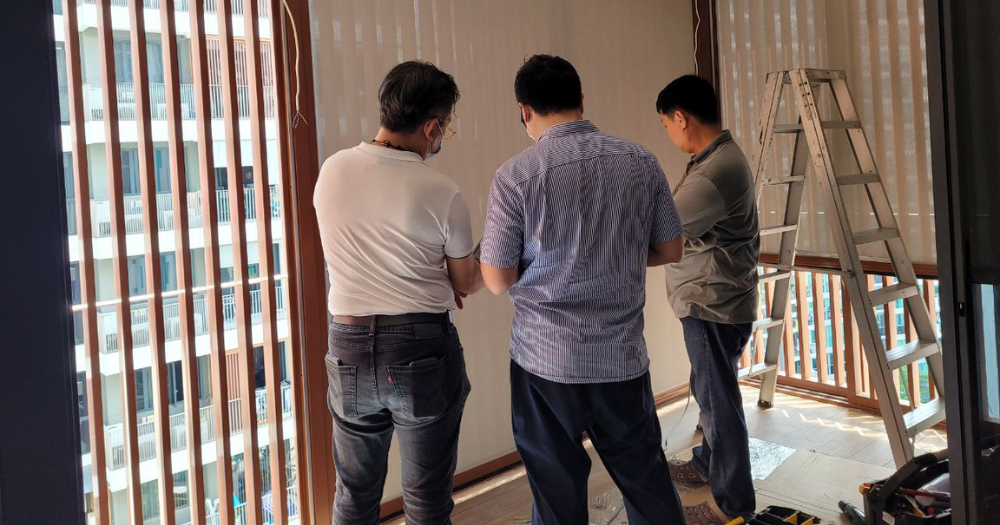
The biggest mistake is signing the handover document immediately. Take your time. Once you sign, proving that a scratch or dent was caused by the installer becomes difficult.
Ignoring the "Zip" Function
The “Zip” in Zipscreen is what keeps insects out and cool air in. Inspect the zip feed inside the track. If it pops out during a test run, the installation is failed. Review our article on Common Installation Challenges Explained to understand why this happens.
Not Testing Smart Home Features
If you have a smart hub, pair it while the installer is there. Connectivity issues are notorious traps that are hard to troubleshoot alone.
Innovation & Design Centre
Based in Melbourne, Australia, our Innovation & Design Centre (IDC) is home to state-of-the-art testing machinery and over 25 dedicated engineers, designers and technicians – all focused on continuously delivering market-leading solutions.
With almost four decades of R&D, every Zipscreen component is quality assured, rigorously cycle tested 10,000 times and backed by our five-year warranty.

Why is Finding the Right Vendor So Difficult for Homeowners in 2026?

Finding a reliable vendor in Singapore has become a minefield.
- Scams and Fly-by-Night Operators: With the rise of digital marketing, many “companies” are just middlemen with no technical team. They subcontract to the lowest bidder.
- The “Hidden Cost” Trap: You get a low quote, but the post-installation handover checklist reveals they didn’t include a remote, or they used non-stainless steel screws that rust in a month.
- Is it Really Useful? Homeowners often wonder if they overpaid. A transparent vendor will break down the Step-by-Step Zipscreen™ Installation Process so you know exactly where your money went.
External Validation and Benchmarks
Don’t just take our word for it. Cross-reference your installer’s standards with reputable platforms like Qanvast, Renopedia, and Houzz Singapore. Check if your vendor is listed on CaseTrust or RCMA (Renovation Contractors and Material Suppliers Association). Renovation guides on CNA or Home & Decor Singapore also frequently highlight the importance of proper handover protocols to avoid disputes.
Finalizing the Handover
Once the dust settles, how do you know the safety standards were met?
- Pull Test: The installer should physically test the tension.
- Electrical Test: Ensure the motor cuts off automatically if the blind hits an obstacle.
- Visual Inspection: Check for cracks in the surrounding masonry.
Use our guide on How to Inspect Installation Quality to act as your own Quality Control officer.
Timeline and Handover
Before the installer leaves, ask them:
- “How do I clean the fabric?”
- “What is the warranty procedure?”
- “How do I reset the motor if the power trips?”
For a deeper dive into timelines, check How Long Does Zipscreen™ Installation Take. If you are considering DIY in the future, read Professional Installation vs DIY Risks to understand why professional handover is superior. Finally, learn How to Inspect Installation Quality like a pro before they pack up.
Inspired? Let’s create something for you.
Speak to our sales person – see if our service fits your needs.

Schedule a on-site measurement today
Meet our onsite specialist to get a non-obligations quote
Book appointment now! →Frequently Asked Questions
Everything you need to know about the Handover Checklist
What is a post-installation handover checklist?
+It is a verification document used to confirm that your Zipscreen™ blinds are installed correctly, fully functional, and free of defects before you make the final payment.
Why must I test the blinds 3 times?
+Running the blinds up and down 3 times ensures the motor thermal sensor is stable and that the fabric settles correctly into the side channels without jamming.
Can I withhold payment if defects are found?
+Yes. You should not sign the handover until critical defects are rectified. Standard practice allows retaining a percentage until issues are resolved.
How do I check for fabric defects?
+Stand 1 meter back. Look for puckering (waves), fraying edges near the zip, or dirty marks. The fabric should be taut and flat.
What should be in the handover kit?
+You should receive the remote control, warranty card, user manual, and a cleaning guide. Ensure you have the installer's support contact.
Do Zipscreen blinds block rain?
+They are water-resistant, not waterproof. During handover, check that water doesn't pool on the bottom bar, which can stretch the fabric.
How do I verify the wind resistance?
+Push the fabric gently. It should have slight "give" but stay secure in the tracks. If it pops out easily, the tension is too loose.
What if the motor is noisy?
+Somfy or Dooya motors should be relatively quiet. Grinding sounds indicate misalignment or debris in the track. Report this immediately.
Can I adjust the limits myself?
+It is not recommended. Incorrect adjustment can strip the motor gears. Ask the installer to set them perfectly during handover.
How often should I clean the blinds?
+Ask during handover! Generally, a soft brush and water every 3 months keeps the mesh clear of dust and prevents mold.
Zipscreen™ Installation Guide: Solutions to Common Challenges
This guide answers the most critical questions homeowners ask about Zipscreen™ systems, explaining how they work, why they are effective, and how they differ from standard blinds.
Definition and Purpose:
Zipscreen™ blinds are external roller blinds that use a patented “zip” retention system. Unlike traditional blinds that hang loose, the fabric is locked into side channels, creating a sealed barrier. They are primarily used to:
- Block UV Rays: Reduce solar heat gain by up to 90%.
- Weather Protection: Shield balconies from wind and rain.
- Insect Control: The sealed tracks prevent mosquitoes and bugs from entering.
Weather Resistance Capabilities
Yes, they are highly effective against rain and wind.
- Wind: The zip retention system prevents the fabric from flapping or tearing in high winds (rated for moderate gusts).
- Rain: The fabric is water-resistant. Because the sides are sealed, rain cannot blow in from the edges, making them superior to standard outdoor blinds.
- Limit: They are not 100% waterproof like a glass window; in typhoon conditions, some mist may penetrate the mesh.
Thermal Efficiency
Yes. Zipscreen™ blinds are designed to reflect and absorb solar energy before it reaches the glass of your home.
- Heat Reduction: By stopping the sun outside, they can lower indoor temperatures by 5-10°C.
- Glare Control: They filter harsh sunlight, allowing soft natural light in while enabling you to see out (view-through capability).
Day vs. Night Privacy
- Daytime: The mesh fabric provides excellent privacy. You can see out, but neighbors cannot see in due to the light reflection on the fabric.
- Nighttime: The effect reverses. If your balcony is lit up at night, people outside can see in. For total night privacy, a blackout fabric is required, though this sacrifices airflow.
Comparison Framework
Feature | Zipscreen™ Blinds | Standard Outdoor Blinds |
Side Sealing | Fabric locked in tracks (Zip) | Wire guides or loose hang |
Wind Stability | High (No flapping) | Low (Flaps in wind) |
Insect Proof | Yes (Fully sealed) | No (Gaps at sides) |
Cost | Premium | Budget/Mid-range |
Automation Options
Yes, motorization is the standard for Zipscreen™ systems due to the friction in the tracks which makes manual operation heavy.
- Control: Operated via remote, wall switch, or smartphone apps (Somfy/Dooya).
- Smart Home: Can integrate with Google Home or Amazon Alexa.
- Safety: Motors include obstacle detection to stop the blind if it hits an object.
Read more about Zipscreen™

Step-by-Step Zipscreen™ Installation Process: A Homeowner’s Guide
January 27, 2026 No Comments
Read More » 
How Long Does Zipscreen™ Installation Take? A Realistic Timeline for Singapore Homes
January 27, 2026 No Comments
Read More » 
The Ultimate Preparation Checklist Before Installation for Zipscreen™ Blinds: Avoid Costly Mistakes
January 27, 2026 No Comments
Read More » 
Can Zipscreen™ Blinds Be Installed Without Drilling? The Truth for Singapore Homes
January 27, 2026 No Comments
Read More » 
Common Installation Challenges Explained: The Ultimate Zipscreen™ Guide for Singapore Homes
January 27, 2026 No Comments
Read More » Woud like to know more?
Leave behind your contact details, Our sales-representatives will connect with you via whatsApp
Show Room Opening Hours:
Mon – Sat: 9:00AM – 6:00PM