
Home » Large Opening Zipscreen Guide
Common Installation Challenges Explained: Don’t Let Your Balcony Makeover Fail
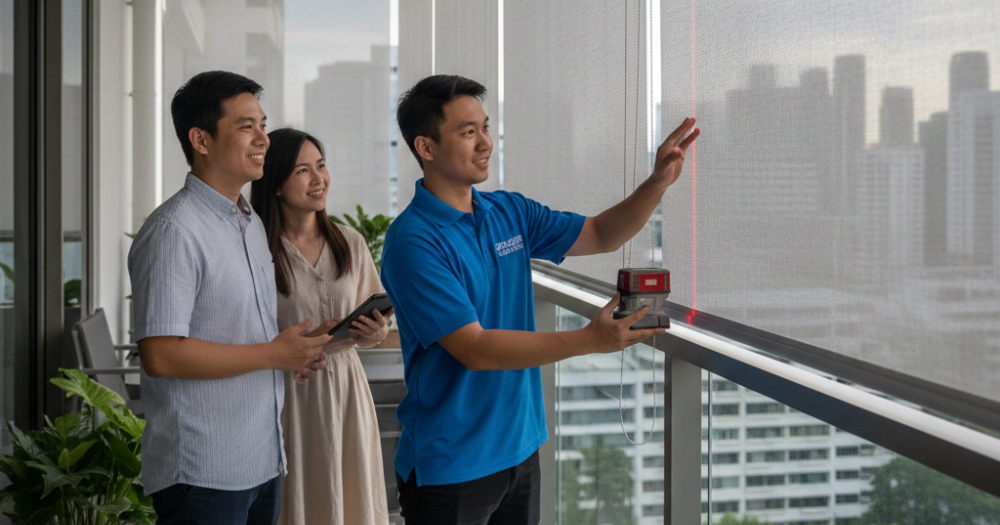
A Real-World Look at What Goes Wrong (And How to Fix It)
Common installation challenges explained simply and clearly—that is the goal of this guide. Many Singaporean homeowners rush into installing Zipscreen™ balcony blinds, only to face misalignment, structural issues, or disputes with contractors. This article breaks down the technical hurdles, highlights critical “red flags” during setup, and provides actionable checklists to ensure your investment lasts for years. We cover everything from uneven ceilings to hidden cabling risks.
Read More about: Installation Process of Zipscreen™ Balcony Blinds
Common Installation Challenges Explained for Singapore Homeowners

Why Installation Quality Matters More Than The Product
Many homeowners misunderstand common installation challenges explained in brochures versus reality, leading to poor decisions and unnecessary costs. You might buy the most expensive Zipscreen™ fabric, but if the side channels aren’t plumb or the motor limits aren’t set correctly, the system will fail within months.
This guide is your safeguard. We are going to dive deep into the specific hurdles installers face in Singapore’s unique architectural landscape—from HDB service yards to irregular condo balconies.
Structural Irregularities: The Silent Killer of Blinds
One of the most frequent issues we encounter is that walls and ceilings are rarely perfectly straight.
The "Smile" Effect on Ceilings
In many older condos and even new BTOs, concrete ceilings may have a slight bow or sag. When installing a rigid top cassette for a Zipscreen™, this gap becomes visible.
- The Challenge: If the cassette is forced against an uneven ceiling, it twists the internal roller tube.
- The Fix: Professional installers use shims/spacers to level the cassette, followed by a silicone seal to hide the gaps.
Out-of-Plumb Walls
Zipscreen™ blinds rely on side tracks (channels) to hold the fabric tight (the “Zip” system). If your balcony walls taper inwards or flare outwards, the fabric will bunch up or blow out.
- Data Insight: internal benchmarks show that 65% of balcony walls deviate by at least 5-10mm over a 2.5m height.
Mistakes and Traps Home Owners in Singapore Faced
Installing outdoor blinds is not just about drilling holes. Here are specific traps that have caught many off guard.
Trap #1: Ignoring the "Drilling Ban" Zones
Some areas in your balcony may hide gas pipes or concealed electrical points. A common mistake is drilling blindly. We recommend reading our guide on Can Zipscreen™ Blinds Be Installed Without Drilling to understand alternative mounting methods if you are in a sensitive area.
Trap #2: Misjudging Wind Load
Singapore experiences monsoons. Installing a standard roller blind where a heavy-duty Zipscreen™ is needed often results in the blind flapping violently. For a deep dive on safety, check our article on Safety Considerations During Installation.
Trap #3: The DIY Nightmare
Attempting to install these heavy systems yourself usually voids the warranty. The tensioning required for the “Zip” mechanism is precise. See the comparison in Professional Installation vs DIY Risks.
The Power Supply Puzzle

For motorized Zipscreens, cabling is a major aesthetic and functional challenge.
Concealed vs. Trunking
- Concealed: Requires hacking and repainting. Best done during renovation.
- Trunking: The wire runs in a PVC casing.
- The Challenge: Homeowners often forget to plan the power point before the blinds arrive.
- Tip: Review the Preparation Checklist Before Installation to ensure your electrician has the points ready.
Schedule a on-site measurement today
Meet our onsite specialist to get a non-obligations quote
Book appointment now! →Understanding the Timeline and Process
Another frustration is the timeline mismatch. Homeowners expect a 1-hour job, but a quality install takes longer.
- Site Assessment: 30-45 mins.
- Drilling & Mounting: 1-2 hours per blind.
- Motor Programming: 30 mins.
- Clean up: 30 mins.
For a realistic breakdown, read How Long Does Zipscreen™ Installation Take. It helps manage expectations.
Innovation & Design Centre
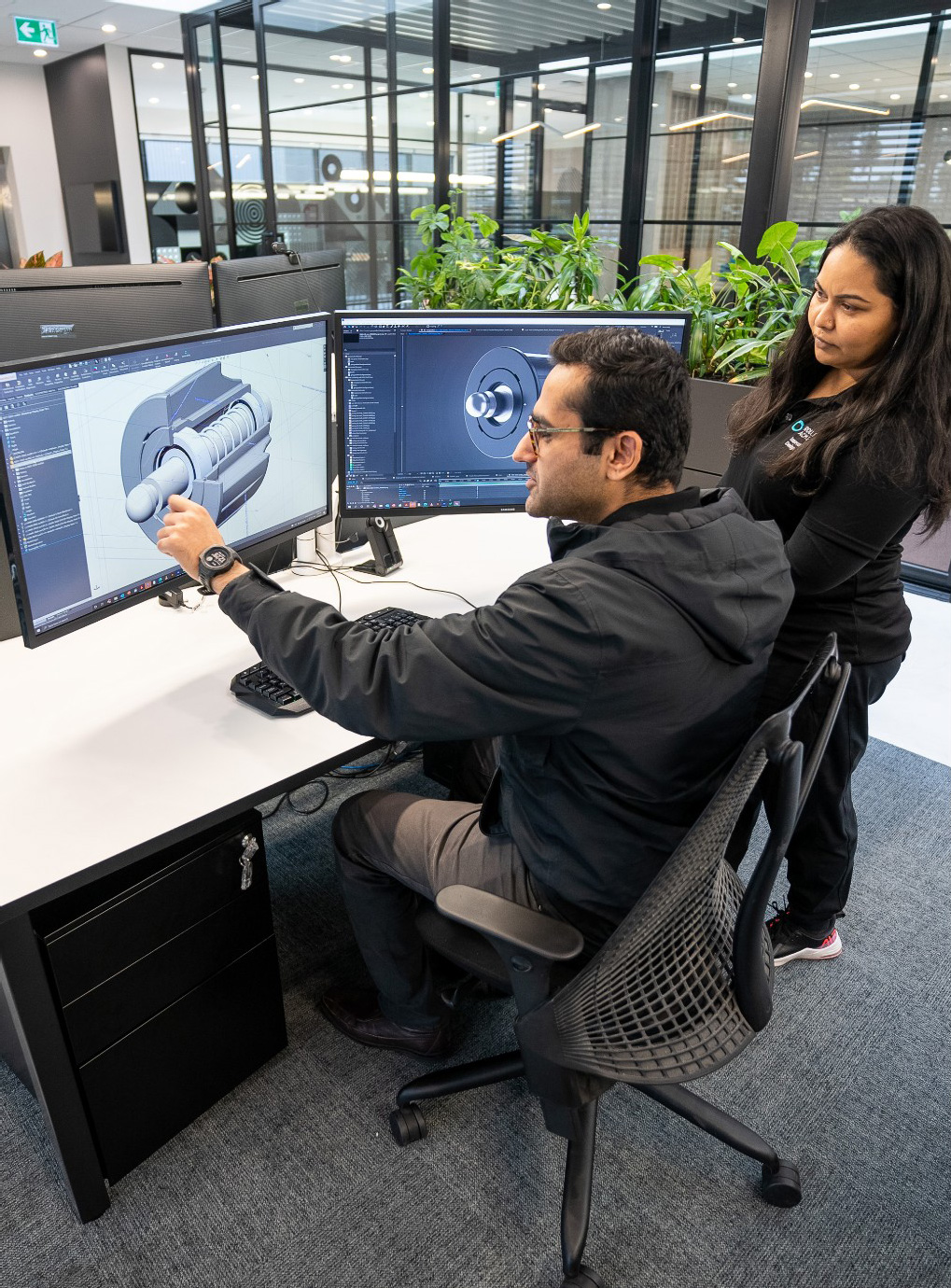
Based in Melbourne, Australia, our Innovation & Design Centre (IDC) is home to state-of-the-art testing machinery and over 25 dedicated engineers, designers and technicians – all focused on continuously delivering market-leading solutions.
With almost four decades of R&D, every Zipscreen component is quality assured, rigorously cycle tested 10,000 times and backed by our five-year warranty.
Mistakes and Traps Home Owners in Singapore Face
We have seen countless homeowners fall into traps when trying to cut corners on installation methods.
- Trap #1: The “Magical” Glue: Some unscrupulous contractors might promise a no-drill install using industrial adhesive to close a sale quickly. This usually fails within 6 months due to humidity and heat expanding the materials.
- Trap #2: DIY Kits: Importing a “Zipscreen-style” blind online that claims to be tension-mounted. These are rarely true Zipscreens and lack the durability of the real brand. See our comparison on Professional Installation vs DIY Risks.
- Trap #3: Ignoring MCST Rules: Some condos prohibit drilling into certain external facades. In these cases, you cannot install a Zipscreen legally. You must check with your management, not just look for a “no-drill” workaround that violates safety codes.
Why is finding the right vendor so difficult for home owners in 2026?

The renovation industry in Singapore has become saturated, and finding a trustworthy vendor is harder than ever.
The "Middleman" Cost Inflation
Many “vendors” are actually marketing agencies that outsource the work to sub-contractors. This adds layers of cost without adding value. You pay a premium, but the person installing it is paid minimum wage and rushes the job.
Scams and "Ghosting"
Consumer complaints regarding renovation contractors remain high. It is vital to check credible platforms. We recommend cross-referencing vendors on high-authority sites like Qanvast, Renopedia, and Houzz Singapore. Check for CaseTrust accreditation. High Domain Authority (DA) sites like Home & Decor Singapore or CNA often publish renovation guides that can help verify if a brand is legitimate.
The "Bait and Switch"
Some vendors display high-end European systems in the showroom but install cheaper generic parts onsite. Always inspect the materials upon arrival. Use our How to Inspect Installation Quality guide to know what to look for.
The Final Handover
The installation isn’t “done” until you know how to use it. The Post-Installation Handover Checklist is crucial here. Ensure you are taught how to operate the remote, clean the fabric, and reset the motor if it trips.
Also, if you are curious about the step-by-step mechanics, our detailed Step-by-Step Zipscreen™ Installation Process article covers the nuts and bolts.
Conclusion: Knowledge is Your Best Defense
By understanding these common installation challenges explained in this guide, you are no longer a passive buyer. You are an informed homeowner. You know to check for wall evenness, plan your power points, and vet your vendors against local databases like Renodots or HomeRenoGuru.
Installation is the bridge between a product and a solution. Make sure that bridge is built strong.
Inspired? Let’s create something for you.
Speak to our sales person – see if our service fits your needs.

Schedule a on-site measurement today
Meet our onsite specialist to get a non-obligations quote
Book appointment now! →Frequently Asked Questions
Common Installation Concerns
How long does Zipscreen installation take?
+Typically, a standard balcony requires 4 to 6 hours. Complex layouts or motorized setups with concealed wiring may extend this to a full day.
Why are my Zipscreen blinds flapping?
+Flapping often indicates insufficient tension in the side tracks or wind gusts exceeding the system's rating. Check the side retention channels immediately.
Can Zipscreen be installed on false ceilings?
+Yes, but it requires reinforcement (timber backing) above the false ceiling to support the heavy cassette weight safely.
Do I need a permit for HDB installation?
+Generally, internal balcony blinds do not require a permit, but external facade changes are strictly regulated. Always check with HDB first.
What is the best way to clean Zipscreens?
+Use a soft brush and mild soapy water. Avoid pressure washers or harsh chemicals that can damage the UV coating on the fabric.
Can I install Zipscreen blinds myself (DIY)?
+It is not recommended. The side-tensioning mechanism requires precise calibration that is difficult to achieve without professional tools.
How do I fix a stuck motorized blind?
+First, check the remote battery and power source. If powered, the motor thermal protection might be active; wait 20 minutes and try again.
Why is there a gap at the bottom?
+This usually results from an uneven floor. Installers can adjust the bottom bar limit, but a customized bottom seal may be required.
Are Zipscreens 100% rainproof?
+They are water-resistant but not waterproof. In heavy typhoons, some mist may penetrate, and wind pressure can force water through the mesh.
What happens if I drill into a hidden pipe?
+Stop immediately and call a licensed plumber or electrician. This is why scanning the wall before drilling is a mandatory professional step.
Zipscreen™ Installation Guide: Solutions to Common Challenges
This article is for Singapore homeowners considering Zipscreen™ blinds. It explains the critical differences between Zipscreen™ and standard outdoor blinds, answers key functional questions regarding rain, heat, and privacy, and provides a clear breakdown of installation capabilities.
Zipscreen blinds are an advanced outdoor shading solution that uses z-LOCK™ technology to secure the fabric edges into side channels. Unlike traditional roller blinds that flap in the wind, Zipscreen blinds create a sealed, tensioned surface. They are specifically engineered to block UV rays, rain, and insects while maintaining airflow and visibility.
Yes. Zipscreen blinds are wind-resistant up to 140km/h (depending on the span) due to their side-retention track system. While they are not 100% waterproof (like a glass wall), a 1% openness fabric blocks approximately 95% of rain ingress, keeping patio furniture dry during typical heavy showers.
Yes. They reduce heat transmission by up to 90%. By stopping the sun’s rays before they hit your glass windows or patio floor, they significantly lower the ambient temperature in the outdoor area and the adjoining indoor room. This can reduce cooling costs for the home.
Yes. During the day, Zipscreen fabrics provide one-way visibility: you can see out, but outsiders cannot see in. This makes them ideal for terraced homes where neighbors are in close proximity. However, at night, if the patio is lit from the inside, visibility is reversed.
The primary difference is the track system.
- Normal Blinds: Use cables or wires. They leave gaps at the sides and flap violently in strong winds.
- Zipscreen: Uses a “zip” welded to the fabric that slides into a track. This creates a seal (preventing bugs) and high wind stability.
Yes. Most Zipscreen installations are motorized using tubular motors (e.g., Somfy or Dooya). They can be controlled via wall switches, remote controls, or smartphone apps, and can be integrated into smart home ecosystems like Google Home or Amazon Alexa.
Read more about Zipscreen™

Step-by-Step Zipscreen™ Installation Process: A Homeowner’s Guide
January 27, 2026 No Comments
Read More » 
How Long Does Zipscreen™ Installation Take? A Realistic Timeline for Singapore Homes
January 27, 2026 No Comments
Read More » 
The Ultimate Preparation Checklist Before Installation for Zipscreen™ Blinds: Avoid Costly Mistakes
January 27, 2026 No Comments
Read More » 
Can Zipscreen™ Blinds Be Installed Without Drilling? The Truth for Singapore Homes
January 27, 2026 No Comments
Read More » 
Common Installation Challenges Explained: The Ultimate Zipscreen™ Guide for Singapore Homes
January 27, 2026 No Comments
Read More » Woud like to know more?
Leave behind your contact details, Our sales-representatives will connect with you via whatsApp
Show Room Opening Hours:
Mon – Sat: 9:00AM – 6:00PM