
Home » 7 Best Zipscreen™ Options for Small Condo Balconies: 2026 Singapore Guide to Maximizing Space
Best Zipscreen™ Options for Small Condo Balconies

Transforming Your Compact Outdoor Space into a Functional Sanctuary
Living in a Singapore condo often means working with limited square footage. This guide explores the best Zipscreen™ options specifically tailored for small balconies, helping you navigate MCST regulations, wind safety, and cost-effective automation. Whether you’re looking to block the afternoon sun or create a rain-proof home office, we provide the data-driven benchmarks and expert insights you need to make an informed investment.
Read More about: Zipscreen™ Balcony Blinds for Condos in Singapore
Zipscreen™ Balcony Blinds for Condos in Singapore

Why Small Balcony Owners Often Overpay for the Wrong Blinds
Many homeowners in Singapore misunderstand the best Zipscreen™ options for small condo balconies, leading to poor decisions and unnecessary costs. Often, the temptation is to opt for the cheapest “zip-style” blind available on social media, only to find that the tracks jam during a Sumatra Squall or the fabric sags within six months.
In a compact 40 to 60-square-foot balcony, every inch—and every dollar—counts. Choosing the wrong system doesn’t just waste money; it can lead to disputes with your MCST over facade consistency or result in a “greenhouse effect” that makes your balcony unusable.
The Data-Driven Case for Zipscreen™ in 2026
As of early 2026, the demand for balcony enclosures has surged by 25% across Singapore’s Core Central Region (CCR) and Rest of Central Region (RCR). Data from renovation portals like Qanvast and Renopedia suggests that homeowners now view the balcony not as a “clothes drying area,” but as a high-value extension of the living room.
Feature | Authentic Zipscreen™ | Generic “Zip” Blinds |
Wind Resistance | Up to 60-80 km/h (Beaufort 7-8) | 20-30 km/h (Flaps/Vibrates) |
Side Retention | Patented z-LOCK™ (Gapless) | Plastic zippers or cables (Gaps) |
Typical Lifespan | 10 – 12 Years | 2 – 4 Years |
Rain Protection | 95% – 99% (with 1% fabric) | 60% – 75% (Side seepage) |
Market PSF (2026) | $25.00 – $35.00 | $16.90 – $21.00 |
Why Finding the Right Furnishing is a Minefield for Singaporeans
Finding the right furnishing is notoriously difficult for Singaporeans. Between aggressive “factory-direct” marketing and the fear of renovation scams, homeowners are often paralyzed by choice.
- The “OEM” Scam: Many vendors sell generic, unbranded tracks as “Original Zipscreen™.” Without the patented z-LOCK™ technology, these imitations cannot maintain fabric tension, leading to unsightly “rippling” and mechanical failure.
- The Utility Gap: Is a $3,500 investment really useful? Many find that without a focused guide explaining condo rules for balcony blinds in Singapore, they install systems that the MCST later demands they remove.
- The Cost Trap: Vendors often quote a low PSF but hide “Difficult Access” surcharges ($150-$300) or electrical wiring fees for motors ($150-$250 per point).
Best Zipscreen™ Options for Small Condo Balconies
1. The "Slimline" Manual Spring-Balanced System
For very small balconies (less than 2.5 meters wide), a manual spring-balanced Zipscreen™ is often the smartest choice. Unlike old-school pulley systems, the Zipscreen™ manual variant allows you to pull the blind down to any height and lock it instantly.
- Best for: Budget-conscious owners of 1-bedroom or studio units.
- Advantage: No electrical wiring required, making it MCST approved without needing a licensed electrician.
2. Motorized Smart-Home Integrated Systems
In 2026, over 70% of Zipscreen™ installations in Singapore are motorized. High-end motors like Somfy or Automate can be controlled via Google Home or Alexa. This is crucial for small balconies where furniture might block the path to a manual crank handle.
- Pro Tip: Use the “Impact Detection” feature. If the blind hits a chair or a plant while descending, it stops automatically, preventing damage to the motor.
3. The 1% Openness "Rain-Block" Fabric
Small balconies are prone to “wind-driven rain.” While 5% openness fabric is popular for airflow, the best Zipscreen™ option for small condo balconies in high-rise units is the 1% openness mesh. This blocks 99% of rain while still allowing you to see the view from your balcony.
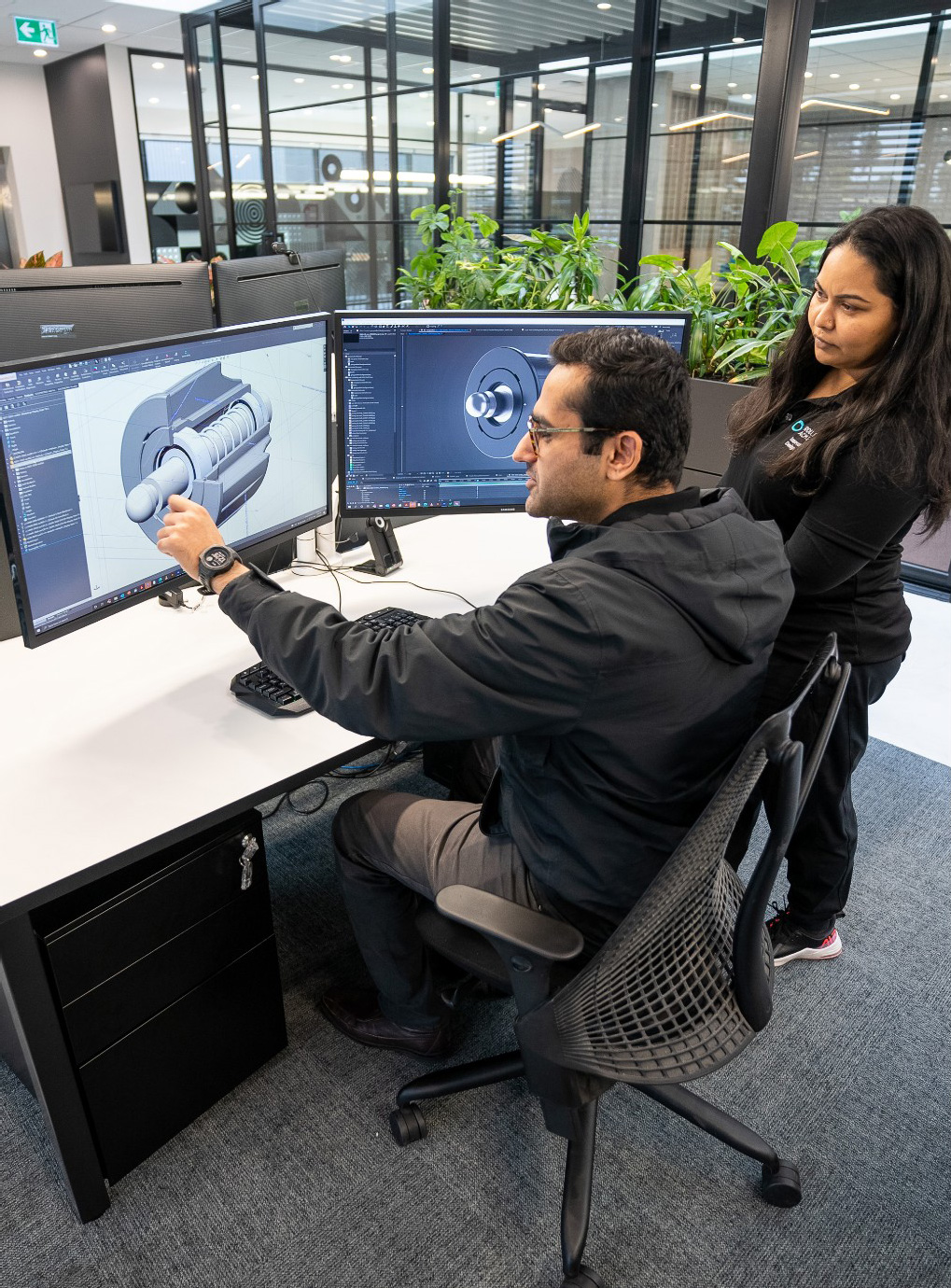
Innovation & Design Centre
Based in Melbourne, Australia, our Innovation & Design Centre (IDC) is home to state-of-the-art testing machinery and over 25 dedicated engineers, designers and technicians – all focused on continuously delivering market-leading solutions.
With almost four decades of R&D, every Zipscreen component is quality assured, rigorously cycle tested 10,000 times and backed by our five-year warranty.
Mistakes and Traps Home Owners in Singapore Faced

Based on consumer advice from CaseTrust and real-world feedback on HomeRenoGuru, here are the most common pitfalls:
- The “100% Waterproof” Myth: No mesh blind is 100% waterproof. During a severe monsoon, a fine mist may penetrate. If a vendor promises “100% dry,” they are likely selling PVC, which will turn your balcony into an oven under the Singapore sun.
- Ignoring Wind Load Ratings: Units above the 15th floor experience significantly higher wind speeds. Installing a system without a certified wind rating is a safety hazard. Ensure you read this focused guide on wind safety for high-rise balcony blinds.
Facade Non-Compliance: Every condo has a specific RAL color code for the tracks. Installing “Signal Grey” when the MCST requires “Basalt Grey” can lead to legal notices and forced reinstatement costs.
Case Study: 1-Bedroom Condo in Punggol (Waterbay)

- The Problem: The owner wanted to use their 45sqft balcony as a study but faced intense West sun and frequent rain.
- The Solution: Installed an authentic Zipscreen™ with 1% Phifer fabric and a motorized Automate™ motor.
- The Result: The owner effectively gained 45sqft of “indoor” space for a total cost of $2,800. Comparing this to the property’s PSF of $1,400, the “investment” paid for itself by increasing the usable value of the home by over $60,000.
- Insight: The owner avoided common condo installation mistakes by requesting the MCST’s specific technical drawings before fabrication.
How to Ensure Your Installation is Success-Proof
To navigate the complexity of Singapore’s renovation landscape, use the Triple-S Framework:
- Seal (z-LOCK): Does the system have a physical “zip” welded to the fabric? If it’s just a cable, it’s not a Zipscreen™.
- Stability: Check if the hardware is marine-grade aluminum to prevent coastal corrosion (especially for condos near East Coast or Sentosa).
- Smart-Control: Does the vendor provide a hub for IoT integration?
Before you sign any contract, ensure you have a list of questions to ask your MCST.
Common Questions
Expert Insights for Singapore Homeowners
Are Zipscreen™ blinds allowed in all Singapore condos? +
While most MCSTs allow them, they are not universally approved without checking. Each condo has specific bylaws regarding the approved color, fabric type, and placement. Always obtain written approval from your Managing Agent to ensure your choice is MCST compliant and matches the building's facade.
What is the difference between 1% and 5% openness fabric? +
Openness refers to the weave density. 1% fabric is tighter, offering 99% rain protection and better privacy, but less airflow. 5% fabric allows more breeze and better outward visibility but may let in fine mist during heavy Singapore storms. For small balconies, 1% is usually preferred for all-weather utility.
How much does a Zipscreen™ cost for a standard condo balcony? +
In 2026, expect to budget between $2,500 and $4,500 for a standard 3-meter wide balcony. This includes authentic z-LOCK™ hardware and motorization. Prices range from $25 to $35 per square foot. Beware of quotes below $20 psf, as they often use generic parts with shorter lifespans.
Can Zipscreen™ blinds withstand high-floor winds in Singapore? +
Yes, authentic Zipscreen™ systems are engineered for high-rise units. They can withstand wind speeds up to 80km/h. However, during extreme storms or Sumatra Squalls, it is always a best practice to retract the blinds to prevent the "parachute effect" which can strain the building's structure.
Read more about Zipscreen™

Are Zipscreen™ Blinds MCST Approved? The Ultimate 2026 Singapore Condo Guide
January 25, 2026 No Comments
Read More » The Definitive Guide to Condo Rules for Balcony Blinds in Singapore: Avoid Costly MCST Mistakes
January 25, 2026 No Comments
Read More » 
Is Your High-Rise Balcony Safe? The Ultimate Guide to Wind Safety for Zipscreen™ Blinds in Singapore
January 25, 2026 No Comments
Read More » 
7 Best Zipscreen™ Options for Small Condo Balconies: 2026 Singapore Guide to Maximizing Space
January 25, 2026 No Comments
Read More » 
Ultimate Guide to Privacy Solutions for Condo Balconies: Why Zipscreen™ is the Top Choice in Singapore (2026)
January 25, 2026 No Comments
Read More » The Ultimate Wind Safety Protocol for High-Rise Blinds
A Comprehensive Guide to Selecting Best Zipscreen™ Options for Small Balconies
Above-the-Fold Summary: This guide explains the technical specifications, regulatory requirements, and cost-benefit analysis of installing Zipscreen™ blinds in small Singapore condo balconies. It is designed for homeowners seeking to convert outdoor areas into weather-protected living spaces and vendors looking to align with 2026 BCA standards.
The best option is a motorized 1% openness system using z-LOCK™ technology. This setup provides maximum rain protection and UV blockage (99%), which is essential for compact spaces where furniture is close to the balcony edge.
Zipscreen™ matters because it solves the “Utility-Space Gap.” In Singapore’s high-density environment, a balcony often represents 10% of a home’s total area. By enclosing it with a wind-resistant, insect-proof barrier, homeowners increase their property’s usable square footage without the high cost and regulatory hurdles of balcony glass.
The z-LOCK™ system uses a cause–effect–outcome model:
- Cause: A side-zipper is high-frequency welded to the fabric edges.
- Effect: This zipper is securely guided within an aluminum side-channel.
- Outcome: A 100% sealed perimeter that prevents fabric “blowouts” and eliminates side gaps where rain or mosquitoes could enter.
When evaluating the cost of a Zipscreen™, homeowners should use this mental model:
- Total Cost (C): Price of installation (e.g., $3,000).
- Space Gained (S): Square footage of the balcony (e.g., 50 sqft).
- Investment PSF (I): $C / S = $60 psf.
- Market PSF (M): Property value (e.g., $1,500 psf).
- Verdict: If $I$ is less than 10% of $M$, the Zipscreen™ is a high-yield renovation that pays for itself in resale value.
Contrary to popular belief, motorized systems are more durable than manual ones. Manual cranking often applies uneven force, leading to fabric misalignment over time. Motorized units apply consistent, calibrated tension, extending the fabric’s lifespan by approximately 30%.
- Budget: Range from $25 to $35 psf for authentic systems.
- Fabric: 1% openness is the gold standard for rain protection.
- Compliance: Always obtain written MCST approval for color-matching.
- Wind Safety: Rated up to 80km/h; avoid generic cable-guided imitations.
- Integration: Compatible with Google Home/Alexa via RTS motors.
Woud like to know more?
Leave behind your contact details, Our sales-representatives will connect with you via whatsApp
Show Room Opening Hours:
Mon – Sat: 9:00AM – 6:00PM
Zipscreen

7 Best Zipscreen™ Options for Small Condo Balconies: 2026 Singapore Guide to Maximizing Space
Read More » January 25, 2026 No Comments