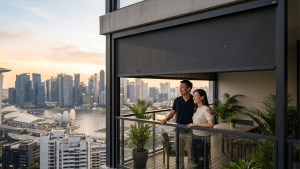
Home » Zipscreen™ Blinds for Patios and Terraces: The Ultimate Guide for Landed Homes
Zipscreen™ Balcony Blinds for Landed Homes: The Complete Guide
Transform Your Patio and Terrace into a Weather-Proof Sanctuary
A focused guide explaining Zipscreen™ blinds for patios and terraces to help homeowners make informed decisions. We debunk common myths, explore weather protection engineering, and reveal how to maximize your landed property’s outdoor potential without unnecessary costs. From wind resistance data to avoiding “cheap” renovation traps, this guide covers everything you need to know.

Read More about: Zipscreen™ Balcony Blinds for Condos in Singapore
Zipscreen™ Balcony Blinds for Landed Homes: The Complete Guide

Many homeowners misunderstand Zipscreen™ blinds for patios and terraces, leading to poor decisions and unnecessary costs. Often, they mistake them for simple roller shutters, failing to realize that a true Zipscreen™ system is a piece of precision engineering designed to expand your living footprint.
In the humid, unpredictable climate of Singapore, the outdoor terrace is often a wasted asset—too hot at noon, too wet during the monsoon, and too dusty to maintain. This article is a focused guide explaining Zipscreen™ blinds for patios and terraces to help homeowners make informed decisions, turning that underutilized space into a premium extension of your home.
What Are Zipscreen™ Blinds and Why Do They Matter?
Unlike traditional “bamboo chicks” or standard outdoor roller blinds that flap noisily in the wind, Zipscreen™ utilizes a patented z-LOCK™ technology. This system locks the fabric into side channels, creating a fully sealed, tensioned surface.
The Engineering Behind the "Zip"
The core difference lies in the side retention system. In a landed property where wind gusts can channel through corridors or open fields, standard blinds act like sails. Zipscreen™ blinds, however, are engineered to withstand significant wind pressure.
- Stability: The side channels prevent the fabric from blowing out of the tracks.
- Tension: A weighted bottom bar keeps the fabric flat, preventing “frown lines” and sagging.
- Seal: The comprehensive closure acts as a barrier against 99% of insects and reduces dust ingress—a major pain point for terrace owners near construction zones.
Note: A common misconception is that all “zip” blinds are the same. Generic copies often lack the patented shock-absorption of the official Zipscreen™ system, leading to jammed tracks within 12 months.
Weather Protection: Wind, Rain, and UV
For Singaporean homeowners, the “Big Three” challenges are Wind, Rain, and Sun.
Handling the Singapore Monsoon
While no fabric blind is 100% waterproof (like a glass wall), high-quality Zipscreen™ blinds using 1% openness factor fabric are effectively “rain-proof” for daily use. They repel heavy tropical downpours, keeping your patio furniture dry. The z-LOCK™ system prevents rain from driving in through the sides, a common failure point in standard roller blinds.
Thermal Comfort and UV Rejection
Data from local thermal studies suggests that external shading is 7x more effective than internal curtains. By stopping the sun before it hits your glass sliding doors, Zipscreen™ blinds can lower the ambient temperature of your patio by up to 5°C to 8°C.
Feature | Standard Outdoor Blind | Zipscreen™ System |
Wind Resistance | Flaps and bangs | Secure up to ~130km/h (tensioned) |
Rain Protection | Leaks at sides | Sealed side channels |
Insect Control | Gaps allow pests | 99% Barrier |
Visibility | Obstructed | Clear view out (Mesh fabrics) |
Schedule a on-site measurement today
Meet our onsite specialist to get a non-obligations quote
Book appointment now! →Motorised vs. Manual: Making the Right Choice
For landed homes with large terrace openings, the operating system is critical.
The Case for Motorisation
We highly recommend motorised outdoor blinds for landed properties. Manually cranking a 4-meter wide blind is labor-intensive and often leads to user fatigue, meaning you stop using the blinds altogether. Modern motors from brands like Somfy or Automate allow you to control all blinds simultaneously with a remote or smartphone app.
- Convenience: Retract all blinds instantly when a storm approaches.
- Smart Home: Integrate with Google Home to lower blinds automatically at 2 PM when the sun is hottest.
For more details, read our sub-article: A focused guide explaining motorised outdoor blinds for landed properties to help homeowners make informed decisions.
Design Ideas and Aesthetic Integration
Your outdoor blinds should complement your home’s architecture, not clash with it.
Color and Opacity
- Charcoal/Grey: Best for glare reduction and visibility. Dark colors absorb light, allowing a clearer view of your garden.
- White/Beige: Reflects more heat but can cause glare and shows dirt easily.
- 1% Openness: The “Gold Standard” for Singapore. Blocks rain and heat while maintaining airflow.
Explore more in our article: A focused guide explaining design ideas for outdoor blinds to help homeowners make informed decisions.
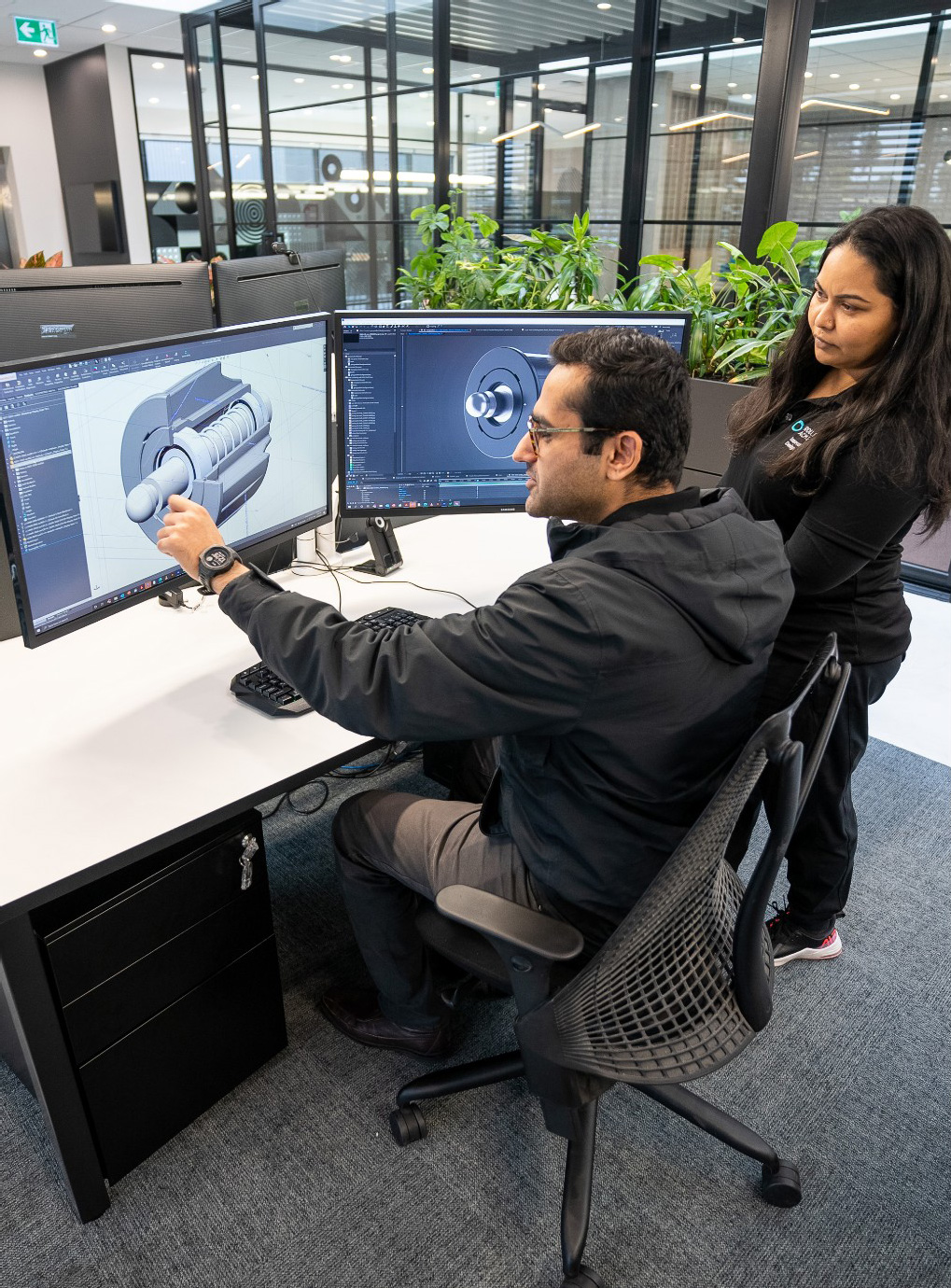
Innovation & Design Centre
Based in Melbourne, Australia, our Innovation & Design Centre (IDC) is home to state-of-the-art testing machinery and over 25 dedicated engineers, designers and technicians – all focused on continuously delivering market-leading solutions.
With almost four decades of R&D, every Zipscreen component is quality assured, rigorously cycle tested 10,000 times and backed by our five-year warranty.
Mistakes and Traps Home Owners in Singapore Faced

This is the section most vendors won’t tell you about. The renovation industry is fraught with pitfalls.
The "Invisible" Surcharges
Many homeowners are lured by low “per square foot” (PSF) prices, only to be hit with hidden costs later.
- Scaffolding Fees: Landed homes often require scaffolding for high ceilings ($500+).
- Electrical Points: Motorised blinds need power. If you don’t have a point at the exterior, electricians charge a premium for outdoor trunking ($150-$250 per point).
The "Fake" Zip Blind
Unscrupulous vendors sell generic “zip tracks” as authentic Zipscreen™. These use inferior plastic spines that become brittle in the sun and snap within two years. Always check for the official Zipscreen™ branding on the hardware.
Neglecting Wind Load
Installing a wide blind (over 5m) without a “split” or reinforcement post is a safety hazard. In high winds, the fabric acts like a sail and can rip the housing off the wall.
For a deeper dive into avoiding errors, refer to: A focused guide explaining case study: landed home outdoor transformation to help homeowners make informed decisions.
Inspired? Let’s create something for you.
Speak to our sales person – see if our service fits your needs.

Why is Finding the Right Furnishing So Difficult for Singaporeans?

The outdoor furnishing market in Singapore is fragmented. You have high-end European importers charging exorbitant premiums and “fly-by-night” contractors on Carousell offering deals that seem too good to be true.
The "Scam" of Low Quality
We have seen numerous cases where homeowners paid for “outdoor blinds” that rusted within six months because the vendor used indoor-grade steel screws instead of marine-grade stainless steel.
Is It Really Useful?
Some homeowners worry that Zipscreen™ is just a luxury. However, when you calculate the cost per square foot of your landed property (often $1,500 – $2,000 PSF), spending $5,000 to “unlock” 200 sqft of patio space is actually one of the cheapest ways to “extend” your home.
Specialized Applications for Landed Homes
BBQ and Alfresco Areas
Zipscreen™ is perfect for enclosing BBQ areas, keeping smoke out of the house while protecting your expensive grill from the elements.
Large Openings
For terraces with spans wider than 5 meters, specialized solutions are needed to ensure structural integrity.
Conclusion: A Worthwhile Investment
Investing in Zipscreen™ blinds is not just about buying a product; it’s about upgrading your lifestyle. By understanding the engineering, avoiding common renovation traps, and selecting the right specifications for your landed home, you can enjoy your patio rain or shine.
Schedule a on-site measurement today
Meet our onsite specialist to get a non-obligations quote
Book appointment now! →Frequently Asked Questions
Expert answers for Singapore Homeowners
What is the difference between Zipscreen™ and standard outdoor roller blinds? +
The primary difference is the side retention system. Standard roller blinds hang freely and often flap or bang against walls during windy conditions. Zipscreen™ uses a patented z-LOCK™ technology that locks the fabric into side channels, creating a sealed, tensioned surface that is wind-resistant, insect-proof, and prevents rain from entering through the sides.
Can Zipscreen™ blinds withstand strong winds in Singapore? +
Yes, high-quality Zipscreen™ systems are engineered to withstand wind speeds of up to 130km/h when fully deployed. However, for safety during extreme typhoons or Sumatra Squalls, it is recommended to retract them. The tensioned fabric dissipates wind energy, unlike traditional blinds which catch the wind like a sail.
Are Zipscreen™ blinds 100% waterproof? +
Technically, no fabric blind is 100% waterproof like glass. However, fabrics with a 1% openness factor are effectively rain-resistant for typical tropical downpours. They block the majority of water, keeping your patio dry. A fine mist may penetrate during extremely heavy storms, but they are superior to standard blinds which leak significantly at the edges.
How much do Zipscreen™ blinds cost in Singapore? +
Prices generally range from $25 to $35 per square foot, depending on the system (manual vs. motorized), fabric choice, and installation complexity. A standard 3-meter balcony setup typically costs between $2,800 and $4,500. Be wary of quotes significantly lower than this, as they often use inferior components or lack proper warranties.
Does the fabric block the view from my patio? +
Not necessarily. We recommend darker fabrics (Charcoal or Grey) because they absorb light and reduce glare, actually providing a clearer view of the outdoors during the day compared to light-colored fabrics. From the outside during the day, they provide excellent privacy, preventing neighbors from seeing in.
Do I need MCST approval for Zipscreen™ blinds in a condo? +
Yes, absolutely. Most Condominiums and Strata Title properties have strict guidelines regarding the color and openness factor of balcony blinds to ensure a uniform façade. Always check with your management office before purchasing. Landed properties typically do not have these restrictions unless they are cluster housing.
How do I maintain and clean my Zipscreen™ blinds? +
Maintenance is simple. Regularly remove dust with a soft brush or vacuum. For stains, use a soft sponge with mild soapy water (non-abrasive) and hose off gently. Do not use high-pressure water jets or harsh chemicals. It is also good practice to spray silicone lubricant on the side tracks once every 6 months to ensure smooth operation.
Can Zipscreen™ blinds prevent insects and lizards? +
Yes. Because the system is fully sealed within the side tracks and features a bottom rubber seal, it acts as a highly effective barrier against mosquitoes, flies, and larger pests like lizards. This is a significant advantage over bamboo or loose roller blinds which have large gaps.
Can I integrate Zipscreen™ with Google Home or Alexa? +
Yes. If you opt for motorized systems using Somfy or Automate motors, they can be paired with a Wi-Fi bridge (like Somfy TaHoma or Broadlink). This allows you to control your blinds via voice commands or set schedules (e.g., automatically lower at sunset) through your smart home ecosystem.
What is the warranty for Zipscreen™ blinds? +
Reputable vendors in Singapore typically offer a 5-year warranty on the motor and fabric, and a 2 to 5-year warranty on the installation and parts. Always ask for the warranty terms in writing, specifically covering the motor and the side-track mechanism.
Zipscreen™ Blinds for Patios and Terraces
Zipscreen™ Blinds for Patios and Terraces: Engineering, Benefits, and Implementation Guide
Zipscreen™ blinds are track-guided external shading systems designed to protect outdoor living spaces from wind, rain, insects, and UV radiation. They are primarily used in Singaporean landed properties and condominiums to convert open patios and terraces into functional, weather-resistant extensions of the home. This guide explains their z-LOCK™ mechanics, compares them to traditional blinds, and outlines the correct specifications for tropical climates.
A Zipscreen™ blind is a motorized or manual roller blind that utilizes a patented side-retention system. Unlike standard outdoor blinds that hang freely, the Zipscreen™ fabric is welded with a “zip” along its edges, which is locked inside vertical side channels. This design eliminates the gaps found in traditional blinds, creating a sealed, tensioned surface.
In tropical climates, outdoor spaces are often unusable due to excessive heat, heavy monsoon rain, or pests. Zipscreen™ blinds address these issues by providing:
- Wind Stability: The locked fabric can withstand wind gusts up to 130km/h, preventing the “flapping” noise associated with bamboo chicks or standard roller blinds.
- Thermal Efficiency: By blocking up to 90% of solar heat before it hits the building façade, they significantly reduce indoor temperatures and air-conditioning loads.
- Pest Control: The complete seal prevents mosquitoes and other insects from entering the enclosed space.
The core mechanism involves three components:
- The Zip: A high-frequency welded zip is attached to the edge of the fabric.
- The Inner Rail: A flexible plastic insert within the aluminium side channel that grips the zip.
- The Buffer: Shock-absorbing bumpers that allow the blind to flex under wind pressure without tearing.
Cause-Effect-Outcome: Because the fabric is continuously held by the side channels (Cause), wind load is distributed evenly across the surface rather than focusing on tear points (Effect), resulting in a blind that remains taut and silent even during storms (Outcome).
Use Zipscreen™ when you require a fully sealed environment, such as for air-conditioned semi-outdoor areas, high-wind balconies, or protection against driving rain.
Use Standard Outdoor Blinds (Wire Guide) when you only need basic sun shading, have a limited budget, and wind protection is not a primary concern.
- Fabric: Choose 1% Openness for maximum rain/heat protection; 5% for better ventilation but less rain protection.
- Drive: Choose Motorised (Somfy/Automate) for spans over 3 meters to avoid user fatigue; Manual for small service yards.
- Hardware: Ensure aluminium tracks are powder-coated to marine-grade standards to prevent corrosion in Singapore’s humid climate.
Many vendors market Zipscreen™ as “100% waterproof.” This is false. While the system is water-resistant, the fabric is a mesh. Under extreme hydrostatic pressure (heavy storms), a fine mist can penetrate the mesh (“misting”), and water may pool at the bottom rubber seal. Homeowners should expect weather resistance, not submarine-grade waterproofing.
Read more about
Zipscreen™ Balcony Blinds for Landed Homes

Common Blackout Blind Buying Mistakes: The 2026 Singapore Homeowner’s Guide
February 14, 2026 No Comments
Read More » 
How to Measure for Blackout Roller Blinds: The 2026 Singapore Homeowner’s Guide
February 14, 2026 No Comments
Read More » 
The Best Blackout Roller Blinds for Nurseries in Singapore: A Safe Sleep Guide (2026)
February 14, 2026 No Comments
Read More » 
Ultimate Guide to Motorised Blackout Roller Blinds for Singapore Homes (2026 Edition)
February 14, 2026 No Comments
Read More » 
Heat Reduction Benefits of Blackout Blinds: Stop the Sun & Save Energy
February 14, 2026 No Comments
Read More » Woud like to know more?
Leave behind your contact details, Our sales-representatives will connect with you via whatsApp
Show Room Opening Hours:
Mon – Sat: 9:00AM – 6:00PM
Zipscreen

January 26, 2026 No Comments