

Home » Large Opening Zipscreen Guide
Privacy Levels: Roller Blinds vs Curtains – The Definitive Comparison

Stop The Fishbowl Effect: How to Choose Coverage for Day and Night
Are your neighbors seeing too much? In Singapore’s dense HDB and Condo estates, privacy is a luxury. This guide provides a data-driven comparison of Privacy Levels Roller Blinds vs Curtains, analyzing light gaps, opacity, and night-time visibility. We break down the pros and cons of blackout fabrics, sheer layers, and smart configurations to help you reclaim your personal space without sacrificing style.

Common Blackout Blind Buying Mistakes: The 2026 Singapore Homeowner’s Guide
Home Common Blackout Blind Buying Mistakes to Avoid Don’t waste money on the wrong blind—get it right...

How to Measure for Blackout Roller Blinds: The 2026 Singapore Homeowner’s Guide
Home How to Measure for Blackout Roller Blinds: The 2026 Singapore Homeowner’s Guide Don’t Let...

The Best Blackout Roller Blinds for Nurseries in Singapore: A Safe Sleep Guide (2026)
Home Blackout Roller Blinds for Nurseries: The Ultimate Guide for Singapore Parents Creating the Perfect...

Ultimate Guide to Motorised Blackout Roller Blinds for Singapore Homes (2026 Edition)
Home Ultimate Guide to Motorised Blackout Roller Blinds for Singapore Homes Darkness at the push of a...

Heat Reduction Benefits of Blackout Blinds: Stop the Sun & Save Energy
Home Heat Reduction Benefits of Blackout Blinds: The Ultimate Cooling Guide Stop the Sun, Keep the Cool Is...

Best Rooms for Blackout Roller Blinds: The Ultimate 2026 Guide
Home Best Rooms for Blackout Roller Blinds: Where Darkness Matters Most Maximizing Comfort & Privacy Not...

Blackout Roller Blinds vs Curtains: The Ultimate Comparison Guide for Singapore Homes (2026)
Home Blackout Roller Blinds vs Curtains: The Complete Singapore Buyer’s Guide Stop Letting the Sun Dictate...

Are Blackout Roller Blinds 100% Effective? The Truth About Light Leaks
Home Are Blackout Roller Blinds 100% Effective? The Real Singapore Guide Debunking the Myths of Total...

Blackout Blinds for Shift Workers: The Ultimate Sleep Solution Guide (2026)
Home Blackout Blinds for Shift Workers: How to Master Daytime Sleep Your Survival Guide to Deep Sleep...

How Blackout Roller Blinds Improve Sleep: The Science of Darkness
Home Darkness equals deeper sleep. We live in a city that never sleeps. Between the streetlamps outside...
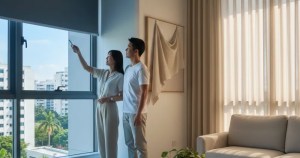
Modern Singapore living room comparing privacy levels of roller blinds vs curtains installed by Ministry of Blind
Privacy isn’t optional—choose wisely.
Imagine this: It’s 8:00 PM. You’ve just stepped out of the shower and walked into your living room. You feel relaxed, safe in your own home. But across the corridor, your neighbor has a direct line of sight into your apartment. You didn’t realize that your “light filtering” shades turn transparent when the lights go on inside.
In Singapore, where blocks are built closer than ever, this “fishbowl effect” is a real problem. Whether you are renovating a BTO or upgrading a Resale Condo, the battle for privacy window treatments often comes down to two heavyweights: Roller Blinds vs Curtains.
This article cuts through the fluff. We will analyze coverage, visibility at night, and the notorious “side gaps” to determine which treatment truly protects your privacy.
The Core Conflict: Day vs. Night Privacy

Most homeowners make the mistake of testing privacy during the day. However, privacy requirements change drastically when the sun goes down.
- Daytime: The light is brighter outside. You want to see out, but stop others from seeing in. Daytime privacy window film or sheer curtains work best here.
- Nighttime: The light is brighter inside. This reverses the effect. Without opaque window treatments, you are essentially performing on a lit stage for the dark world outside.
Roller Blinds: The Clean Shield
Roller blinds are often favored for their minimalist aesthetic, but how do they score on privacy?
Fabric Choice Matters
Your privacy level depends entirely on the openness factor of the fabric.
- Blackout Blinds: These provide 100% privacy through the fabric. No shadows, no silhouettes.
- Perforated / Sunscreen Blinds: These are excellent for daytime privacy but fail at night. If you use a 3% or 5% openness factor, neighbors can see inside clearly once your indoor lights are on.
The "Light Gap" Vulnerability
The biggest privacy trap with roller blinds is the gap between the fabric and the window frame. Because of the operating mechanism, there is often a 1.5cm to 2cm gap on the sides.
- The Risk: If someone stands at an angle to your window, they might see through this gap.
- The Fix: We recommend installing side panels or a U-channel system (often used in blackout blinds setups) to seal these gaps.
Internal Link: For a deeper dive into aesthetics, read our guide on Roller Blinds or Curtains for Modern Interiors.
ADVERTISMENT
Curtains: The Full-Coverage Wrap

Curtains are the traditional choice for a reason. They naturally offer better side coverage because the fabric can extend past the window frame.
The Power of Layering
To achieve versatile privacy, most Singaporeans opt for a “Day and Night” curtain system (Double track).
- Day Layer: Sheer curtains soften the sunlight and prevent passersby from seeing in during the day.
- Night Layer: Blackout curtains or heavy dim-out drapes provide complete occlusion at night.
Unlike blinds, blackout curtains can be curved back to the wall (a “return”), eliminating side gaps entirely. This makes them one of the best privacy window treatments for bedrooms.
Data Comparison: Privacy Benchmarks
We conducted a benchmark comparison focusing on typical HDB corridor windows.
Feature | Roller Blinds (Blackout) | Curtains (Blackout + Sheer) |
Daytime View-Out | Limited (unless pulled up) | Excellent (through sheers) |
Nighttime Privacy | High (Fabric is opaque) | Maximum (No side gaps) |
Side Light Gaps | High Risk (1-2cm gaps) | Zero Risk (with wall return) |
Silhouettes | None | None |
Airflow Privacy | Low (Must be fully down) | Medium (Can be slightly open) |
Internal Link: Concerned about cost? Check the Cost Comparison Roller Blinds vs Curtains.
Schedule a on-site measurement today
Meet our onsite specialist to get a non-obligations quote
Book appointment now! →Indoor Blinds
Custom roller blinds offer practical and affordable window dressing solution. Roller blinds comes in wide selection texture, material, pattern and design that actively trap the heat and sun glare, you can ensure your privacy in your space. When not in use, pull them up and it easy in maintenance compare to curtain.

Specialized Solutions for Difficult Windows
Top Down Bottom Up Shades
For those on the ground floor or facing a corridor, top down bottom up shades (often found in cellular shades or honeycomb shades) are a game-changer. You can lower the top half to let light in while keeping the bottom half covered to block eye-level views.
Smart Glass and Films
If you prefer a clean glass look, smart glass film allows you to switch from clear to opaque with a button press. Alternatively, one way window film (or mirrored window film) works wonders for daytime privacy but must be paired with curtains for night.
Real-World Case Study: HDB BTO in Punggol
Scenario: A ground-floor unit facing a busy walkway.
- The Problem: The owners felt exposed using standard Venetian blinds. At night, the slats allowed light leakage and visibility from high angles.
- The Solution: We installed double cell honeycomb shades.
- Result: The “top-down” feature allowed them to see the sky while blocking the walkway view. The double-cell structure also provided sound insulation.
Internal Link: Living in a noisy area? Learn about Sound and Insulation Curtains vs Roller Blinds.
ADVERTISMENT
Mistakes and Traps Home Owners in Singapore Faced
When rushing to renovate, many homeowners fall into expensive traps regarding privacy.
1. Ignoring the "Reverse Fishbowl" of Reflective Film
Many homeowners buy mirrored glass film thinking it solves everything. They don’t realize that at night, the mirror effect reverses. You see your own reflection inside, while the outsider sees you clearly. Always pair film with night curtains.
2. The "Gap" in Bay Windows
In condos with Bay Windows, installing individual roller blinds often results in massive gaps where the blinds meet in the corners. This compromises privacy significantly. Roman shades or custom-curved curtain tracks are often better solutions here.
3. Underestimating Light Bleed in Bedrooms
You might buy expensive blackout blinds, but if you mount them inside the recess without side channels, the “halo” of light (and visibility) around the edges can be disturbing. For absolute privacy, outside mounting (overlapping the wall) is superior.
Internal Link: See why this matters in Roller Blinds vs Curtains for Bedrooms.
Why is finding the right vendor so difficult for homeowners in 2026?
The renovation market in Singapore is saturated, yet finding a trustworthy vendor remains a headache.
The Rise of "Middleman" Scams
In 2026, the barrier to entry for e-commerce is low. Many “vendors” are simply drop-shippers with no installation expertise. They sell motorized privacy blinds or smart shades that look good online but lack the safety certifications required for Singapore homes.
The Hidden Costs of "Cheap"
A quotation for $200 might turn into $500 once “installation,” “gst,” and “transport” are added. Furthermore, low-quality mechanisms on cordless window shades often fail within a year, leaving your privacy stuck halfway down the window.
At Ministry of Blind, we believe in transparent pricing and durable mechanisms that ensure your privacy stays private for years.
High Authority Reference: According to consumer reports on CaseTrust, renovation complaints remain top of the list in Singapore. Always verify your vendor on platforms like Qanvast or Houzz Singapore before committing.
ADVERTISMENT
Schedule a on-site measurement today
Meet our onsite specialist to get a non-obligations quote
Book appointment now! →Frequently Asked Questions
Everything you need to know about Window Privacy
Which blinds are best for privacy?
+Top-down bottom-up cellular shades and blackout roller blinds with side channels offer the best privacy.
Can people see through sheer curtains at night?
+Yes. When lights are on inside, standard sheer curtains become transparent. You must layer them with blackout drapes.
Do roller blinds leave privacy gaps?
+Often yes. Standard installs leave a 1-2cm light gap on sides. U-channels or side tracks can fix this.
How does one-way mirror film work?
+It relies on light imbalance. It provides daytime privacy only; at night, people outside can see in.
Are Venetian blinds good for privacy?
+They are moderate. You can tilt slats to deflect views, but high-angle views (from upper floors) may still penetrate.
What is the best curtain fabric for privacy?
+Heavy, tightly woven fabrics like velvet or triple-pass blackout linings ensure 100% visual privacy.
How to secure privacy for HDB corridor windows?
+Use Venetian blinds or top-down shades. They allow airflow while blocking direct eye-level views.
Are motorized blinds better for privacy?
+Yes, because you can schedule them to close automatically before sunset, ensuring you are never exposed.
Do solar shades provide night privacy?
+No. Solar shades (1-5% openness) are for day use. At night, they become see-through when back-lit.
Can I use frosted film for living rooms?
+Yes, frosted film offers 24/7 privacy but blocks your view out completely. Best for bathrooms.
ADVERTISMENT
Privacy Levels Roller Blinds vs Curtains: The 2026 Definitive Guide
This guide compares Roller Blinds and Curtains specifically for privacy in high-density housing (HDB/Condos). It analyzes Day vs. Night visibility, coverage gaps, and fabric opacity. It is designed for homeowners seeking data-backed solutions to prevent visual intrusion.
Window privacy is determined by three factors: Material Opacity, Side Coverage, and Light Balance.
- Material Opacity: How much light passes through. Blackout fabrics offer 100% opacity; solar shades offer 1-5% openness (low privacy).
- Side Coverage: Curtains can wrap around the wall (return), eliminating gaps. Roller blinds typically leave 1.5cm side gaps due to mechanical components.
- Light Balance: Sheer fabrics and mirror films rely on the "brighter side" theory. They work when it is brighter outside (Day) but fail when it is brighter inside (Night).
Privacy fails at night due to the Reverse Fishbowl Effect.
In the daytime, sunlight reflects off the window surface, making it hard to see inside. At night, internal artificial lighting illuminates the interior while the outside is dark. This renders "one-way" films and "light filtering" shades transparent to outside observers.
Roller Blinds Performance
- Coverage: Good, but prone to "halo" gaps at the edges.
- Day Privacy: Excellent with Perforated/Solar fabrics.
- Night Privacy: Requires Blackout fabric. Even then, side gaps may reveal angles.
- Best Use: Modern, minimalist spaces where side-channels can be installed to block gaps.
Curtains Performance
- Coverage: Superior. Can be sized wider than the window frame.
- Day Privacy: Achieved via a secondary Sheer layer (Day Curtain).
- Night Privacy: Absolute when using Blackout (Night Curtain).
- Best Use: Bedrooms and living areas requiring total seclusion and zero light leak.
- Use Curtains when: You are in a bedroom, ground floor unit, or facing a corridor. The ability to layer sheers (day) and blackout (night) offers the most flexible protection.
- Use Roller Blinds when: You are in a high-floor unit with no direct facing neighbors, or for kitchens/study rooms where fabric bulk is undesirable.
Use Top-Down Bottom-Up Shades when: You need light but want to block street-level views (common in landed properties or corridor units).
- Wind Factor: Curtains blow in the wind, potentially revealing the interior. Blinds are generally more static but can bang against frames.
- Smart Glass: Offers instant switching but is significantly more expensive and requires electrical wiring.
- Corridor Windows: Standard roller blinds block airflow when down. Venetian blinds or Shutters are superior here for Privacy + Airflow.
Read more about Roller Blinds
Roller Blinds vs Curtains for Light Control: The Ultimate Guide for Singapore Homes
February 7, 2026 No Comments
Read More » 
Why Many Homeowners Switch from Curtains to Blinds: A 2026 Trend Analysis
February 7, 2026 No Comments
Read More » 
Privacy Levels: Roller Blinds vs Curtains – The 2026 Guide to HDB & Condo Privacy
February 7, 2026 No Comments
Read More » 
Cost Comparison Roller Blinds vs Curtains: The Real Price Breakdown (2026 Guide)
February 7, 2026 No Comments
Read More » 
Roller Blinds vs Curtains: Which Window Treatment Is Better? (Singapore Edition)
February 7, 2026 No Comments
Read More » Woud like to know more?
Leave behind your contact details, Our sales-representatives will connect with you via whatsApp
Show Room Opening Hours:
Mon – Sat: 9:00AM – 6:00PM