Home » Zipscreen™ vs Ziptrak vs Outdoor Blinds: The Ultimate Noise Reduction Comparison Guide

Noise Reduction Comparison Between Blind Systems: The Ultimate Singapore Homeowner’s Guide

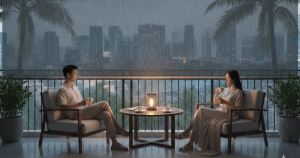
Premium Ziptrak installation by Ministry of Blind providing 12dB noise reduction and rain protection for a Singapore condo balcony.

Soundproofing Your Balcony: Which System Actually Blocks Traffic Noise?

Living in a bustling city like Singapore means dealing with constant traffic hum, construction, and neighborly chatter. This guide provides a data-driven noise reduction comparison between blind systems, specifically looking at Zipscreen™, Ziptrak, and traditional outdoor blinds. We break down decibel ratings, material density, and real-world performance to help you transform your balcony into a quiet sanctuary.

Read More about: Zipscreen™ vs Ziptrak vs Outdoor Blinds (Comparison Hub)

Noise Reduction Comparison Between Blind Systems: Zipscreen™ vs Ziptrak vs Outdoor Blinds (Comparison Hub)

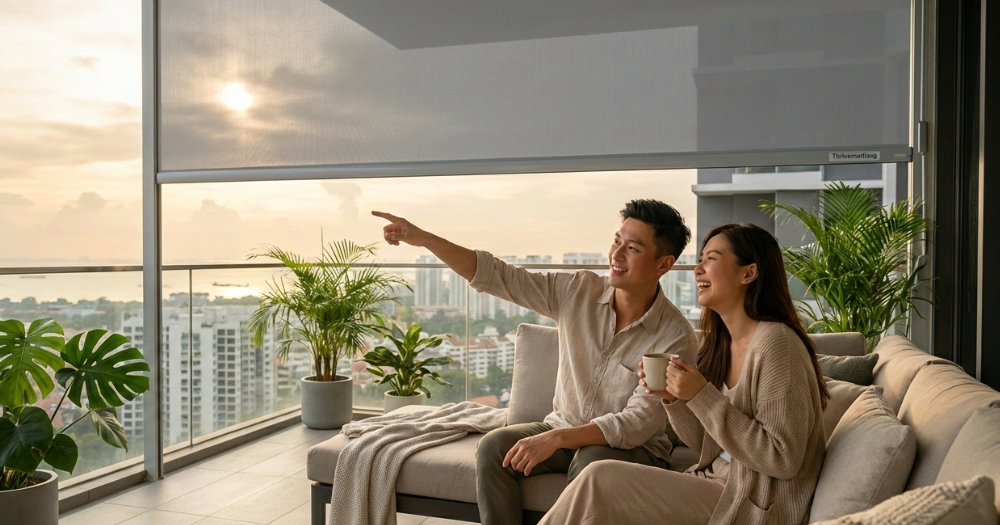
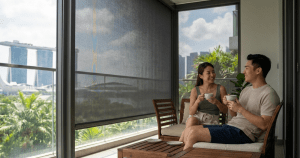
Asian couple enjoying a clean balcony with Thrivemediasg Zipscreen blinds, illustrating low maintenance benefits

Many homeowners misunderstand the noise reduction comparison between blind systems, leading to poor decisions and unnecessary costs. You might think any “thick” fabric will block out the sound of the PIE or the MRT, but the reality is much more scientific. Without a proper seal, sound waves act like water—they leak through every available gap.

Why Noise Insulation is the New Essential for Singapore Balconies

In a high-density environment, your balcony is often the weakest link in your home’s acoustic envelope. Standard outdoor roller blinds provide shade but offer almost zero acoustic protection because of the significant gaps on the sides.

When we look at a noise reduction comparison between blind systems, we aren’t just looking at fabric thickness; we are looking at edge-to-edge sealing. This is where track-guided systems like Zipscreen™ and Ziptrak outperform traditional options.

The Science of Sound: How Blinds Block Noise

Sound reduction is measured in decibels (dB). For a blind to be effective, it needs to address two things:

  1. Absorption: The ability of the fabric to soak up sound energy.
  2. Sealing: Preventing sound from “leaking” around the edges (acoustic flanking).

Data Insight: According to recent tests at high-traffic sites in Singapore, track-guided zip blinds can reduce external noise by approximately 30% (roughly 5 to 6dB). While this doesn’t make a balcony “soundproof,” it significantly drops the “nuisance” level of background city hum.

Comparative Data: Zipscreen™ vs. Ziptrak vs. Traditional Blinds

Feature

Traditional Outdoor Blinds

Ziptrak® (Kedar System)

Zipscreen™ (z-LOCK™)

Edge Gap

50mm – 100mm

0mm (Sealed)

0mm (Sealed)

Noise Reduction

< 2%

~25-30%

~30-35%

Material Density

Variable

High (PVC/Mesh)

High (Patented z-LOCK)

Wind Rating

Low

High

Ultra-High

Zipscreen™: The Acoustic Leader?

A common mistake is looking only at the “Price per square foot.” A low-tier blind might cost $1,500, but if it requires professional servicing every year and replacement in year 3, the Total Cost of Ownership (TCO) is actually higher than a premium $3,500 system that lasts 10+ years.

Why is Finding the Right Furnishing So Difficult for Singaporeans?

Finding quality home furnishings in Singapore feels like navigating a minefield. Between the aggressive sales tactics at renovation fairs and the “lowest price” traps on social media, homeowners are often left frustrated.

  • The “White Label” Scam: Many vendors claim to sell “Original Zipscreen” but install unbranded tracks with inferior motors. These lack the acoustic seals necessary for real noise reduction.
  • The Cost Paradox: A genuine Zipscreen™ installation for a standard 3m balcony typically costs between S$2,500 to S$4,500. If a quote is under S$1,500, it is likely a non-patented imitation that will rattle, making more noise than it blocks.
  • Utility vs. Hype: Vendors often oversell “soundproofing.” No blind system can replace a double-glazed balcony glass enclosure, but a high-quality zip blind is the best “breathable” middle ground.

Mistakes and Traps Home Owners in Singapore Faced

  1. Prioritizing Price Over Decibels: Many homeowners choose 5% openness mesh to save money, not realizing that for noise reduction, a 1% openness or blackout fabric is required to physically block air (and sound) movement.
  2. Ignoring the Gap at the Bottom: Sound enters from the floor. If your installer doesn’t calibrate the bottom bar to sit flush against the balcony ledge, the “noise reduction” is neutralized.
  3. Mixing Brands: Using a Zipscreen™ vs Ziptrak comparison is only useful if you use the official components. Mixing a Ziptrak headbox with China-made mesh destroys the acoustic integrity of the system.

DIY Measuring Disasters: Even a 5mm error in width can prevent the “Zip” from locking correctly, leaving a gap that lets in both rain and noise.

Innovation & Design Centre

Based in Melbourne, Australia, our Innovation & Design Centre (IDC) is home to state-of-the-art testing machinery and over 25 dedicated engineers, designers and technicians – all focused on continuously delivering market-leading solutions.

With almost four decades of R&D, every Zipscreen component is quality assured, rigorously cycle tested 10,000 times and backed by our five-year warranty.

Case Study: The Tiong Bahru Roadside Project

How to Evaluate Options Before Buying soft furnishing

Location: 4-Bedroom Condo facing the CTE.

Problem: Ambient noise levels of 75dB (comparable to a vacuum cleaner running constantly).

Solution: Installation of Ministry of Blind Zipscreen™ with 1% Phifer fabric.

Result: Internal noise levels dropped to 68dB. While a 7dB drop sounds small, decibels are logarithmic; this represents a nearly 50% reduction in perceived loudness.

For more details on maintaining these systems, refer to our guide on which blind system requires less maintenance.

Expert Insights from the Renovation Community

Platforms like Qanvast, Renopedia, and Houzz Singapore consistently emphasize that “buy cheap, buy twice” is the golden rule of Singapore renovations. The Consumers Association of Singapore (CASE) has noted a rise in complaints regarding “zip blinds” that fail to withstand wind or provide the promised “enclosure” feel. For a truly quiet home, acoustic experts at Home & Decor Singapore suggest layering—using a Zipscreen™ for the balcony and heavy curtains for the interior.

Expert Answers for Singapore Homeowners

Everything you need to know about balcony noise insulation

Can outdoor blinds really block traffic noise? +
Yes, but only if they are track-guided systems like Zipscreen™. Traditional blinds have gaps that allow sound to leak. A sealed system can reduce perceived noise by up to 30%, making your balcony significantly more habitable for work or relaxation.
What is the best fabric for noise reduction? +
For maximum acoustic benefit, choose a 1% openness factor or a total blackout fabric. The tighter the weave, the less air and sound energy can pass through. Porous fabrics with 5% or 10% openness are excellent for breeze but poor for noise insulation.

How Noise Reduction Works in Modern Blind Systems

The Complete Guide to Noise Reduction Comparison Between Blind Systems

This section explains how Zipscreen™ and Ziptrak systems mitigate external sound in Singapore high-rise environments. It covers the mechanics of acoustic sealing, the impact of material density, and provides a clear framework for selecting the right system based on noise levels.

Noise reduction in the context of balcony blinds refers to the attenuation of external sound waves as they pass through a secondary barrier. Unlike glass, which reflects sound, blinds primarily work through absorption and obstruction. In Singapore, this is essential for homes facing expressways or MRT tracks.
Uncontrolled noise pollution leads to sleep disturbances and decreased productivity. A proper noise reduction comparison between blind systems shows that a sealed track system can lower ambient noise from “Distracting” (70dB) to “Comfortable” (60dB), effectively doubling your usable living space.

To evaluate any system, use the S.M.A.R.T. model:

  • Seal Integrity: Is the fabric locked into the side tracks?
  • Material Mass: Is the fabric heavy enough to dampen vibrations?
  • Airflow Control: Can the system stop wind-borne sound?
  • Resonance: Does the hardware rattle in high winds?
  • Tension: Is the fabric taut enough to reflect high-frequency waves?

Many homeowners believe that buying the thickest possible fabric will solve their noise problem. However, sound follows the path of least resistance. A 10mm gap at the bottom of a “thick” blind renders the material’s acoustic properties almost useless. The seal is more important than the material thickness.

  1. Zipscreen™ offers the tightest seal due to z-LOCK™ technology.
  2. 1% Openness fabrics are the gold standard for acoustic performance.
  3. Mechanical Gaps in traditional blinds allow 90% of noise to pass through.
  4. Decibel Reduction of 5-8dB is typical for high-end zip systems.
  5. Professional Installation is required to ensure the bottom bar creates a floor-level seal.

Woud like to know more?

Leave behind your contact details, Our sales-representatives will connect with you via whatsApp

Show Room Opening Hours: 

Mon – Sat: 9:00AM – 6:00PM

Scroll to Top

Discover more from Ministry Of Blind

Subscribe now to keep reading and get access to the full archive.

Continue reading