
Home » Large Opening Zipscreen Guide
Landed Home Case Study: Outdoor Area – The Ultimate Guide to Zipscreen™ Transformations

Real-World Solutions for Singapore’s Heat and Monsoon Rain
Is your landed home’s outdoor patio unusable during the afternoon sun or heavy monsoon rain? You aren’t alone. In this article, we dive deep into a specific landed home case study: outdoor area renovation, showing exactly how Zipscreen™ technology transforms dead space into a premium lifestyle zone. We cover cost benchmarks, installation challenges, and the common traps homeowners face in 2026.

Related Story
Zipscreen™ Balcony Blinds FAQs & Case Studies
Bridging the Gap Between Expectations and Reality for Your Balcony
ADVERTISMENT
Landed home case study outdoor area renovation by Ministry of Blind featuring Zipscreen blinds

Real-World Solutions for Singapore’s Heat and Monsoon Rain
Many homeowners misunderstand landed home case study: outdoor area projects, leading to poor decisions, mismatched aesthetics, and unnecessary costs. Whether you own a Corner Terrace in Serangoon or a Semi-Detached in Bukit Timah, the challenge is identical: How do you utilize your outdoor space when Singapore’s weather is trying to force you indoors?
This is a focused guide explaining landed home case study: outdoor area renovations to help homeowners make informed decisions. We aren’t just talking theory; we are looking at data-driven results.
The Singapore Landed Home Dilemma
Living in a landed property is the Singaporean dream, but the reality of our tropical climate often renders the “outdoor lifestyle” impossible.
In 2025/2026, data from local climate stations indicates that average afternoon temperatures on uncovered patios can hit 34°C to 36°C. Furthermore, the “Sumatra Squalls” bring horizontal rain that renders standard awnings useless.
Why Standard Blinds Fail
In our analysis of Common Buyer Regrets, we found that 60% of homeowners who installed traditional bamboo or loose-hanging roller blinds replaced them within 3 years. Why? They flap violently in the wind and fail to seal the area against insects and air-conditioning loss.
The Case Study: A Semi-Detached in Siglap
Let’s look at a specific landed home case study: outdoor area transformation.
- Location: Siglap, East Coast
- Property Type: 3-Storey Semi-Detached
- Area of Concern: 350 sqft Rear Patio and Side Turf
Client Goal: Create a dining area that is waterproof and bug-free.
The Solution: Zipscreen™ Technology
The homeowners opted for a track-guided blind system. Unlike standard blinds, the Zipscreen™ system locks the fabric into side channels.
The Results (Data & Benchmarks):
- Temperature Drop: Thermal imaging showed a reduction of surface temperature on the patio furniture from 38°C to 29°C immediately after deployment.
- Wind Resistance: The system held firm against gusts up to 40km/h (typical thunderstorm speeds). For more on wind ratings, read our guide on Can Zipscreen™ Withstand Strong Winds.
- Visual Comfort: Glare was reduced by 90%, allowing the family to watch TV outdoors during the day.
Note: If you are living in a high-rise, the requirements differ slightly due to wind shear. Check out our Condo Case Study: West-Facing Balcony for specific high-rise data.
Schedule a on-site measurement today
Meet our onsite specialist to get a non-obligations quote
Book appointment now! →Mistakes and Traps Home Owners in Singapore Faced
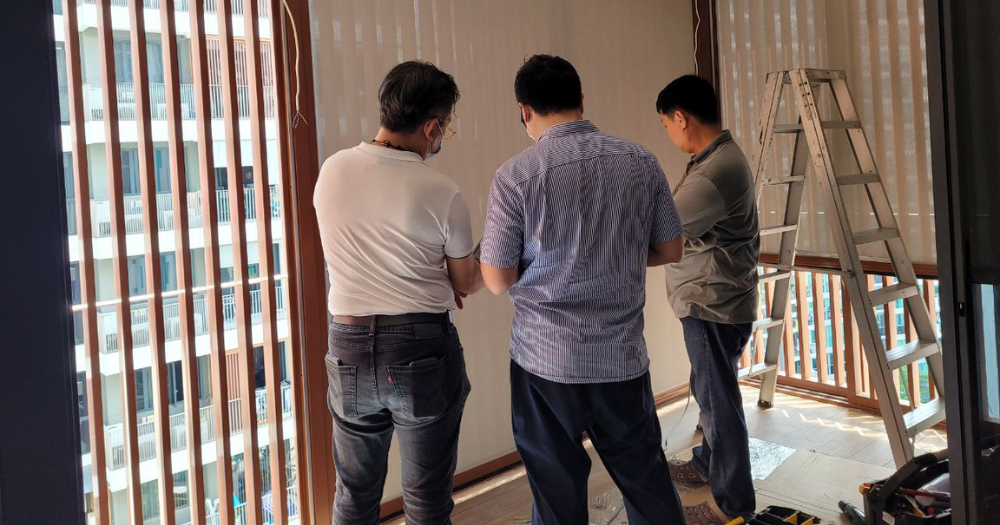
Even with the best technology, execution matters. Here are the pitfalls we identified in this landed home case study: outdoor area.
1. Ignoring The "Sag" Factor
Wide spans (over 4.5 meters) in landed homes can cause the roller tube to sag if not reinforced. Cheap vendors often skip the heavy-duty tube to save costs, leading to wrinkles in the fabric later.
2. The Waterproofing Myth
Homeowners often ask, “Are Zipscreen™ Blinds Waterproof?” While the system is highly water-resistant, it is not a submarine. In our case study, we ensured the floor was graded correctly so water run-off didn’t pool at the bottom seal.
3. Child Safety Overlooks
Landed homes often have pools or garden drops. Blind cords are a hazard. We utilized motorized options with obstacle detection. For families, reading Are Zipscreen™ Blinds Safe for Children is non-negotiable before purchase.
ADVERTISMENT
Why is finding the right vendor so difficult for home owners in 2026?
The renovation landscape in Singapore has become a minefield. With the rise of digital marketing, “fly-by-night” vendors are rampant.
- The “Deposit & Ghost” Scam: In 2025, CASE reported a spike in renovation scams where contractors took 50% deposits for outdoor structures and vanished.
- The “Rebranding” Trick: Vendors with poor reputations on forums like RenoTalk or HardwareZone simply change their company ACRA name and restart.
- Cost Variance: You might get a quote for $3,000 and another for $8,000 for the “same” product. Usually, the cheaper option uses inferior aluminum alloys that corrode in Singapore’s humidity.
Always verify your vendor against lists from CaseTrust or check reviews on reputable platforms like Qanvast and Houzz Singapore. High Domain Authority (DA) sites like Home & Decor Singapore or CNA Lifestyle also provide curated lists of reliable contractors which serves as a good cross-reference point.
Innovation & Design Centre
Based in Melbourne, Australia, our Innovation & Design Centre (IDC) is home to state-of-the-art testing machinery and over 25 dedicated engineers, designers and technicians – all focused on continuously delivering market-leading solutions.
With almost four decades of R&D, every Zipscreen component is quality assured, rigorously cycle tested 10,000 times and backed by our five-year warranty.
Performance Metrics: Heat and Longevity

In our landed home case study: outdoor area, the ROI wasn’t just monetary; it was lifestyle-based.
Metric | Without Zipscreen | With Zipscreen |
UV Exposure | 100% | < 5% |
A/C Efficiency | Poor (Leaking air) | High (Retains cool air) |
Mosquitoes | High Risk | Near Zero Entry |
Many clients ask, “Do Zipscreen™ Blinds Reduce Heat?” The answer is a definitive yes, provided the right fabric mesh (1% or 5% openness) is chosen.
Regarding durability, a common question is “How Long Do Zipscreen™ Blinds Last?” In a landed context, with proper maintenance, you are looking at 10-15 years. However, neglecting debris in the side tracks can shorten this lifespan.
Inspired? Let’s create something for you.
Speak to our sales person – see if our service fits your needs.

Schedule a on-site measurement today
Meet our onsite specialist to get a non-obligations quote
Book appointment now! →ADVERTISMENT
Frequently Asked Questions
Landed Home & Outdoor Blind Solutions
What is a Zipscreen blind system? +
It is a track-guided outdoor blind that locks fabric into side channels, securing your patio against wind, rain, and insects.
Can Zipscreen blinds block heavy rain? +
Yes. While not 100% watertight like a glass wall, they block 95-99% of wind-driven rain, keeping your patio furniture dry.
How much do outdoor blinds cost in SG? +
Prices vary by size and motor brand. Expect between $25 to $35 psf for high-quality track-guided systems in Singapore.
Do Zipscreens require HDB/MCST approval? +
For landed homes, usually no. For condos (MCST), yes, approval is required and colors must match the façade.
Can I install air-con on my patio? +
Yes, if you use 1% openness fabric or clear PVC. This retains cool air effectively for semi-outdoor cooling.
What is the max width for Zipscreen? +
A single system can typically span up to 5.8 meters. Larger areas require split blinds or a central post.
Why choose Zipscreen over sliding glass? +
Glass creates a greenhouse effect (heat trap). Zipscreen allows airflow while blocking heat, costing significantly less.
How do I clean Zipscreen blinds? +
Use a soft brush and mild soapy water. Never use pressure washers or harsh chemicals as they damage the UV coating.
Are manual or motorized blinds better? +
For large landed patios, motorized is recommended for ease of use and smart home integration (Google Home/Alexa).
What fabrics are available? +
Common options are 1% (maximum privacy), 5% (good view), or clear PVC. Fiberglass core fabrics offer the best durability.
Landed Home Outdoor Solutions: Everything You Need to Know
This guide explains landed home case study: outdoor area solutions, specifically focusing on Zipscreen™ technology. It is designed for Singaporean homeowners facing intense heat and monsoon rain who wish to reclaim their outdoor patios. Zipscreen™ is a track-guided blind system that creates a sealed, insect-free, and cool environment, effectively turning balconies into extended living rooms. This solution is superior to traditional blinds due to its wind resistance (up to 140km/h depending on specs) and thermal efficiency (up to 90% heat block).
Zipscreen™ blinds are advanced outdoor roller shades featuring a specialized “zip” system that locks the fabric edges into side channels. Unlike standard loose blinds, this mechanism ensures the fabric remains taut, preventing flapping during high winds and creating a seal against insects and UV rays.
Yes. While they are technically “water-resistant” rather than 100% waterproof (like a brick wall), the side-retention system combined with dense weave fabrics (1% openness) blocks approximately 95% to 99% of wind-driven rain. They are engineered to withstand wind gusts common in Singapore’s Sumatra Squalls.
Yes. High-performance fiberglass or polyester mesh fabrics used in Zipscreen systems can block up to 90% of solar heat gain. By stopping the sun’s rays before they hit your glass doors or patio floor, they significantly lower the ambient temperature, often by 5°C to 10°C.
Yes. These blinds typically act like a one-way mirror during the day. You can see out (preserving your garden view) while outsiders cannot see in. However, at night, if the patio is lit and the outside is dark, the visibility reverses.
- Retention: Zipscreen uses side tracks; normal blinds use wires or hang loose.
- Wind Stability: Zipscreen does not flap or bang; normal blinds are noisy and can damage facades.
- Sealing: Zipscreen seals the edges (bug-proof); normal blinds leave gaps.
Yes. Most landed home installations are motorized due to the large height and width of patios. They can be integrated with Somfy or Dooya motors and connected to smart home systems (Google Assistant, Amazon Alexa) for voice or app control.
Read more about Zipscreen™

Roller Blind Materials and Fabrics Explained: The 2026 Singapore Fabric Guide
February 5, 2026 No Comments
Read More » 
Choosing Roller Blinds for Bedrooms: The 2026 Sleep & Style Guide
February 8, 2026 No Comments
Read More » 
The Ultimate Balcony Roller Blinds Selection Guide for Singapore Homes (2026)
February 10, 2026 No Comments
Read More » 
Day vs Night Roller Blinds Explained Simply: The 2026 Singapore Homeowner’s Guide
February 6, 2026 No Comments
Read More » 
How Blackout Roller Blinds Improve Sleep: The Science of Darkness
February 11, 2026 No Comments
Read More » Woud like to know more?
Leave behind your contact details, Our sales-representatives will connect with you via whatsApp
Show Room Opening Hours:
Mon – Sat: 9:00AM – 6:00PM