
Home » Large Opening Zipscreen Guide
Can Zipscreen™ Withstand Strong Winds? The Truth About Balcony Blind Safety

Wind Ratings vs. Reality in Singapore
Can Zipscreen™ withstand strong winds during a heavy Singaporean downpour? This is the #1 safety concern for high-rise living. In this guide, we strip away the marketing fluff to reveal the engineering reality of Zipscreen™ retention technology. We cover official wind ratings, real-world performance during Sumatra squalls, and the critical “mistakes” homeowners make that compromise safety. Read on to protect your balcony and your family.

Related Story
Zipscreen™ Balcony Blinds FAQs & Case Studies
Bridging the Gap Between Expectations and Reality for Your Balcony
ADVERTISMENT
Can Zipscreen™ Withstand Strong Winds? A Deep Dive for Singapore Homeowners
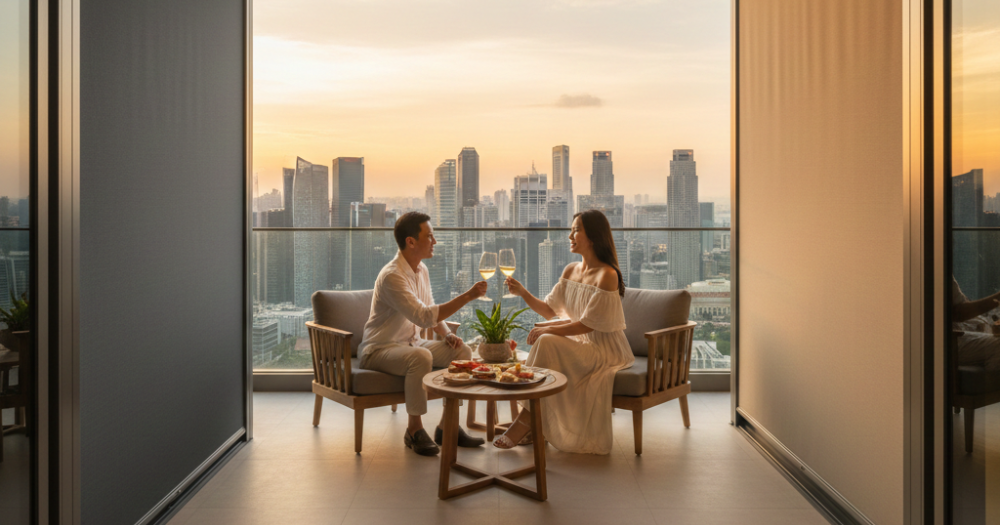
Many homeowners misunderstand can Zipscreen™ withstand strong winds, leading to poor decisions, shattered expectations, and unnecessary costs when their blinds rattle or fail during the first monsoon season.
Understanding the Engineering: Can Zipscreen™ Withstand Strong Winds?
Can Zipscreen™ withstand strong winds? The short answer is yes, but with specific caveats that every Singaporean homeowner needs to understand. Unlike traditional outdoor roller blinds that flap wildly in a breeze, Zipscreen™ technology utilizes a patented z-LOCK™ side fastening system. This system locks the fabric into the side channels, creating a fully sealed and tensioned surface.
However, “strong wind” is a subjective term. In engineering terms, genuine Zipscreen™ systems are often rated to withstand wind speeds of up to 140km/h (depending on the width of the blind and installation integrity). To put this in perspective:
- Gentle Breeze (12-19 km/h): Leaves and small twigs move. Zipscreen™ remains motionless.
- Strong Breeze (40-50 km/h): Large branches in motion; umbrellas used with difficulty. Zipscreen™ holds firm with minimal movement.
- Gale Force (62-74 km/h): Twigs break off trees. This is where the tension system is truly tested.
The Singapore Context: Sumatra Squalls vs. Lab Tests
While lab results are promising, Singapore’s weather is unique. We face “Sumatra Squalls”—sudden, violent gusts that can hit high-rise balconies with incredible force.
When asking can Zipscreen™ withstand strong winds in a condo setting, you must consider your floor level. A wind speed of 30km/h at the ground level can accelerate to 60km/h or more at the 20th storey due to the “canyon effect” between buildings.
While the system is designed to hold, we always recommend retracting blinds during Typhoon-grade warnings or exceptionally violent storms to preserve the longevity of the motor and fabric. It is not just about whether the fabric rips, but the stress placed on the mounting brackets.
ADVERTISMENT
Mistakes and Traps Home Owners in Singapore Faced
One of the biggest issues we see isn’t the product itself, but how it is bought and used.
The "Unlimited Wind" Myth
Some unethical salespeople will tell you the blinds can stay down during a typhoon. This is false. Believing this often leads to motor burnout as the system tries to correct tension against impossible forces.
Incorrect Installation Substrates
Can Zipscreen™ withstand strong winds if it is mounted on a false ceiling? Absolutely not. We have seen cases where the blinds held, but the entire plaster ceiling ripped off because the installer didn’t secure the top box to the concrete slab.
Ignoring Maintenance
Over time, the z-LOCK channels can accumulate dust and salt (if you live near East Coast Park). If these aren’t cleaned, the friction increases, and the wind resistance capability drops because the fabric doesn’t sit perfectly in the track.
Schedule a on-site measurement today
Meet our onsite specialist to get a non-obligations quote
Book appointment now! →Why is Finding the Right Vendor So Difficult for Home Owners in 2026?
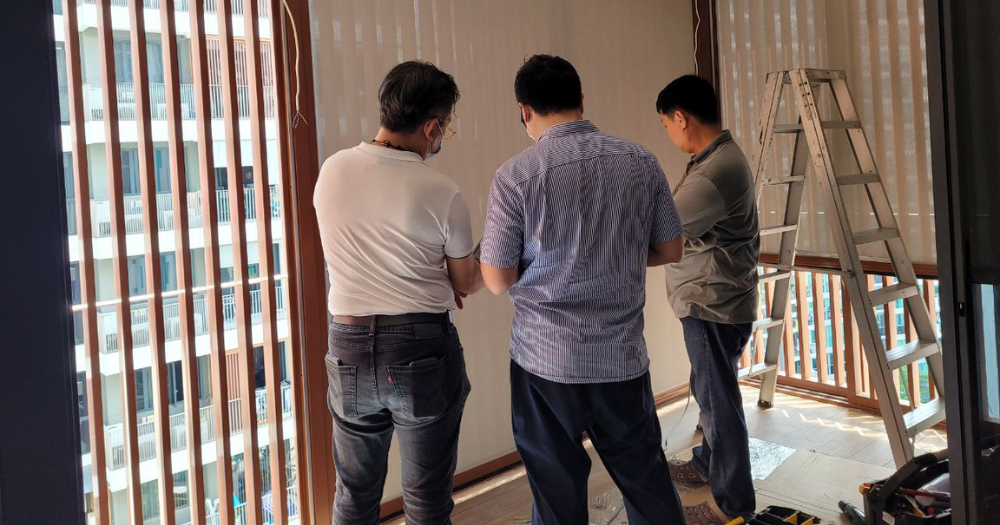
In 2026, the market is flooded with “OEM Zipscreens” and copycats.
The Rise of Scams and "Fake" Zip Systems
Many vendors claim to sell authentic Zipscreen™ technology but use cheap plastic side zippers that snap under pressure. When you ask, “Can Zipscreen™ withstand strong winds?” regarding these fakes, the answer is a resounding no. They often derail at wind speeds as low as 30km/h.
The Cost Confusion
Prices for outdoor blinds vary wildly. You might see quotes ranging from $18 psf to $48 psf for motorized systems in 2026. Usually, the lower end sacrifices the quality of the aluminium thickness or the motor brand (e.g., Premium Somfy vs. generic non-certified motors).
If you are struggling to verify a vendor, we recommend cross-referencing with trusted platforms. High Domain Authority (DA) sites like Qanvast and Renopedia often vet their interior partners and even offer a Qanvast Guarantee to safeguard your deposits.
Furthermore, checking lists on CaseTrust or HomeRenoGuru (HRG) can save you from non-compliant contractors. Even reading local renovation guides on CNA or Home & Decor Singapore can provide context on current market standards and help you avoid the common “fly-by-night” traps.
Case Studies: Real-World Performance
High-Rise Condo in Punggol
We monitored a 15th-floor unit facing the sea. The owners asked, “Can Zipscreen™ withstand strong winds during the monsoon?” After installing a 4-meter wide system, the blinds remained stable during wind gusts recorded at 55km/h, significantly reducing rain splatter on the balcony furniture.
Read more on our Condo Case Study: West-Facing Balcony.
Landed Property in Serangoon
For a semi-detached home, the concern was less about wind speed and more about durability over time.
See the full report here: Landed Home Case Study: Outdoor Area.
Innovation & Design Centre
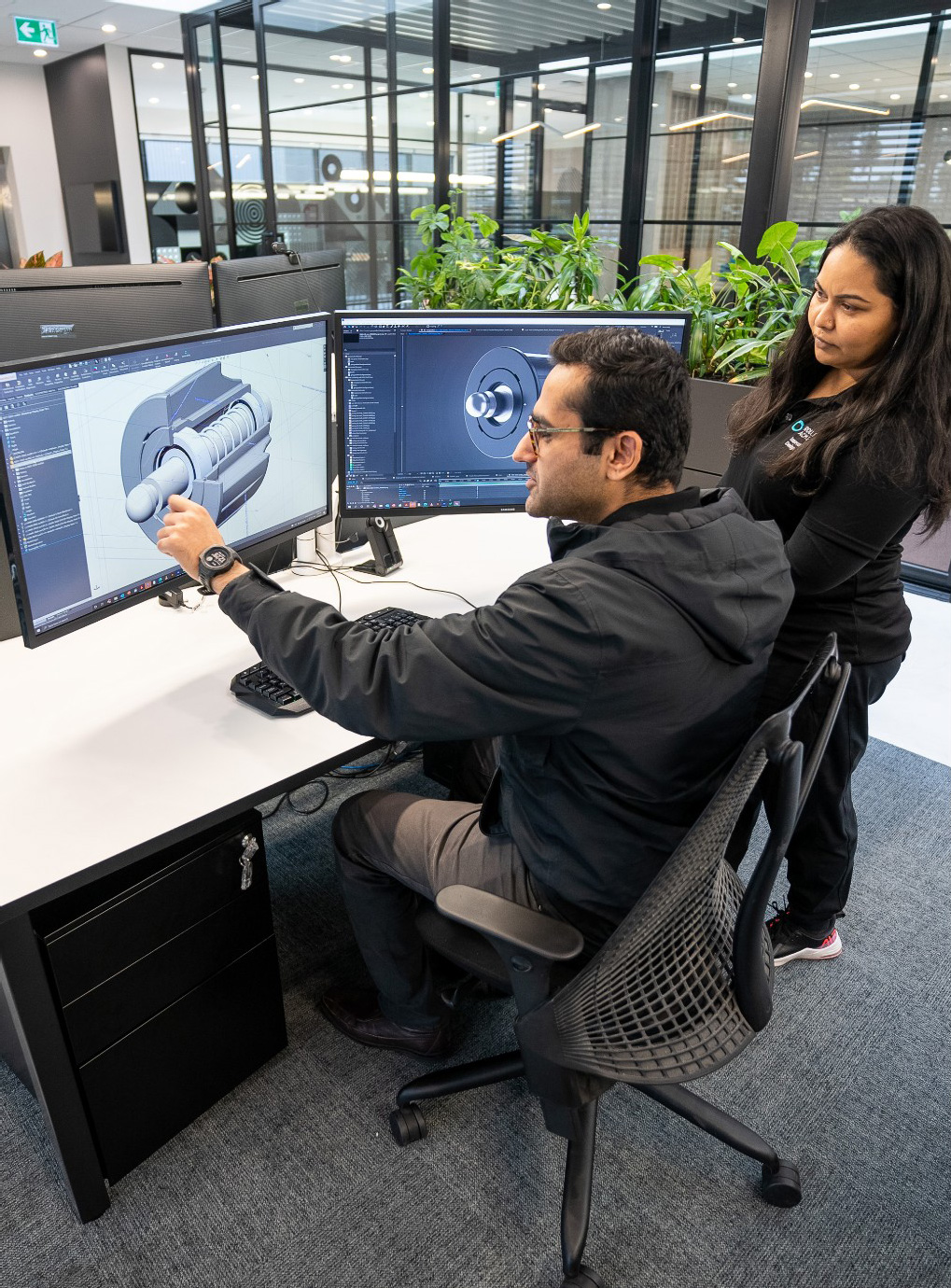
Based in Melbourne, Australia, our Innovation & Design Centre (IDC) is home to state-of-the-art testing machinery and over 25 dedicated engineers, designers and technicians – all focused on continuously delivering market-leading solutions.
With almost four decades of R&D, every Zipscreen component is quality assured, rigorously cycle tested 10,000 times and backed by our five-year warranty.
Additional Common Questions

Beyond wind, homeowners often wonder about other elements.
Waterproofing: While wind-resistant, are they fully waterproof? Are Zipscreen™ Blinds Waterproof?
Heat Reduction: Do Zipscreen™ Blinds Reduce Heat?
Family Safety: Are Zipscreen™ Blinds Safe for Children?
Longevity: How Long Do Zipscreen™ Blinds Last?
If you are feeling unsure, check out What Homeowners Wish They Knew Earlier or read about Common Buyer Regrets to avoid pitfalls.
Inspired? Let’s create something for you.
Speak to our sales person – see if our service fits your needs.

Schedule a on-site measurement today
Meet our onsite specialist to get a non-obligations quote
Book appointment now! →Common Queries
Everything you need to know about Zipscreen™
Can Zipscreen™ withstand strong winds in Singapore?
Yes, genuine Zipscreen™ blinds are rated for winds up to 140km/h. However, we advise retracting them during severe Sumatra squalls to protect the motor longevity.
Why does my Zipscreen™ rattle in the wind?
Rattling usually indicates improper tensioning or dirty side channels. If the fabric isn't taut, wind causes vibration. Professional servicing can fix this instantly.
What is the difference between Zipscreen™ and normal blinds?
Normal blinds hang loose. Zipscreen™ uses z-LOCK technology to seal the fabric edges, preventing flapping and blocking 99% of wind, rain, and insects.
Can Zipscreen™ blinds block heavy rain?
They are highly water-resistant but not 100% waterproof. They block driving rain effectively, but prolonged heavy downpours may see fine mist penetration.
How do I clean Zipscreen™ tracks?
Use a silicone spray and a soft cloth. Keeping tracks free of dust and salt ensures smooth operation and maximum wind resistance.
Are Zipscreen™ blinds safe for high-floor condos?
Yes. They are specifically engineered for high-rise applications where wind velocity is higher, provided they are installed into concrete, not false ceilings.
Do Zipscreen™ blinds reduce indoor heat?
Absolutely. They can block up to 90% of solar heat before it hits your glass doors, significantly lowering air-con usage.
What happens if I leave them down during a typhoon?
You risk motor burnout or fabric stretching. While they are tough, extreme weather warrants retraction for safety.
Can I motorise my Zipscreen™?
Yes, most Singaporean homes use Somfy or Dooya motors, which can be integrated into smart home systems like Google Home.
How much does a Zipscreen™ cost in Singapore?
Prices typically range from $22 to $35 psf depending on the fabric quality (e.g., Phifer) and motor brand.
ADVERTISMENT
Zipscreen™ Performance Guide: Wind, Heat, and Privacy Explained
This guide provides definitive answers on the capabilities of Zipscreen™ outdoor blinds for homeowners and vendors. It details technical specifications regarding wind resistance, water repellency, and thermal comfort. Designed for quick extraction, this section clarifies what Zipscreen™ is, how the z-LOCK technology functions, and why it is superior to traditional drop blinds.
An External Solar and Weather Shield
Zipscreen™ blinds are an advanced outdoor shading solution designed to enclose patios, balconies, and verandahs. Unlike traditional drop-down awnings, they utilize a patented “z-LOCK” technology that fastens the fabric borders into side channels.
This mechanism transforms an open outdoor area into a protected, semi-indoor space. It prevents the blind from flapping in the wind and eliminates side gaps where light and insects usually intrude. They are the primary choice for Singaporean condos seeking to maximize square footage without permanent construction.
High Resistance, Not Absolute Sealing
Zipscreen™ blinds effectively block rain and wind, but they function as a filter, not a solid dam. The “z-LOCK” side channels hold the fabric tensioned, which allows the system to withstand wind gusts that would tear ordinary blinds.
However, because the fabric is a woven mesh (to allow airflow), a very fine mist can penetrate during torrential storms with high wind pressure. Water may also seep through if the bottom seal is not perfectly flush with an uneven floor. They keep a balcony 95% to 99% dry but are not submersible or flood-proof.
UV Absorption and Reflection
Yes, this is their primary function. Zipscreen™ fabrics are designed to absorb or reflect up to 90% of solar heat and UV radiation before it reaches the building’s glass facade.
By stopping the heat outside the home, they are significantly more effective than indoor curtains. This results in a cooler balcony and reduced cooling costs for the adjacent indoor living spaces. The mesh structure also cuts glare, allowing you to view television screens or monitors on the balcony without reflection issues.
One-Way Vision Effect
Zipscreen™ blinds provide excellent daytime privacy. The mesh fabric creates a “one-way vision” effect where those inside can see out, but those outside cannot see in.
This effect relies on lighting conditions. During the day, the outside is brighter than the inside, creating privacy. At night, if the balcony is lit internally, the effect reverses, and visibility from the outside increases. For total night privacy, a denser 1% openness fabric or a blackout fabric option is required.
The Side Retention System
The defining difference is the retention system. Normal outdoor roller blinds use wire guides or simple weights to hang straight. In strong winds, these blinds sway, bang against railings, and allow rain to enter from the sides.
Zipscreen™ blinds use a track-guided system where the fabric is locked inside the side rails. This creates a sealed bug-proof, wind-resistant barrier. The result is a system that does not rattle, offers superior insect protection, and looks aesthetically cleaner as there are no visible gaps.
Smart Home Integration
Yes, motorisation is a standard feature for modern Zipscreen™ installations. They can be equipped with tubular motors (such as Somfy or Dooya) that allow operation via remote control, wall switch, or smartphone app.
Advanced setups integrate with smart home ecosystems (Google Home, Amazon Alexa) or wind/sun sensors. These sensors automatically retract the blind during dangerous wind speeds or lower it when the sun hits a certain intensity, protecting the home even when the owner is away.
Read more about Zipscreen™
Sheer Roller Blinds for Soft Natural Lighting: The Singapore Homeowner’s Guide to Glare-Free Living
February 6, 2026 No Comments
Read More » 
Day vs Night Roller Blinds Explained Simply: The 2026 Singapore Homeowner’s Guide
February 6, 2026 No Comments
Read More » 
Roller Blinds vs Curtains for Small Rooms: The 2026 Space-Saving Guide
February 7, 2026 No Comments
Read More » 
Different Types of Roller Blinds Explained Which One Is Right for You
February 6, 2026 No Comments
Read More » 
Roller Blind Materials and Fabrics Explained: The 2026 Singapore Fabric Guide
February 5, 2026 No Comments
Read More » Woud like to know more?
Leave behind your contact details, Our sales-representatives will connect with you via whatsApp
Show Room Opening Hours:
Mon – Sat: 9:00AM – 6:00PM