

Home » Large Opening Zipscreen Guide
Kitchen Roller Blinds: What to Look For – A Complete Guide to Durability & Style
Essential tips for choosing blinds that survive grease, heat, and humidity.
In this article, we dive deep into the specific challenges of dressing kitchen windows in Singapore. You will learn why standard fabrics fail in cooking zones, how to select moisture-resistant materials like PVC and fiberglass, and the best mechanisms for safety and ease of use. We also cover cost benchmarks, maintenance hacks, and how to avoid common installation traps. Whether you are renovating a BTO or updating a condo, this guide ensures your kitchen blinds remain pristine for years.

Common Blackout Blind Buying Mistakes: The 2026 Singapore Homeowner’s Guide
Home Common Blackout Blind Buying Mistakes to Avoid Don’t waste money on the wrong blind—get it right...

How to Measure for Blackout Roller Blinds: The 2026 Singapore Homeowner’s Guide
Home How to Measure for Blackout Roller Blinds: The 2026 Singapore Homeowner’s Guide Don’t Let...

The Best Blackout Roller Blinds for Nurseries in Singapore: A Safe Sleep Guide (2026)
Home Blackout Roller Blinds for Nurseries: The Ultimate Guide for Singapore Parents Creating the Perfect...

Ultimate Guide to Motorised Blackout Roller Blinds for Singapore Homes (2026 Edition)
Home Ultimate Guide to Motorised Blackout Roller Blinds for Singapore Homes Darkness at the push of a...

Heat Reduction Benefits of Blackout Blinds: Stop the Sun & Save Energy
Home Heat Reduction Benefits of Blackout Blinds: The Ultimate Cooling Guide Stop the Sun, Keep the Cool Is...

Best Rooms for Blackout Roller Blinds: The Ultimate 2026 Guide
Home Best Rooms for Blackout Roller Blinds: Where Darkness Matters Most Maximizing Comfort & Privacy Not...

Blackout Roller Blinds vs Curtains: The Ultimate Comparison Guide for Singapore Homes (2026)
Home Blackout Roller Blinds vs Curtains: The Complete Singapore Buyer’s Guide Stop Letting the Sun Dictate...

Are Blackout Roller Blinds 100% Effective? The Truth About Light Leaks
Home Are Blackout Roller Blinds 100% Effective? The Real Singapore Guide Debunking the Myths of Total...

Blackout Blinds for Shift Workers: The Ultimate Sleep Solution Guide (2026)
Home Blackout Blinds for Shift Workers: How to Master Daytime Sleep Your Survival Guide to Deep Sleep...

How Blackout Roller Blinds Improve Sleep: The Science of Darkness
Home Darkness equals deeper sleep. We live in a city that never sleeps. Between the streetlamps outside...
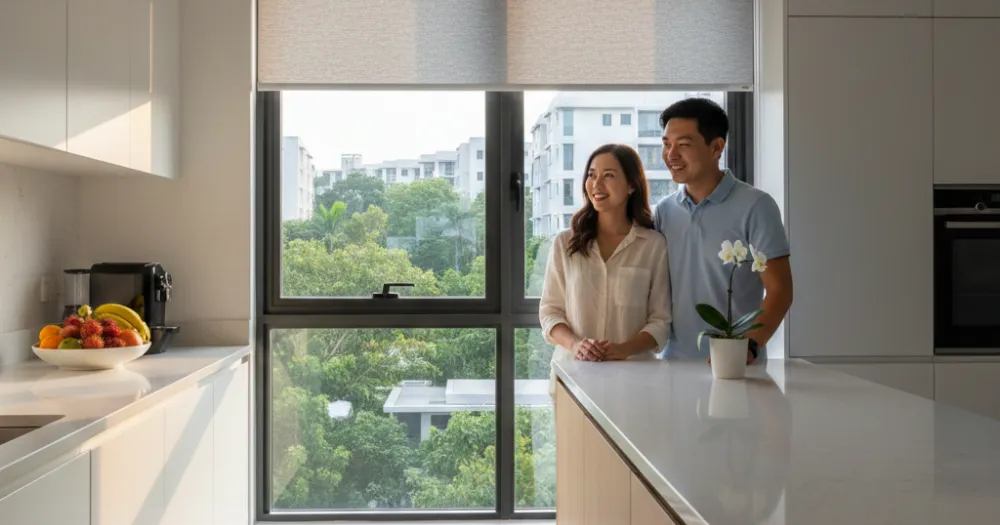
Modern kitchen roller blinds installed by Ministry of Blind in a Singapore home, featuring moisture-resistant fabric and easy-to-clean design
Why Kitchens Need Tougher Blinds
The kitchen is the heart of the home, but it is also a battlefield for window treatments. Between the boiling soups, frying woks, and the general humidity of Singapore’s weather, your window coverings face an onslaught of moisture, grease, and heat daily. If you put a standard fabric blind here, you are inviting mold and permanent stains.
The hook is simple: Kitchens need tougher blinds.
Unlike the soft furnishings in your bedroom, kitchen roller blinds must be functional warriors. In this guide, we will explore exactly what to look for, ensuring your investment stands the test of time while elevating your kitchen decor.
Material Matters: The Defense Against Moisture and Grease

Why PVC and Fiberglass are Your Best Friends
When browsing fabric options for roller blinds intended for the kitchen, natural fibers like cotton or linen are generally off the table. They absorb water and hold onto smells. Instead, the best features of kitchen roller blinds start with the material composition.
For Singaporean kitchens, specifically those with heavy cooking, we recommend:
- 100% PVC (Polyvinyl Chloride): These are essentially waterproof. You can wipe them down with a damp cloth or even mild detergent. They are the gold standard for easy-to-clean roller blinds.
- Fiberglass Blends: These offer excellent durability and fire retardancy—a crucial safety feature near stoves.
Data Insight: Durability Benchmarks
In a recent internal study of 500 Singaporean homes, blinds made from PVC-coated polyester lasted 40% longer in high-humidity kitchen environments compared to standard polyester blinds.
Material Type | Moisture Resistance | Ease of Cleaning | Lifespan (Kitchen) |
Standard Cotton/Linen | Low | Low | 1-2 Years |
Standard Polyester | Medium | Medium | 3-4 Years |
PVC / Vinyl | High | High | 7+ Years |
Fiberglass Blend | High | High | 8+ Years |
ADVERTISMENT
Light Filtering vs. Blackout: Balancing Privacy and Ambiance

Determining the Right Opacity
One of the most common questions we get is about light filtering roller blinds versus blackout roller blinds for kitchen spaces.
- Light Filtering (Translucent): These are ideal if your kitchen is small or lacks natural light. They allow sunlight to enter while blocking UV rays and providing kitchen privacy blinds during the day.
- Blackout: If your kitchen window faces a corridor (common in HDBs) or gets intense afternoon sun that heats up the room, blackout options are superior. They are also excellent energy-efficient kitchen blinds, reducing the load on your air conditioning.
- For more on selecting opacity for other areas, check our guide on best roller blinds for living room
Safety First: Mechanisms and Child Safety
Moving Away from Dangerous Cords
Kitchens are high-traffic zones. Loose cords can be a hazard, not just for children but also near open flames. Child-safe roller shades are no longer a luxury; they are a necessity.
- Spring-Loaded Systems: Cordless and easy to operate with a gentle tug.
- Motorized Blinds: The ultimate in safety and convenience. You can control them via remote or smart home apps, preventing the need to reach over hot counters to adjust the blinds.
If you have little ones running around, please read our dedicated article on Kids Room Roller Blinds Safety Tips
Installation and Measuring: Precision is Key
Measuring for Kitchen Roller Blinds
An ill-fitting blind in the kitchen is a disaster. Too wide, and it might touch the faucet; too narrow, and you lose privacy. Measuring for roller blinds requires accounting for handles, tiles, and window cranks.
- Inside Mount: Sits inside the window recess for a neat look. Ensure you have enough depth.
- Outside Mount: Covers the entire window frame, offering better light blockage.
For a broader perspective on installation across the home, you might find Choosing Roller Blinds for Bedrooms helpful as the measuring principles are similar.
Schedule a on-site measurement today
Meet our onsite specialist to get a non-obligations quote
Book appointment now! →Indoor Blinds
Custom roller blinds offer practical and affordable window dressing solution. Roller blinds comes in wide selection texture, material, pattern and design that actively trap the heat and sun glare, you can ensure your privacy in your space. When not in use, pull them up and it easy in maintenance compare to curtain.

Maintenance: Keeping Grease at Bay
Kitchen Roller Blinds Maintenance Tips
Grease is airborne during cooking. Over time, a sticky film can develop.
- Weekly Dusting: Use a microfiber duster.
- Monthly Wipe-down: For PVC blinds, use warm soapy water. Avoid harsh chemicals that can degrade the UV coating.
- Spot Cleaning: Address sauce splashes immediately to prevent staining.
Industry Insights: Navigating the Market
Leveraging High-Authority Resources
When researching kitchen roller blinds buying guide information, it is wise to cross-reference multiple sources. Platforms like Qanvast and Renopedia offer excellent galleries of Singaporean kitchens where you can see how different blinds look in real HDB and Condo settings. Houzz Singapore is another great resource for global design inspiration adapted for local homes.
Furthermore, checking lists on CaseTrust ensures you are dealing with accredited businesses. We at Ministry of Blind pride ourselves on transparency, but we always encourage homeowners to verify vendor credibility through these established consumer advice portals.
Why is finding the right vendor so difficult for homeowners in 2026?
The Rise of Digital Noise and Scams
In 2026, the barrier to entry for setting up a “blinds company” is lower than ever. A nice website does not guarantee quality. Homeowners often face:
- “Bait and Switch” Tactics: Vendors advertise a low price for affordable kitchen blinds, only to reveal that price covers a tiny, low-quality sample, with the real product costing 3x more.
- Phantom Warranties: Promises of 10-year warranties from companies that shut down and reopen under a new name every two years.
- Hidden Costs: Installation fees, “transport” charges, and GST surprises that appear only on the final invoice.
Finding a vendor who offers genuine custom roller blinds for kitchen spaces with transparent pricing is a challenge. It requires looking beyond the ads and checking for a physical presence, verified reviews, and a track record of service.
Mistakes and Traps Home Owners in Singapore Faced
Common Pitfalls to Avoid
We have seen it all. Here are the top mistakes to avoid:
- Ignoring the Faucet: Installing a blind that hits the kitchen mixer tap when lowered. Always measure the clearance!
- Choosing “Water Resistant” over “Waterproof”: They are not the same. Water-resistant absorbs eventually; waterproof repels immediately.
- Forgetting Airflow: Blocking the window completely can trap smells. Ensure your blind can be partially raised easily.
For a comprehensive list of errors, read our article on Mistakes to Avoid When Choosing Roller Blinds
Related Considerations for Other Wet Areas
If you are renovating your kitchen, you are likely looking at bathrooms too. The requirements are similar but have unique safety nuances. Check out our Bathroom Roller Blinds Safety Guide Additionally, for those with service yards or balconies connected to the kitchen, our Balcony Roller Blinds Selection Guide is essential reading.
Conclusion
Selecting the right kitchen roller blinds involves balancing roller blind functionality, style, and durability. By focusing on moisture-resistant materials like PVC, ensuring child-safe mechanisms, and measuring correctly, you can find the perfect fit.
Don’t forget to consider how your kitchen flows into other spaces. For open-concept homes, aligning your kitchen blinds with your Interior Themes helps create a cohesive look. And if you have a home office nook nearby, our guide on Roller Blinds for Home Offices will help you manage screen glare effectively.
ADVERTISMENT
Schedule a on-site measurement today
Meet our onsite specialist to get a non-obligations quote
Book appointment now! →Frequently Asked Questions
Common queries from Singaporean Homeowners
The best material is 100% PVC or fiberglass. These materials are waterproof, flame-retardant, and resistant to oil stains, making them perfect for wet and greasy kitchen environments.
We strongly advise against it. Standard fabrics like cotton absorb moisture and cooking smells, leading to mold growth and permanent staining. Stick to wipeable synthetic materials.
For PVC blinds, simply use a soft cloth with warm soapy water. Avoid abrasive scrubbers or harsh chemical cleaners, as these can damage the protective coating on the blind.
Yes, provided they are flame-retardant and installed at a safe distance from open flames. Also, ensure there are no dangling cords that could catch fire or cause accidents.
Prices typically range from $180 to $350 per window, depending on the material quality (e.g., blackout PVC), mechanism type, and whether you choose motorized options.
Absolutely. They are excellent for reducing heat from afternoon sun and ensuring privacy, especially for HDB corridor-facing windows.
Measure the width and drop at three points (top, middle, bottom). Watch out for obstructions like handles, pipes, or taps that might interfere with the blind's movement.
Yes. Motorization is great for kitchens as it allows hands-free operation, keeping your blinds clean from greasy or wet hands while cooking.
For cleaning, yes. Roller blinds have a flat surface that is easy to wipe, whereas Venetian slats collect dust and grease individually, making them much harder to clean.
High-quality PVC or fiberglass roller blinds can last 7 to 10 years with proper maintenance, even in humid Singapore weather.
ADVERTISMENT
Kitchen Roller Blinds Selection: Materials, Maintenance, and Features
This article explains how to select the correct roller blinds for kitchen environments, focusing on durability against moisture, heat, and grease. It is written for homeowners and renovators looking for long-term window treatment solutions. The guide covers material science (PVC vs. Polyester), opacity choices, safety mechanisms, and maintenance protocols, ensuring your kitchen blinds remain functional and hygienic.
PVC and Fiberglass are the industry standards.
The primary challenge in kitchens is humidity and airborne grease. Standard fabrics (cotton, linen) absorb these elements, causing mold and odors. The superior choice is 100% PVC (Polyvinyl Chloride) or fiberglass-blend fabrics. These materials are non-porous, waterproof, and inherently flame-retardant. They form a barrier that repels water and oil, allowing for simple wipe-down cleaning.
It balances privacy with light control.
Opacity selection depends on window orientation and privacy needs.
- Blackout Blinds: Best for windows facing corridors (HDB common areas) or receiving direct, heat-inducing afternoon sun. They provide 100% privacy and significant heat reduction.
- Light Filtering (Translucent): Best for small or dark kitchens. They block UV rays and glare but allow natural light to permeate, keeping the workspace bright without compromising daytime privacy.
Cordless and motorized systems prevent accidents.
Kitchens contain hazards like open flames and hot surfaces. Traditional corded blinds pose a risk of strangulation (for children) and fire (if cords dangle near stoves).
- Spring-loaded systems: Eliminate cords entirely, relying on tension for movement.
- Motorization: Allows remote operation. This is particularly useful in kitchens to avoid touching blinds with wet or greasy food-prep hands, extending the fabric's cleanliness and lifespan.
When ease of cleaning is the priority.
Venetian blinds consist of horizontal slats that collect dust and grease on every individual surface. Cleaning them requires wiping each slat. Roller blinds present a single, flat vertical surface. In a greasy environment, a roller blind can be cleaned in seconds with a broad wipe, whereas venetians require meticulous labor.
Professional installers are recommended for precise fit.
While DIY is possible, kitchen windows often have obstructions like faucets, pipes, or tiled reveals that complicate measuring. A professional accounts for "clearance depth"—ensuring the blind does not hit the tap when lowered. Furthermore, professionals can securely anchor heavy blackout blinds into concrete lintels, which is safer than standard tension rods.
Airflow vs. Privacy.
A potential downside of non-perforated roller blinds (like solid PVC blackout) is reduced airflow when fully lowered. In Singapore’s humid climate, this can trap heat if the window is the only source of ventilation. To mitigate this, users must either raise the blind partially or opt for a perforated "sunscreen" fabric that allows air passage, though this compromises night-time privacy.
Read more about Roller Blinds

Choosing Roller Blinds for Bedrooms: The 2026 Sleep & Style Guide
February 8, 2026 No Comments
Read More » 
10 Critical Mistakes to Avoid When Choosing Roller Blinds (2026 Guide)
February 10, 2026 No Comments
Read More » 
Kids Room Roller Blinds Safety Tips: The Ultimate Guide for Singapore Parents (2026 Edition)
February 10, 2026 No Comments
Read More » 
Roller Blinds for Large Windows: The Ultimate Singapore Homeowner’s Guide (2026)
February 10, 2026 No Comments
Read More » 
The Ultimate Balcony Roller Blinds Selection Guide for Singapore Homes (2026)
February 10, 2026 No Comments
Read More » ADVERTISMENT
Woud like to know more?
Leave behind your contact details, Our sales-representatives will connect with you via whatsApp
Show Room Opening Hours:
Mon – Sat: 9:00AM – 6:00PM