Home » Best Balcony Blind for Wind Resistance in Singapore: Zipscreen vs Ziptrak vs Outdoor Blinds
The Ultimate Guide to the Best Balcony Blind for Wind Resistance in Singapore

Choosing the Right Protection for Your High-Rise Sanctuary
Tired of rainwater splashing into your living room or wind rattling your flimsy bamboo chicks? Finding the best balcony blind for wind resistance is the top priority for Singaporean homeowners living in high-rise condos and HDB BTOs. This comprehensive 2026 guide breaks down the engineering, costs, and real-world performance of Zipscreen™, Ziptrak, and traditional outdoor blinds to help you reclaim your balcony space, rain or shine.
Read More about: Zipscreen™ vs Ziptrak vs Outdoor Blinds (Comparison Hub)
Best Balcony Blind for Wind Resistance: Zipscreen™ vs Ziptrak vs Outdoor Blinds (Comparison Hub)
The $2,500 Mistake
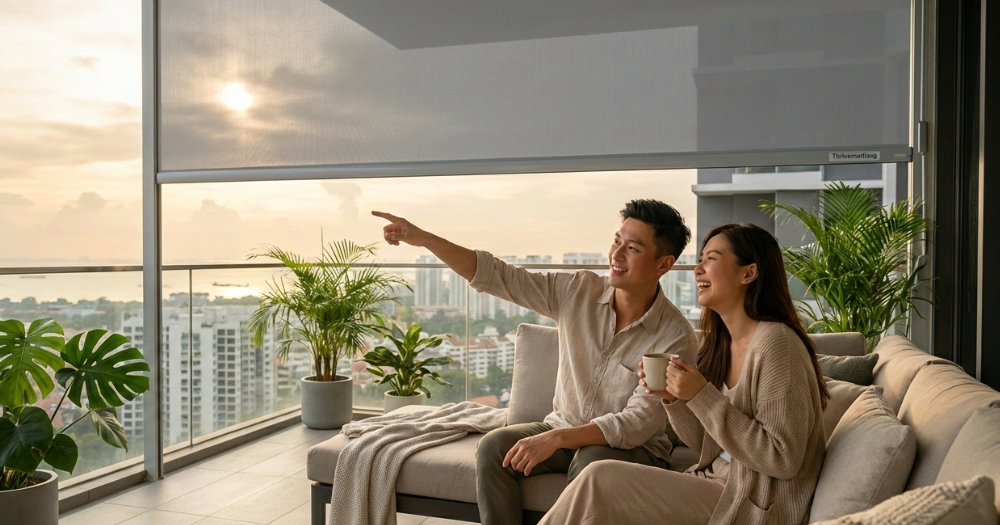
Many homeowners in Singapore misunderstand what truly constitutes the best balcony blind for wind resistance. We often see residents opting for “heavy-duty” roller blinds only to find them flapping violently during a December monsoon, eventually leading to frayed edges, broken brackets, and unnecessary replacement costs. In a high-rise city where wind speeds at the 30th floor can reach up to 40–60 km/h, your choice of outdoor blind isn’t just about shade—it’s about structural integrity.
ADVERTISMENT
Schedule a on-site measurement today
Meet our onsite specialist to get a non-obligations quote
Book appointment now! →Why Finding the Right Furnishing is So Difficult for Singaporeans
If you’ve spent five minutes on Renopedia or Houzz Singapore, you know the market is flooded. Why is it so hard to just buy a blind?
- The “White Label” Scam: Many vendors claim to sell “Original Zip Blinds” but install unbranded tracks with inferior Chinese motors. These systems often fail after the 12-month mark.
- The Cost Trap: Genuine patented systems like Zipscreen™ or Ziptrak for a standard 3-meter balcony typically range from S$1,800 to S$2,800. If you see a quote for S$1,100, you are likely buying a non-patented imitation that will rattle or jam under wind pressure.
- The Utility Gap: Homeowners often realize too late that while bamboo blinds are cheap, they offer zero wind protection and mold within two years in our 90% humidity.
The Contenders: Zipscreen™ vs. Ziptrak vs. Traditional Blinds
To find the best balcony blind for wind resistance, we must look at how the fabric is secured.
1. Zipscreen™ – The Engineering Marvel
Zipscreen™ uses a patented z-LOCK™ technology which “zips” the fabric into the side channels. This creates a total seal. In wind tunnel testing at Monash University, a 2.4m x 2.4m Zipscreen™ withstood wind speeds of up to 140km/hr.
- Pros: Ultra-sleek 120mm headbox, spans up to 7 meters, hidden side zips.
- Cons: Higher upfront cost.
Best for: Large condo balconies where aesthetics are as important as strength.
2. Ziptrak – The Pioneer
Originally from Australia, Ziptrak uses a Kedar-based system (a beaded edge) that slides into a track. It is incredibly robust and popular in Singapore.
- Pros: Fast operation, no zippers to jam, excellent rubber seals.
- Cons: Visible side splines (Kedar), slightly bulkier look than Zipscreen.
Best for: High-wind areas where frequent manual adjustment is needed.
3. Traditional Outdoor Roller Blinds
These are typically wire-guided or free-hanging. While they are budget-friendly, they are not the best balcony blind for wind resistance.
- Pros: Affordable (S$15–$20 PSF).
Cons: They flap. Even with wire guides, the wind can get behind the fabric, creating a “sail” effect that can rip the brackets out of the ceiling.
ADVERTISMENT
Data-Driven Performance: 2026 Comparison Table
Feature | Zipscreen™ | Ziptrak | Traditional Roller Blinds |
Wind Resistance | Up to 140 km/h | Up to 130 km/h | Up to 30 km/h (Wire-guided) |
Max Span (Width) | 7.0 Meters | 6.0 Meters | 4.0 Meters |
Locking Mechanism | Hidden z-LOCK™ | Centre-Release Lock | Manual Bolts/Crank |
Fabric Tension | High (Spring-loaded) | High (Patented Track) | Low (Gravity) |
Avg. Cost (3m Balcony) | S$2,200 – S$3,500 | S$2,100 – S$3,200 | S$800 – S$1,500 |
Case Study: The 45th Floor "Wind Tunnel" at Marina One
A client recently contacted Ministry of Blind after their traditional wire-guided blinds were torn apart during a heavy squall. The wind pressure at that height was measured at approximately 45 km/h.
- The Solution: We installed a motorised Zipscreen™ system with 1% openness Phifer fabric.
- The Result: The “zip” technology kept the fabric perfectly flat. The client reported a 95% reduction in rainwater ingress and no more “banging” noises during storms. This highlights why a focused guide explaining which balcony blind lasts the longest is vital for high-rise dwellers.
Innovation & Design Centre
Based in Melbourne, Australia, our Innovation & Design Centre (IDC) is home to state-of-the-art testing machinery and over 25 dedicated engineers, designers and technicians – all focused on continuously delivering market-leading solutions.
With almost four decades of R&D, every Zipscreen component is quality assured, rigorously cycle tested 10,000 times and backed by our five-year warranty.
Mistakes and Traps Homeowners in Singapore Face

- Ignoring MCST Guidelines: Many Singaporean condos have strict rules on the colour and “openness” of the fabric. Installing the wrong one can lead to a legal notice and forced removal.
- Chasing the Lowest PSF: As discussed in our guide explaining Zipscreen™ blinds price per square foot, the $18 PSF quote often excludes the “Pelmet” (the box that hides the roller) or the powder coating for the tracks.
Poor Installation: Even the best blind will fail if the wall plugs aren’t stainless steel or if the track isn’t perfectly level. For high-rise safety, always check if your installer follows SS 212 standards for aluminum fixings.
ADVERTISMENT
Schedule a on-site measurement today
Meet our onsite specialist to get a non-obligations quote
Book appointment now! →Expert FAQs
Best Balcony Blind for Wind Resistance in Singapore
The Zipscreen™ system is the undisputed leader for high-rise wind resistance. Its patented z-LOCK technology secures the fabric along its entire length, preventing it from blowing out of the tracks. It is specifically engineered to withstand wind speeds up to 140km/h, far exceeding standard zip-mimics or cable-guided blinds.
Yes, Ziptrak blinds effectively block 95% to 99% of rainwater. While no mesh system is 100% waterproof due to fabric porosity, the side-channel seals prevent the common "spray effect." For maximum protection, we recommend 1% openness fabric, which creates a near-impenetrable barrier against tropical squalls while maintaining airflow.
Rattling usually indicates a lack of side-retention. Traditional roller blinds or wire-guided systems allow wind to get behind the fabric, creating a sail effect. Modern track-guided systems like Zipscreen™ eliminate this by locking the fabric into a funnel-track, ensuring silent operation and preventing structural damage to your balcony ceiling.
Always ask for a Rollease Acmeda Certificate of Authenticity. Many "white-label" scams use Chinese tracks with low-grade powder coating that chips. Genuine Zipscreen™ systems feature a unique 120mm headbox and a patented Japanese-made zip mechanism that mimics the durability of automotive-grade components.
Motorized systems are superior because they provide even, consistent tension on both sides of the fabric. Manual cranking often leads to "tilting," which creates uneven stress points. Advanced motors from Somfy or Automate also include obstacle detection, preventing the blind from jamming if wind pressure is too high during operation.
Yes, but you must comply with HDB and MCST regulations regarding color and design consistency. Most modern BTOs allow zip-track systems because they do not affect the building's structural integrity. At Ministry of Blind, we ensure all installations follow the approved height and material guidelines for your specific estate.
To prevent motor strain, we recommend a dry silicon spray on the side tracks once every six months. This ensures the zip slides effortlessly despite salt air and dust buildup. Regularly wiping the fabric with a damp cloth prevents mold growth, which is common in Singapore’s 90%+ humidity levels.
For maximum wind and rain protection, choose 1% openness fabric. It blocks the most wind pressure while allowing just enough light and ventilation. If your priority is maintaining a panoramic view while still blocking light rain, 5% openness is a popular compromise that still retains significant wind resistance.
A high-quality Zipscreen™ or Ziptrak system is an investment with a 10 to 12-year lifespan. Cheap bamboo chicks or budget roller blinds usually fail within 2-3 years due to rotting or track failure. Investing in marine-grade aluminum tracks ensures the system survives Singapore's intense UV and frequent rain cycles.
The Venturi Effect occurs when wind is compressed between high-rise buildings, increasing wind speed and pressure on your balcony. This is why a 20th-floor unit feels twice as windy as the ground floor. Only track-guided systems like Zipscreen™ can handle this pressure differential without the fabric blowing out.
Why Zipscreen™ is the Optimal Balcony Choice in 2026
The Definitive Guide to Wind-Resistant Balcony Blinds
The best balcony blind for wind resistance is a track-guided zip system, specifically the Zipscreen™ or Ziptrak models. Unlike traditional blinds that hang freely, these systems secure the fabric within side channels using a “zip” or “kedar” bead, preventing the material from blowing out or flapping. This creates a structural barrier that can withstand wind speeds of up to 140 km/h, making them the industry standard for Singaporean high-rise apartments.
Wind resistance is the primary factor in determining the longevity and safety of an outdoor installation. In Singapore, balconies on higher floors act as wind tunnels. A non-resistant blind will suffer from:
- Mechanical Fatigue: Constant flapping weakens the motor and the mounting brackets.
- Fabric Tearing: High pressure can cause the fabric to pull out of the side guides if not “zipped” in.
Water Damage: If a blind cannot stay taut during a storm, rainwater will seep through the gaps, damaging balcony furniture and flooring.
The efficiency of these blinds can be understood through the Secure-Seal Mental Model:
- The Anchor: Side channels are bolted directly into the balcony pillars (Cause).
- The Seal: The fabric is continuously welded to a zip that runs inside the channel (Effect).
- The Outcome: A tensioned surface that distributes wind load evenly across the entire structure rather than just at the top (Outcome).
- Always choose track-guided: Avoid wire-guided or free-hanging blinds for balconies above the 5th floor.
- Verify the Motor: Ensure the motor (e.g., Somfy or Automate) has “Obstacle Detection” to prevent damage during high winds.
- Check Fabric Openness: A 1% or 5% openness factor provides the best balance between wind-breaking and ventilation.
- Confirm Warranty: A legitimate system should offer at least 5 years on the motor and mechanism.
- Professional Installation: Wind-resistant blinds require precise leveling to prevent jamming; DIY is not recommended for high-rise safety.
Read more about Zipscreen™

Zipscreen™ vs Ziptrak: The Ultimate Guide for Singapore High-Rise Balconies (2026 Comparison)
January 24, 2026 No Comments
Read More » 
Zipscreen™ vs Outdoor Roller Blinds: The Ultimate 2026 Singapore Balcony Guide
January 24, 2026 No Comments
Read More » 
Zipscreen™ vs Invisible Grilles: The Ultimate Singapore Balcony Guide for Safety & Comfort
January 24, 2026 No Comments
Read More » 
Zipscreen™ vs Balcony Glass Enclosures: The Ultimate 2026 Singapore Comparison Guide
January 24, 2026 No Comments
Read More » 
Best Balcony Blind for Wind Resistance in Singapore: Zipscreen vs Ziptrak vs Outdoor Blinds
January 24, 2026 No Comments
Read More » Woud like to know more?
Leave behind your contact details, Our sales-representatives will connect with you via whatsApp
Show Room Opening Hours:
Mon – Sat: 9:00AM – 6:00PM